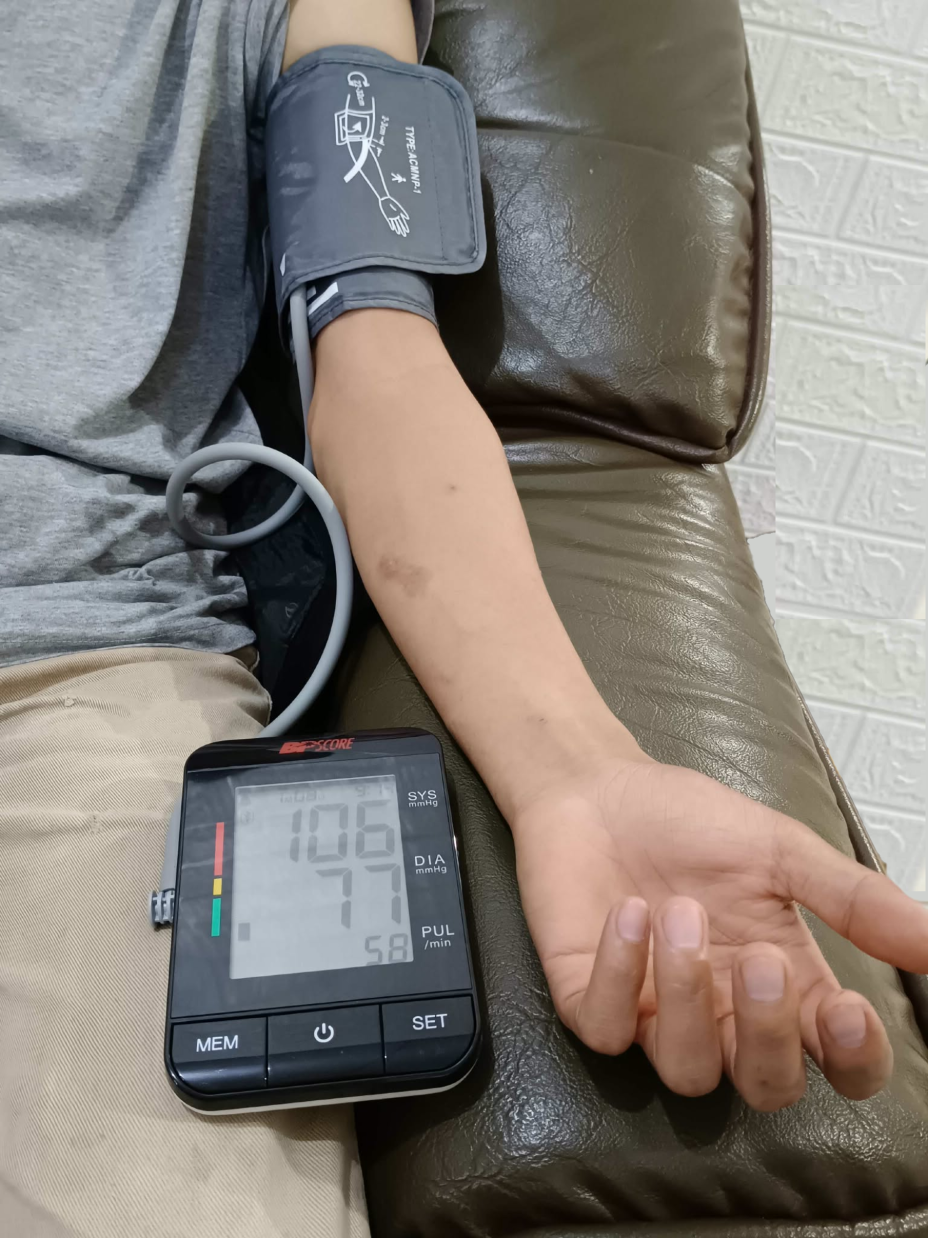
Here we measure the force of the blood against the blood vessels as it is pumped through the body (we say blood pressure because growling ‘blood force’ in a sinister voice does not sound medically appropriate). When the ventricles of the heart squeeze, blood pumps into the arteries, creating what we call the systolic pressure. The residual pressure between squeezes or heart beats we call the diastolic pressure. Thus, the systolic pressure (the upper number) represents the heart squeeze force and the diastolic pressure (the lower number) represents blood flow between squeezes.
We use millimeters of mercury (mmHg) as the units for measuring BP. Basically, the force needed to lift roughly 13.6 grams of mercury up 1 millimeter equals 1 mmHg often referred to as 1 mm (1 mmHg ≈ 0.133 kPa or 0.019 psi). We measure the blood pressure with a device called a sphygmomanometer (say that 3 times fast) or BP cuff. Usually, the blood pressure is measured from the upper arm but in certain cases it is measured from the thigh instead. Some automatic BP cuffs that measure from the wrist.

Pick a size that fits the patient; if the cuff extends over the joints, it is too big, and if the Velcro does not connect correctly, it is too small.
To use the BP cuff on the upper arm, we place the cuff slightly above the elbow with the tube(s) over the brachial artery. The tubes must be pointed distally or toward the elbow, not toward the shoulder. Ask the patient to relax their arm (palm up makes listening easier). With automatic BP cuffs press the button and wait for the numbers to appear. When auscultating, listening with a stethoscope, place the diaphragm of the stethoscope against the brachial artery near the elbow at the base of the cuff. Pump up the cuff with the valve closed while listening to the pulse. When the pulse can not be heard inflate the cuff 20-30 mm higher.
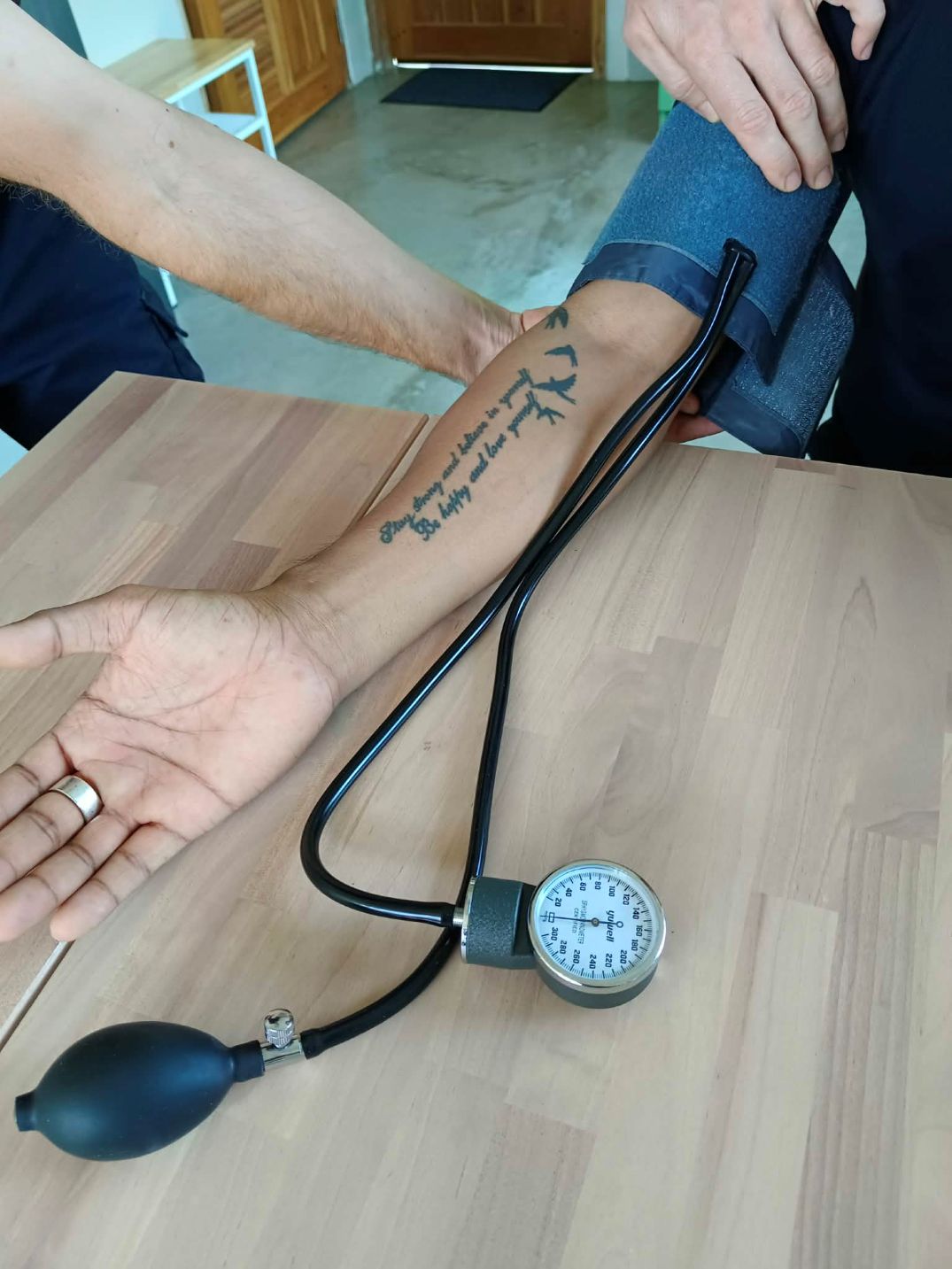
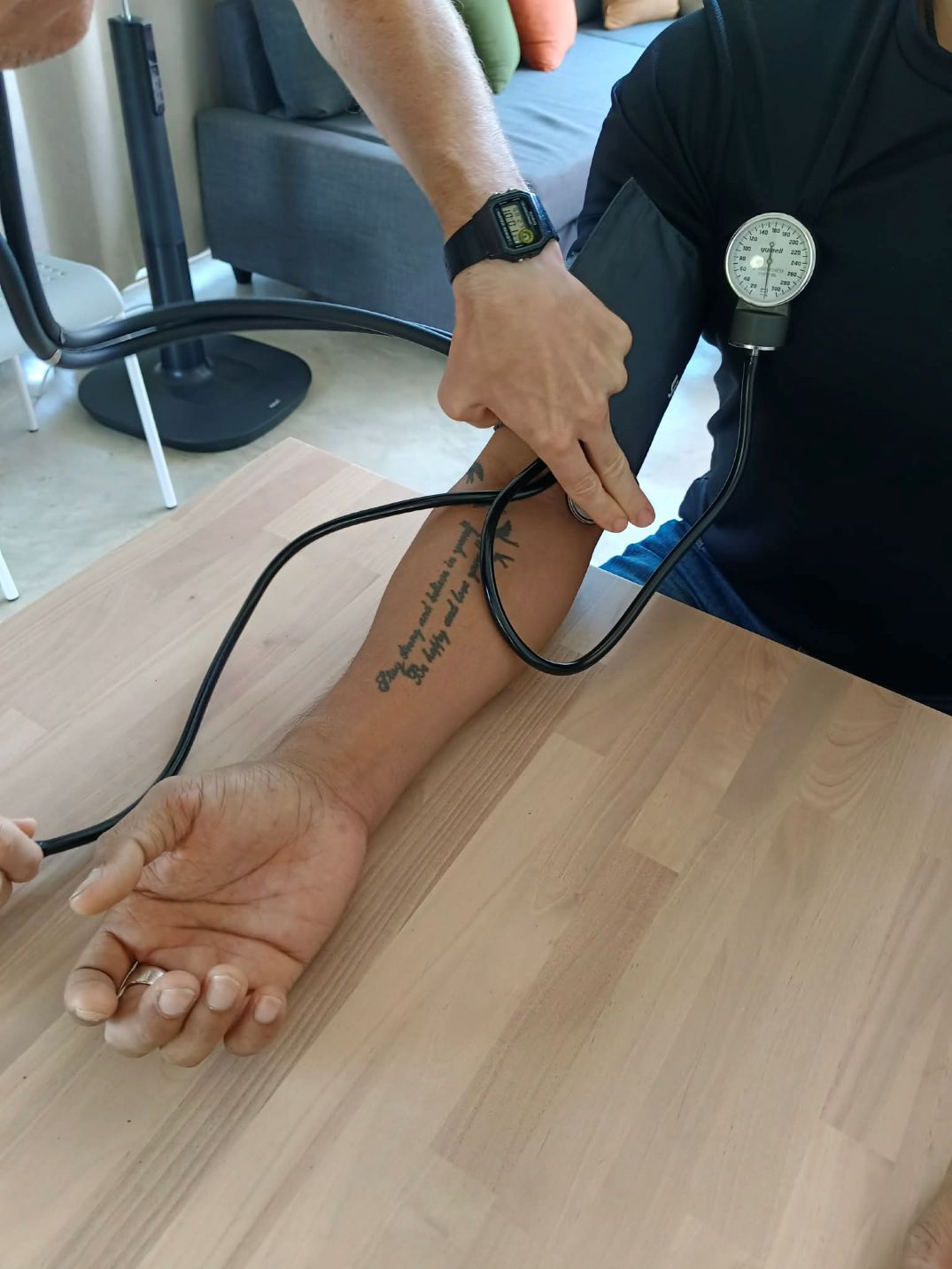
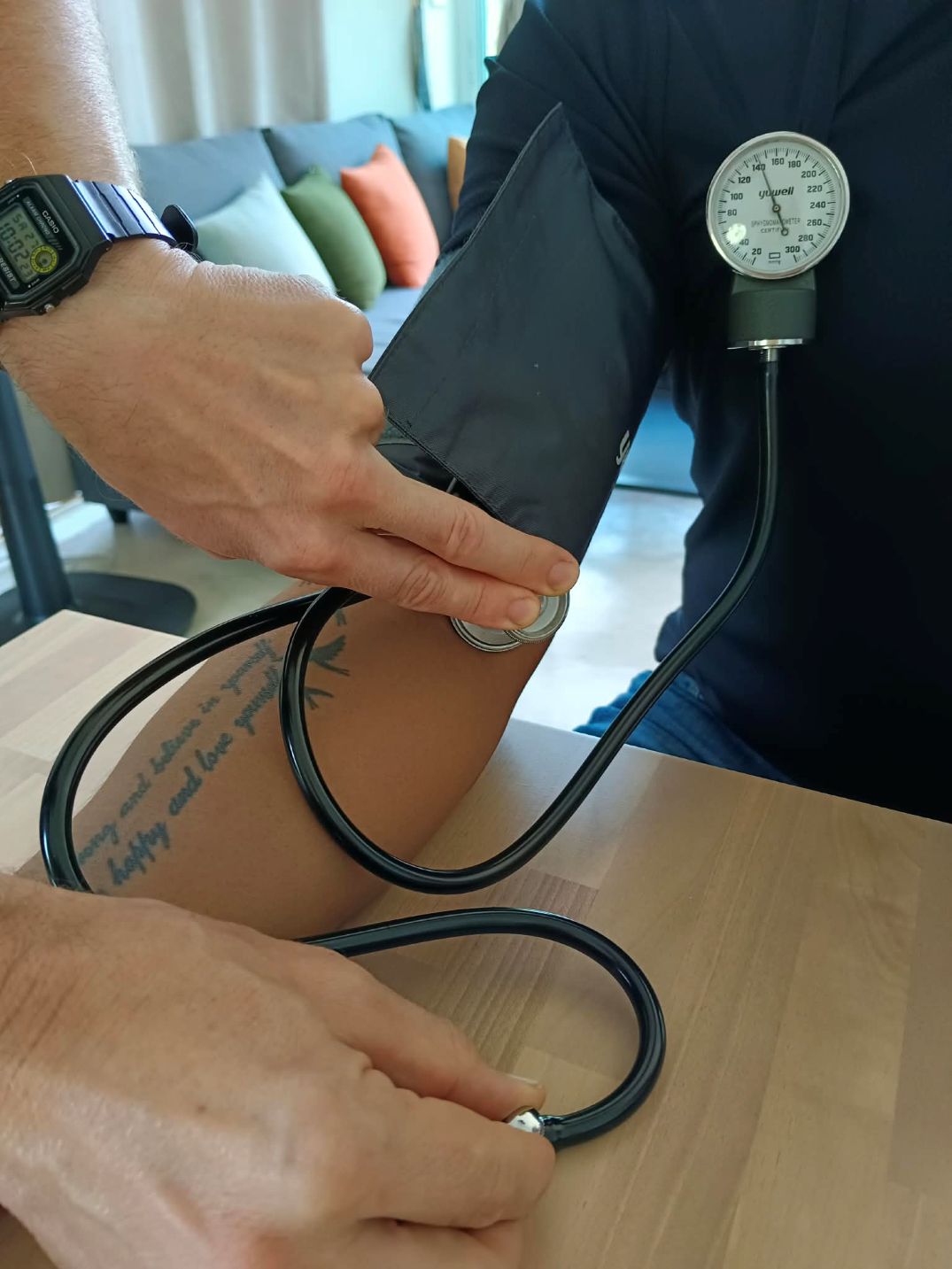
Carefully release the air from the valve while listening for the rush for the pulse and watching the gage. When the pulse can first be heard marks the systolic pressure or top number. Slowly continue to release air while listening to the pulse. The point where the pulse sounds disappear marks the diastolic or lower number.
Common ranges for blood pressures should be;
| Ages Group | Ages Range | Systolic or Upper Number (mmHg) | Diastolic or Lower Number (mmHg) |
|---|---|---|---|
| Newborn | 0-1 months | 60-90 | 20-60 |
| Infant | 1-12 months | 87-105 | 53-66 |
| Toddlers | 1-3 years | 95-105 | 53-66 |
| Children | 3-12 years | 95-112 | 56-71 |
| Adolescents | 12-18 years | 112-128 | 66-80 |
| Adults | 19 years & above | 90-120 | 60-80 |
Note these numbers are taken from distributions of blood pressures. Our patient’s BP may normally sit to one side or the other of what is called ‘normal’. Also, many factors affect the blood pressure to include body position, urine in the bladder, recent activity, stress level, medications, recently eating food, recently smoking, recently drinking caffeine (I see you pounding that energy drink). A doctor should be asked if there are questions about a blood pressure, not random internet searches.
High blood pressure, called hypertension, is a systolic pressure above 140 mm and/or a diastolic pressure above 90 mm. Low blood pressure, called hypotension, is a systolic pressure below 90 mm and diastolic pressure below 60mm.
I strongly recommend to get in the practice of stating the blood pressure you read, not to make up the numbers you think it should be. When in doubt measure the BP again (if the BP needs to be measured more than 2 times in 5 minutes, switch arms).
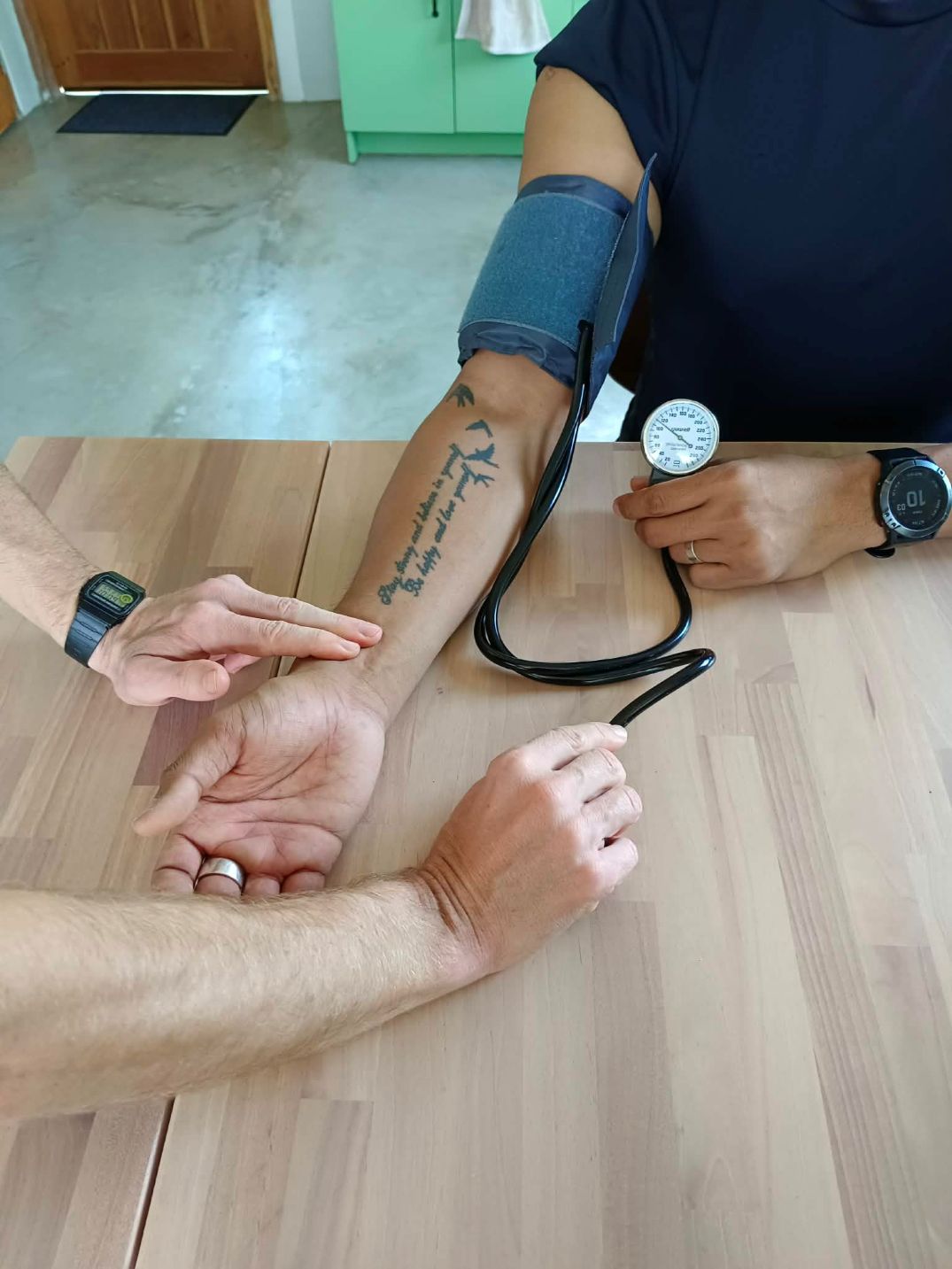
An Alternative Method for Measuring a BP without a Stethoscope; Palpating the Radial Artery
Thank you to K. Bank and K. Gan for help with the photographs. Being a hero usually takes teamwork.
References
Cleveland Clinic. (2023, March 15). Vital Signs. Retrieved from Cleveland Clinic: my.clevelandclinic.org/health/articles/10881-vital-signs
Limmer, D. O. (2007). Emergency Care 10th Ed. Upper Saddle River, New Jersey: Pearson Education Inc.
McNamara, E. C. (2020). Outdoor Emergency Care: A Patroller’s Guide to Medical Care (6th Edition). Burlington, MA: Jones & Bartlett Learning.
Sapra A, M. A. (2023, May 1). Vital Sign Assessment. StatPearls.
The Heart Research Institute. (2024). What Is Normal Blood Pressure By Age. Retrieved from The Heart Research Institute: www.hriuk.org/health/learn/risk-factors/what-is-normal-blood-pressure-by-age