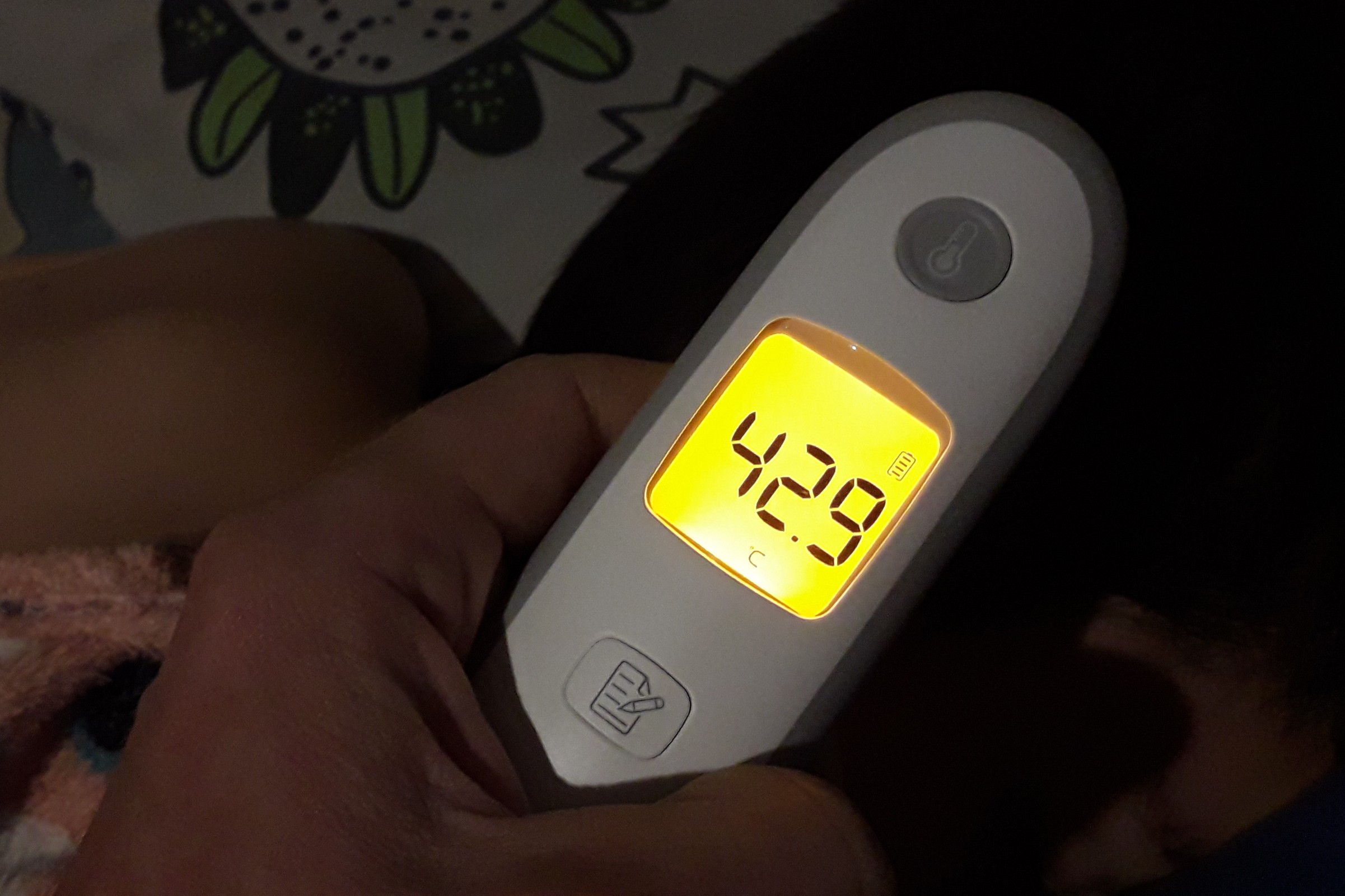
That physical quality generally referred to as hotness or coldness that results from the vibration of kinetic energy in our bodies. We measure this energy/temperature with devices called thermometers using the scales of either Celsius (°C) or Fahrenheit (°F). Many digital thermometers come with options to switch between Celsius and Fahrenheit, but if you need to manually switch the conversion formulas are;
°F = (°C * 9 / 5) + 32
°C = (°F - 32) x 5 / 9
Please enter your temperature reading in the blank and select your unit of measurement.
Be familiar with the thermometer your team uses and follow the directions it comes with. Also, remember to keep spare batteries on hand. Inside the body the hypothalamus regulates the body temperature, which should normally be 36.2 to 37.5°C (97.2 to 99.5°F). While many factors affect body temperature there are 2 general categories to consider, how much the body generates heat either by activity or fever, and how much the environment affects the body either by absorbing heat or giving heat to the body. Realize that a lot can happen with the body and temperature, from shunting blood, to releasing sweat, to funneling blood to an infection. Just because the patient’s hand feels cool does not mean they do not have a fever.
While internal medicine doctors may consider gut (gastrointestinal) thermometers the gold standard of temperature measurement, for lay people assisting with first aid and EMS we use simple less invasive options.
| Temporal Artery Infrared Thermometers (No Contact Digital) | Best used close to the side of the forehead, hence the name temporal. Excellent for infection control as they share extremely little contact with the patient and the fastest method, but come at the cost of less reliable when compared with other methods. |
| Digital Contact Thermometers | Usually needs 10-40 seconds of contact with the body to measure the temperature. Regardless of the location used, thermometers should be cleaned with soap and water (armpits are full of bacteria), just do not get water inside of the device. |
| Oral (Under the Tongue) | The thermometer must be placed under the tongue and the patient must close their lips, not biting down on the device. If the patient has just had a drink or eaten food, we will probably get a false reading. |
| Axillary (Under the Arm) | The thermometer needs to be pressed against the skin on both sides, without the clothing between the thermometer and the skin. Many patients feel more comfortable with this method over oral, but oral temperatures are considered more reliable. |
| Rectal (In the Butt) | Doctors consider rectal insertion the most accurate measurement by these devices, but it is recommended that only trained medical personnel wrestle patients to shove thermometers up their butts. |
| Tympanic Thermometer (In the Ear) | Similar speed to the no contact thermometer yet with a greater accuracy. This should not be used in newborns or if the patient has an earache. |
We listed some commonly accepted core body temperatures of awake adults below. Ranges vary by age group, method for taking the temperature, and activity.
| Body Condition | Commonly Accepted Degrees |
|---|---|
| High Fever or Hyperpyrexia | >40 °C (>104 °F) |
| Fever or Hyperthermia | >38 °C (>100.4 °F) |
| Normal | 37 °C (98.6 °F) |
| Mild Hypothermia | <35 °C (<95 °F) |
| Moderate Hypothermia | <32 °C (<89.6 °F) |
| Severe Hypothermia | <28 °C (<82.4 °F) |
Note that current research considers that there may be a new normal body temperature of 36.4 or 36.6 °C (97.5 or 97.9 °F), as this research is ongoing. Always remember to assess the patient, not just the device.
Thank you to Dr. K and K. Mink for help with the translation. Heroism takes teamwork.
References
Cleveland Clinic. (2023, March 15). Vital Signs. Retrieved from Cleveland Clinic: my.clevelandclinic.org/health/articles/10881-vital-signs
Dolibog P, P. B. (2022, February 9). Comparative Analysis of Human Body Temperatures Measured with Noncontact and Contact Thermometers. Healthcare (Basel, Switzerland).
LeWine, H. E. (2023, May 22). Fever in adults: When to worry. Retrieved from Harvard Health Publishing: www.health.harvard.edu/diseases-and-conditions/treating-fever-in-adults
Limmer, D. O. (2007). Emergency Care 10th Ed. Upper Saddle River, New Jersey: Pearson Education Inc.
Obermeyer Z, S. J. (December 2017). Individual Differences in Normal Body Temperature: Longitudinal Big Data Analysis of Patient Records. The BMJ. Sapra A, M. A. (2023, May 1). Vital Sign Assessment. StatPearls.
Sund-Levander M, F. C. (2002, June). Normal Oral, Rectal, Tympanic and Axillary Body Temperature in Adult Men and Women: a Systematic Literature Review. The Scandinavian Journal of Caring Sciences.