We call the sounds heard with the stethoscope while listening to the chest for breathing as lung sounds. Auscultating is the doctor word for listening with a stethoscope. Lung sounds involve identifying sounds on both lungs and different lobes in each lung. In clinical settings, medical personnel should attempt to listen to 13 points to get a complete set of lung sounds. For first aid and prehospital emergency care, we are suggesting a simplified basic version of listening to 4 points for a quick assessment while balancing other factors of the emergency scene.
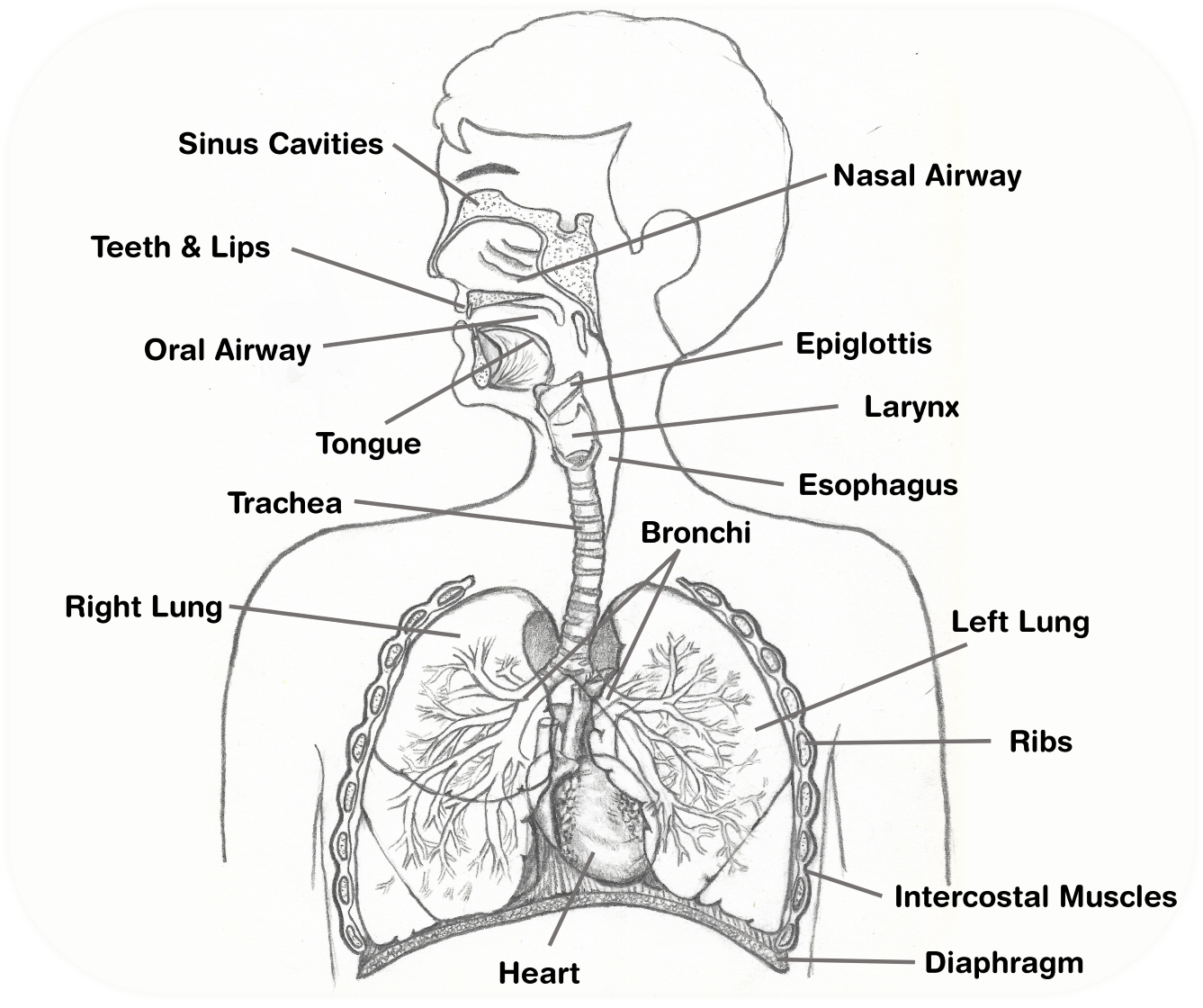
For those that forget anatomy class, the trachea comes down from the neck into the chest and separates into the left and right bronchi, bronchi separate further into bronchioles entering the different lobes and lobe sections, the right lung has 3 lobes and the left lung has 2 lobes. For the emergency provider we are trying to identify quickly if there is a serious problem in any of these areas we need to address before transporting the patient.
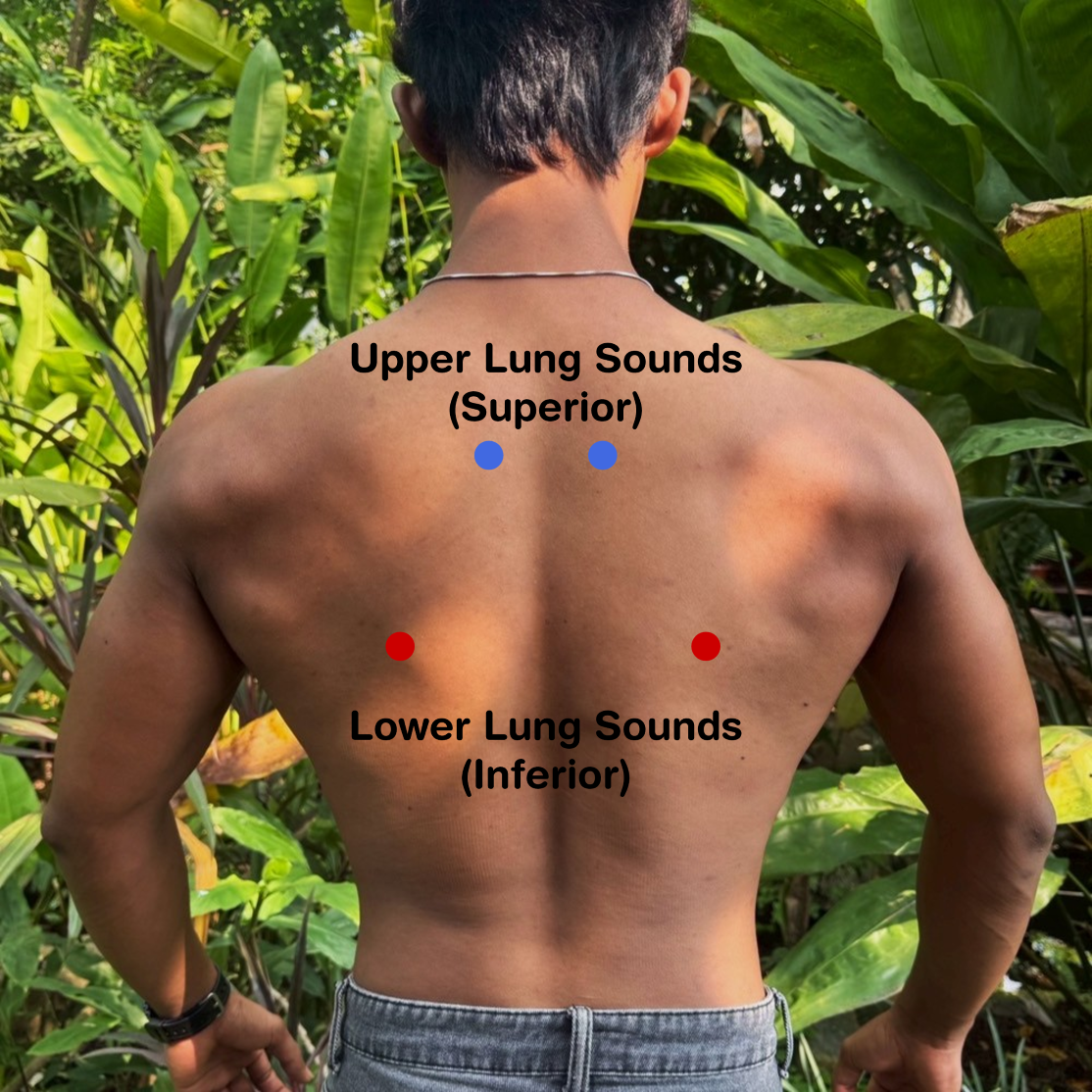
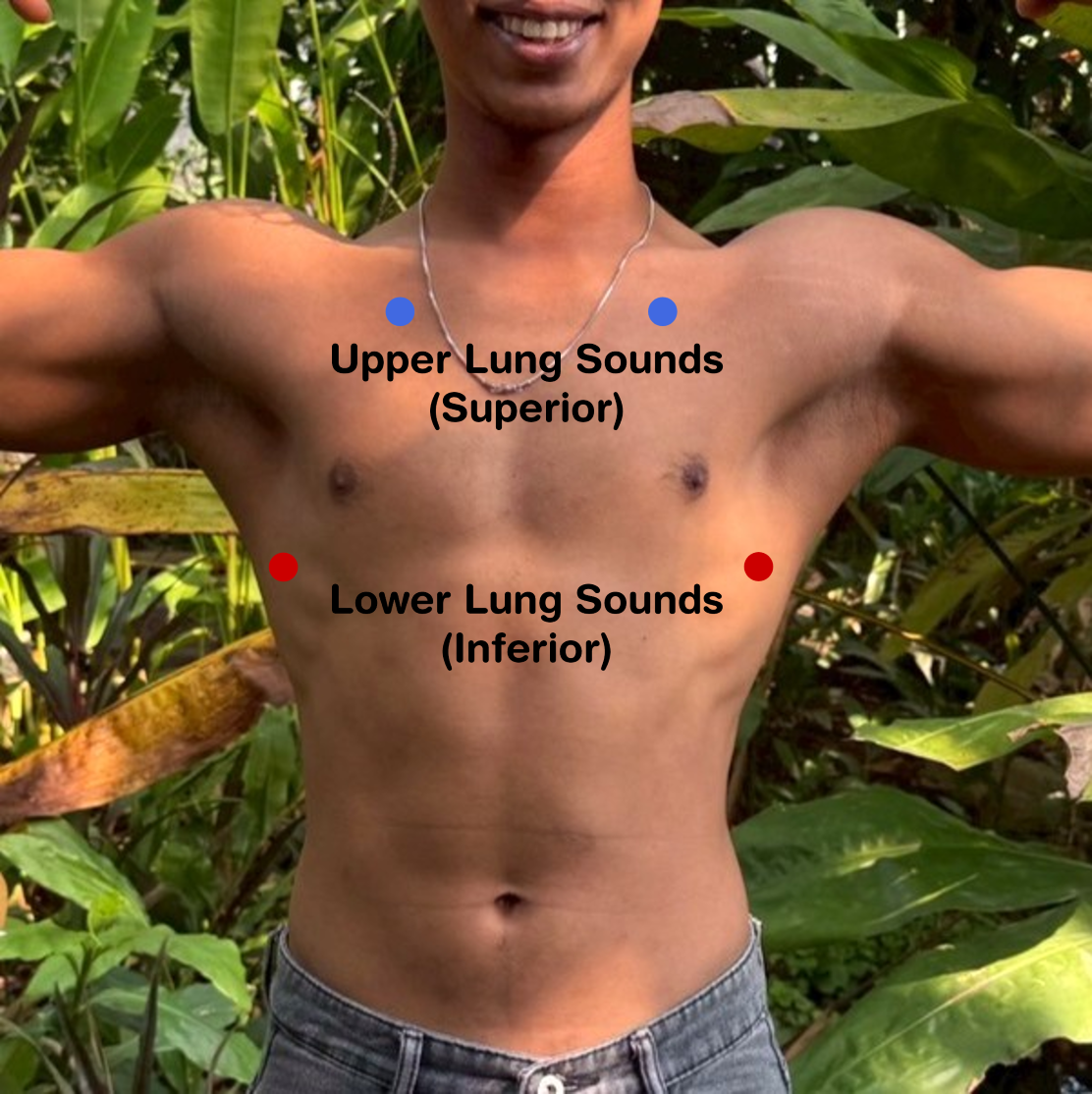
We can quickly listen to the upper and lower lung sounds on both sides. Upper sounds can be heard between the back bone and the scapula. Compare the left to the right. Sometimes we do not always have immediate access to the patient’s back, for example a patient that is backboarded. In these cases, listen to the upper lung sounds from the front under the clavicle. For rapid lower lung sounds listen under the point of the scapulas. If the back is not accessible, listen to lower lung sounds under the arm along the midaxillary line mid-way down the rib cage.
Sounds to listen for include:
| Lung Sounds | Description |
|---|---|
| Normal | There should not be a lot of noise, some tubular inhale sounds in the upper sections and lower pitched huff of exhale especially heard in the lower sections. |
| Crackles | Rice crispy or candy like popping sounds mainly during inhale. Might sound like opening Velcro or hook-loop fasteners. |
| Wheezes and Rhonchi | Whistling more musical sound of air being forced through too small of openings heard in the lung areas. Wheezes are high pitched and rhonchi low pitched. |
| Stridor | Wheezing sound heard only at inhale mainly in the upper airway. |
| Pleural Rub | A rough scraping sound both on inhale and exhale. Think sandpaper sounds. |
| Absent | Nothing! We ain’t found s____! |
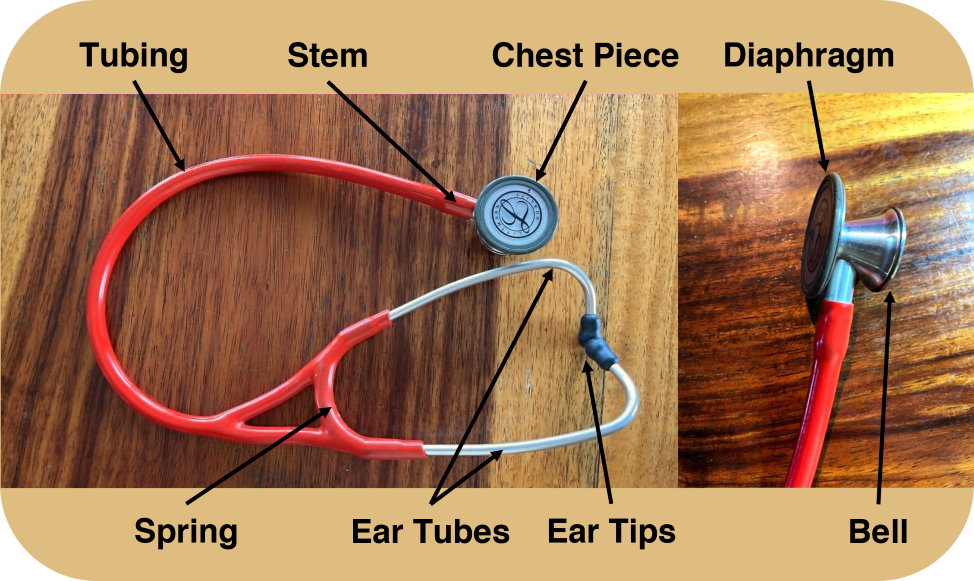
Inform the patient you will be listening to their breathing before shoving your hands up their shirt. Make sure the diaphragm is flipped the correct way with a quick finger tap. Place the diaphragm against the skin and press to listen. Listening often requires 2 hands with a hand pressing the diaphragm and the other hand holding the spring to adjust for better hearing. We can encourage patients to take deep breaths making it easier to hear or you can show off your listening skills by listening to normal shallow breaths.
This is a skill that requires practice, please do not lie about what you do or do not hear.
References
Strong, E. (2023, Dec 10). The Pulmonary Exam / Lung Sounds (Strong Exam). Retrieved from Youtube Strong Medicine: https://www.youtube.com/watch?v=tx8liHLkeW4
Zimmerman B, W. D. (2024, June). Lung Sounds. Retrieved from StatPearls: www.statpearls.com/point-of-care/36567