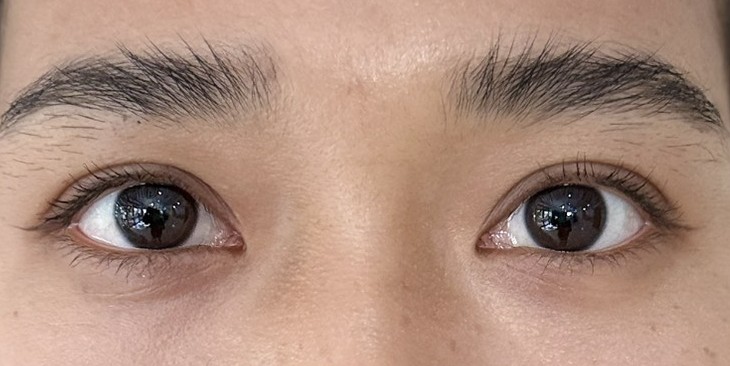
Here we look at the diameter of the patient’s pupils, those black spots in the centers of their eyes, and how the pupils react to light. The pupils are the holes that let light into the eye ball.
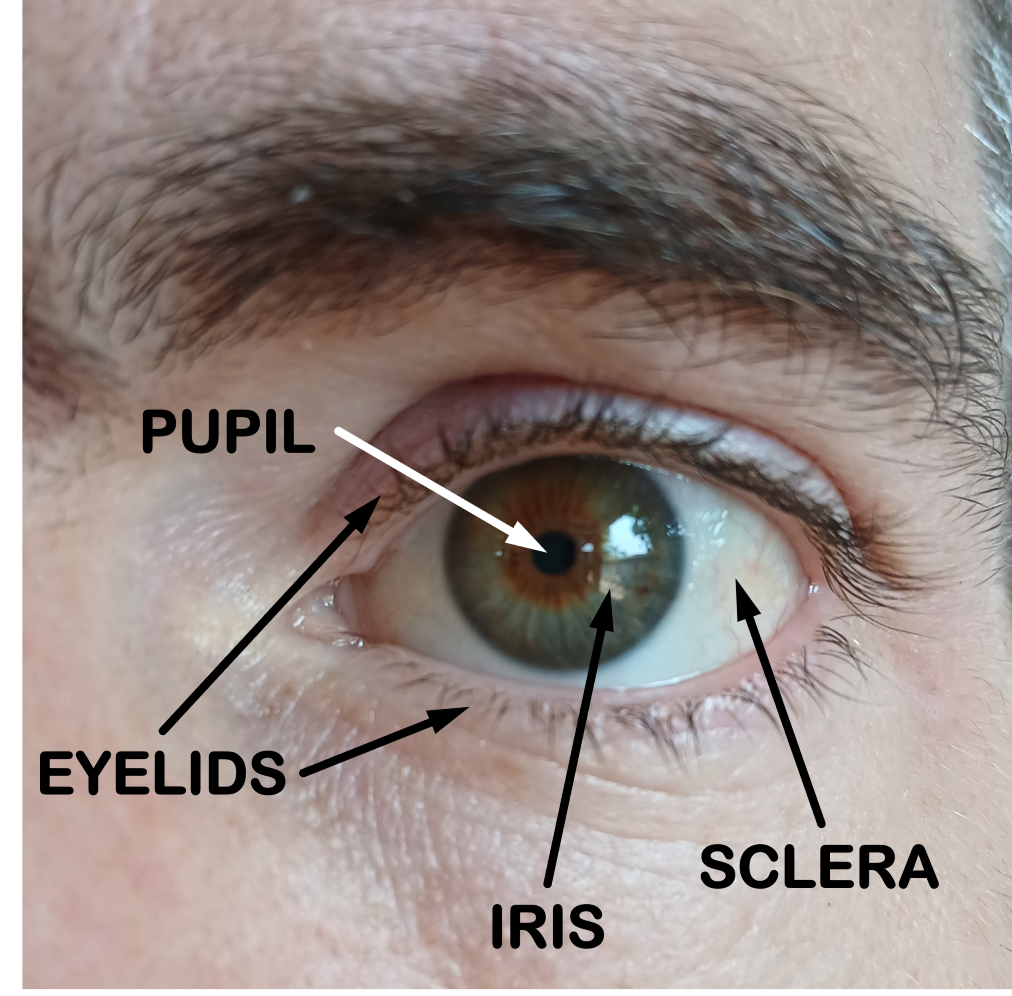
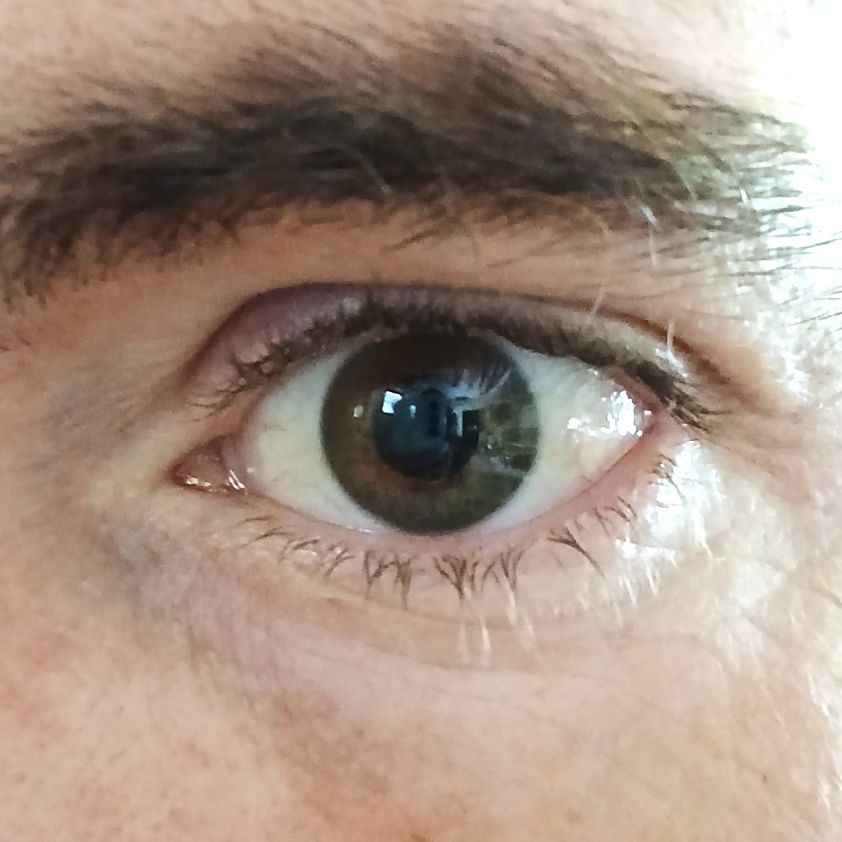
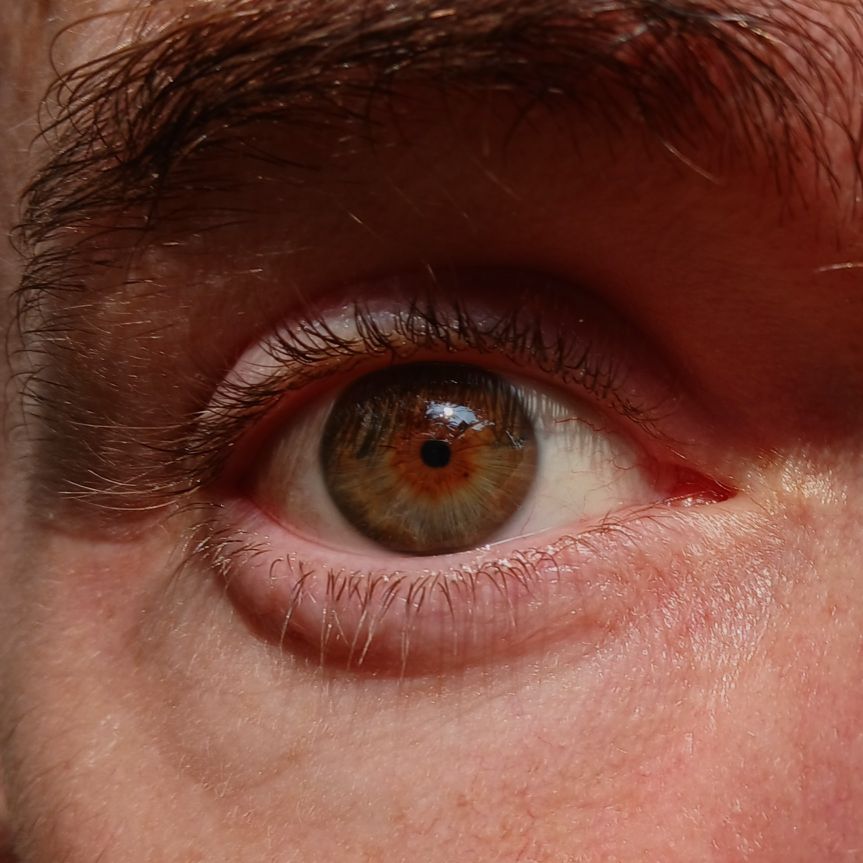
If there is only a little light, like a dark room, then the pupils open up (dilate) to let more light in. If there is a lot of light, like a sunny beach, then the pupils get smaller (constrict) to let less light in. The brain controls this opening and closing. When we check the pupils, we are not just checking the eyes. It is also a check on the brain.
Reactivity
If the patient is indoors, we shine a light on their eye and watch the pupil quickly shrink because of the light. We often use pen lights to check this reactivity. Flashlights can be used, but to avoid painfully shining a flashlight directly into a patient’s eye. There is always that one guy on the team with that super tactical flashlight. Instead of shining directly into their eyes, shine a flashlight to the side of the patient’s face.
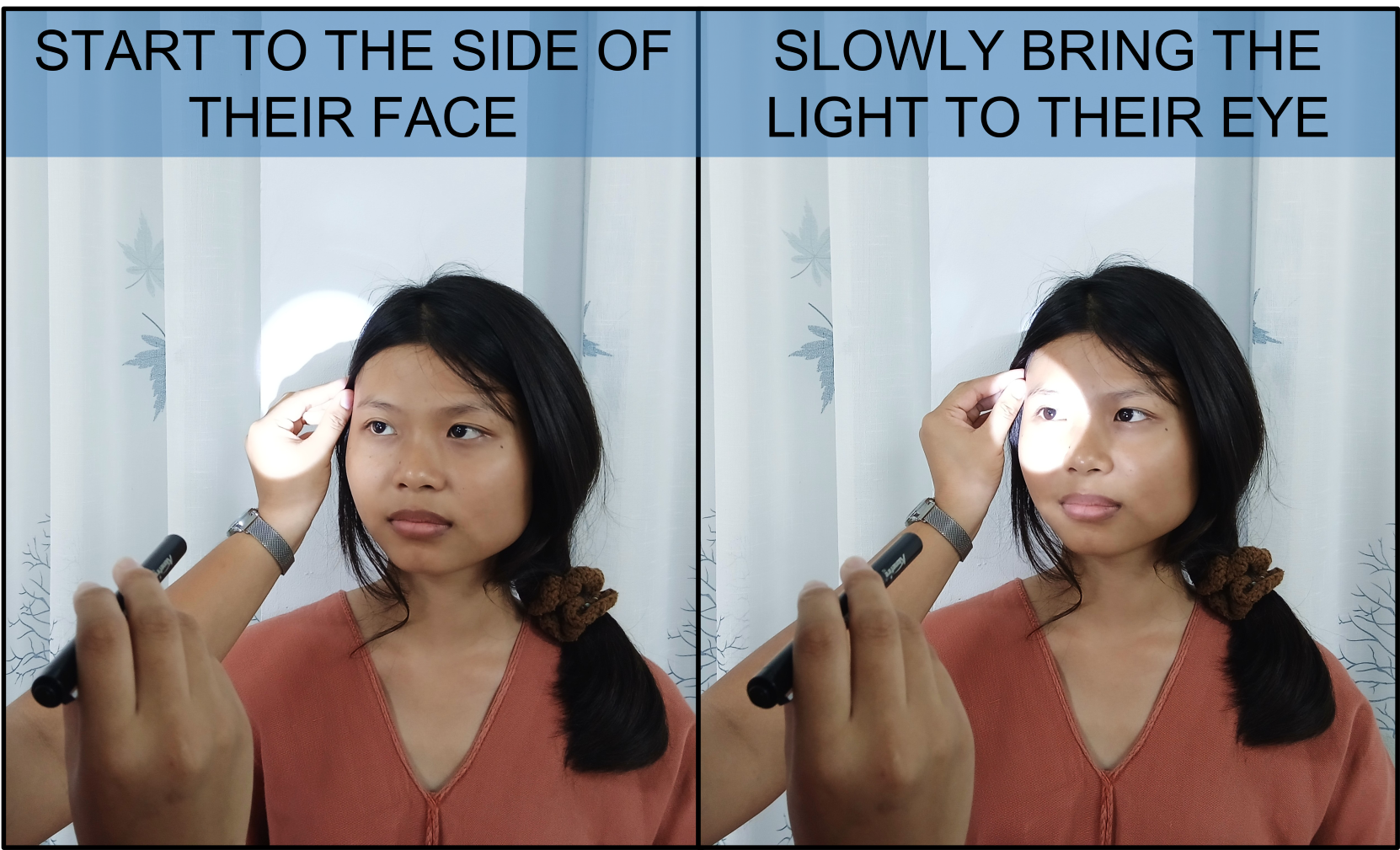
If the patient is outside in sunlight, we can do the opposite taking away the light. Cover the patient’s eye for a few seconds, then uncover the patient’s eye exposing it to light. The pupil should immediately shrink/constrict, so with this technique we must watch closely.
Equal
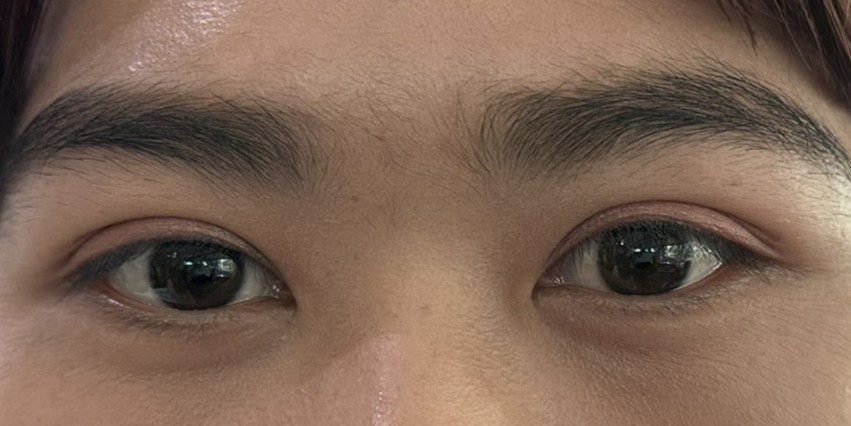
With checking the diameter of the pupils, we make a rough comparison between the left and right eyes. Do the eyes look the same? If there is damage an eye or to one side of the brain it may cause the eyes to have unequal pupil diameters.
If something does not look correct with the pupils ask the patient or their family “what is normal?”. It gets exciting when an eye has no reaction and is not equal to the other eye, only to discover the patient is blind on one side or has a fake eye.
Pupils alone do not tell us much about the patient. Often times abnormal pupils might be caused by drugs, poison, or a stroke. We want a good patient history when discovering abnormal pupils.
References
Limmer, D. O. (2007). Emergency Care 10th Ed. Upper Saddle River, New Jersey: Pearson Education Inc.
McEvoy, D., & Harper, T. (2024). Wilderness Medicine, 15th ed. . Missoula, Montana: Aerie Backcountry Medicine.
Sapra A, M. A. (2023, May 1). Vital Sign Assessment. StatPearls.