To understand water rescue we need to start with understanding the water and the rivers, similar to how understanding anatomy is needed for patient assessment. Learning the terms and definitions listed here is helpful, but nothing replaces experience in the water. My learning about rivers started when I was 9 years old playing in the stream behind my childhood home. Just make sure to be safe when playing in the water.
Water Properties
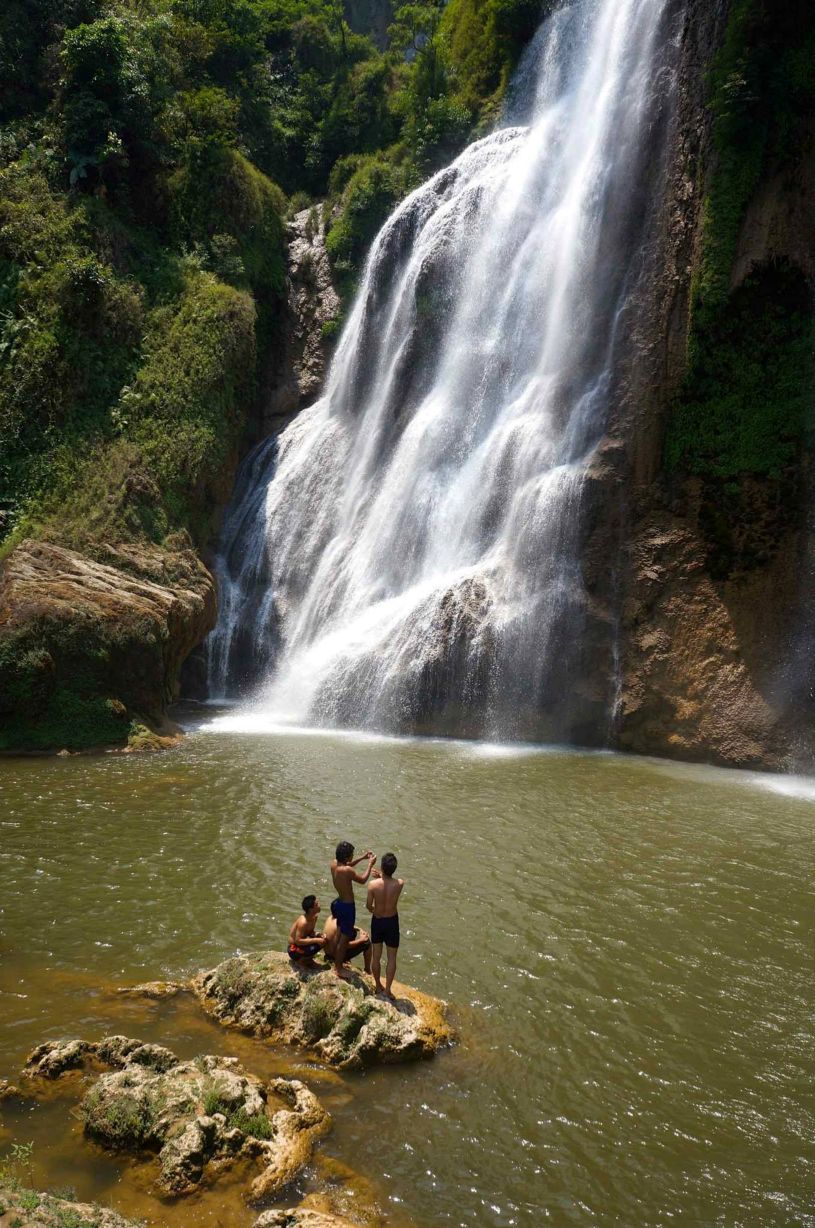
Water is pulled down by gravity, thus water normally flows from the hills or higher ground to the sea or lower ground. Surprise, surprise, water is a liquid, meaning it fits the shape of its container. We should think of the river bed as the container. Water does not compress, meaning the force of falling water is transmitted to other objects. Just because it is water does not mean it will not crush people.
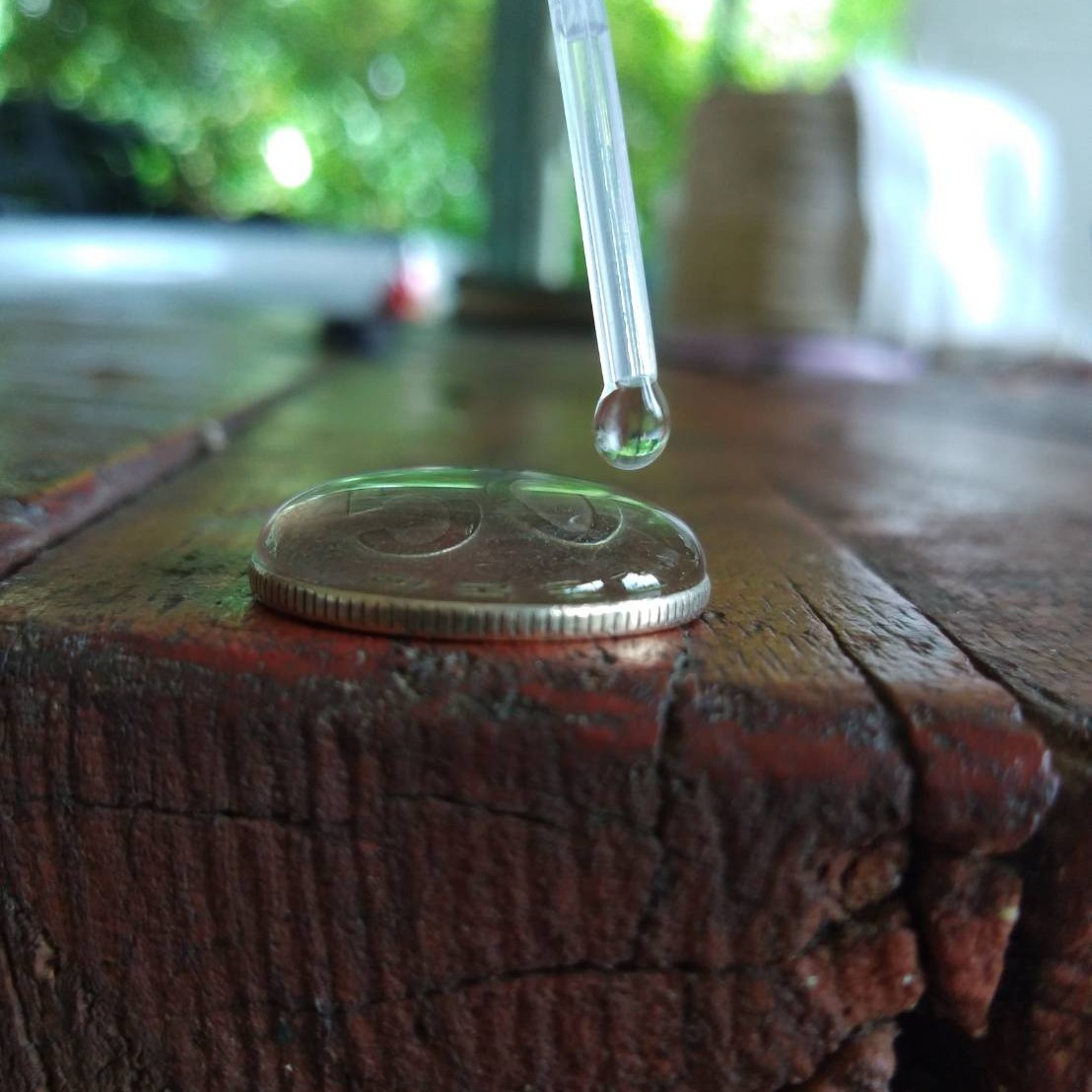
The molecules of water weakly pull at each other with what chemists call a hydrogen bond. This hydrogen bond is the reason water pools together on smooth surfaces; for example a bubble of water collected on a coin.
Force
Looking at a peaceful river, people often misjudge the force of the water. 2 primary things make up the force of a river; speed and surface area.
The speed usually comes from how fast water is pulled down by gravity; measured in m/s or ft/s. The angle or gradient of the river determines much of how fast the water will be. The channel will be moving faster with a straight laminar flow while the rest of the river will have a slower turbulent flow. We often think of frothy white water as indicating fast water, but white water is caused by fast water hitting objects in the river. Watch to see how objects are floating in the water to know how fast the water is moving.
Surface area refers to how much of a person or object is facing the flow of the water. Increased surface in the river equates to increase force of the water pushing. For example, if we consider a normal adult stepping into a river:
- 1 foot into the water ≈ 315 cm2 pushed by water
- Standing knee deep ≈ 0.162 m2 pushed by water
- Standing waist deep ≈ 0.36 m2 pushed by water
- Standing chest deep ≈ 0.522 m2 pushed by water
- Standing neck deep ≈ Why are we calculating this? The water would probably push the person away.
We should generally follow the guideline of only standing up in knee deep water.
River Terminology
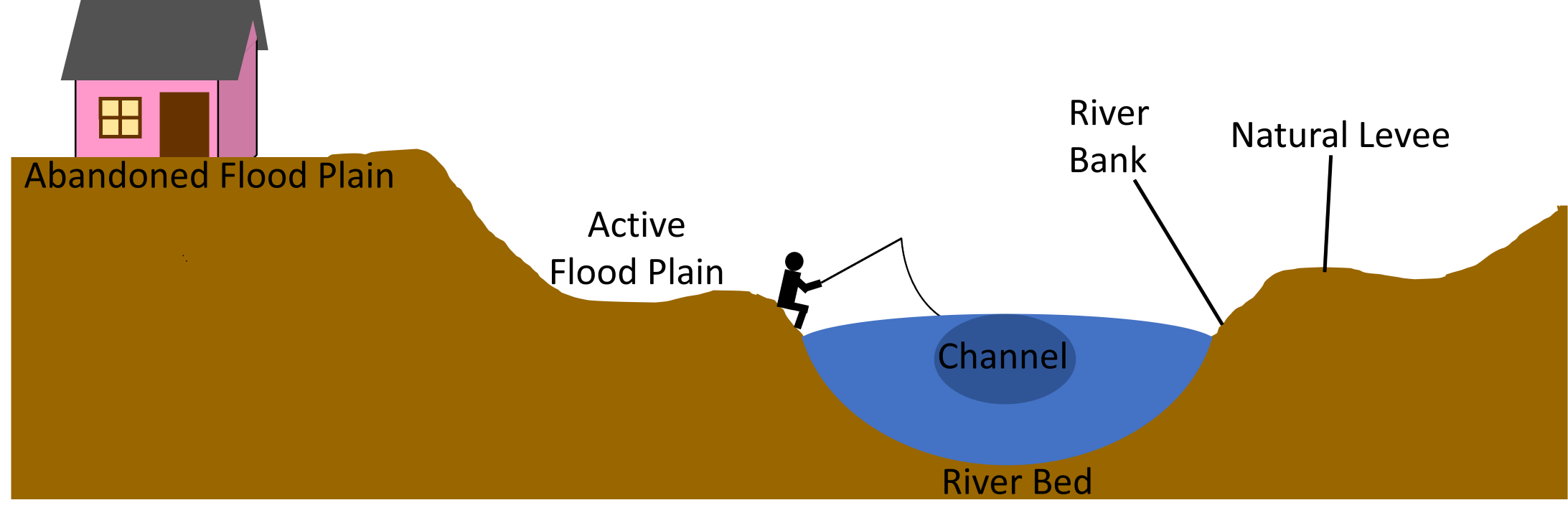
Flow – the amount or volume of water passing a specific location, often m3/s or ft3/s
Channel – the primary path of the river. The river flows fastest in the channel.
River bed – the ground under the river.
River bank – the ground at the edge of the river.
Floodplain – flat ground just above the river bank where water fills during high water times. Floodplains are often made of slit and sediment from previous flood seasons.
Natural levee – extra silt and sediment usually builds up at the edge of the floodplain before sloping down the river bank to the river. Because of these levees, rivers will transition from filling just the river banks to filling the whole floodplain very rapidly.
Active floodplain – the flat ground next to the river bank expected to flood annually.
Abandon floodplain – flat ground beyond the active floodplain that generally does not flood, but will flood during extremely high water, often a 5 - 10 year cycle.
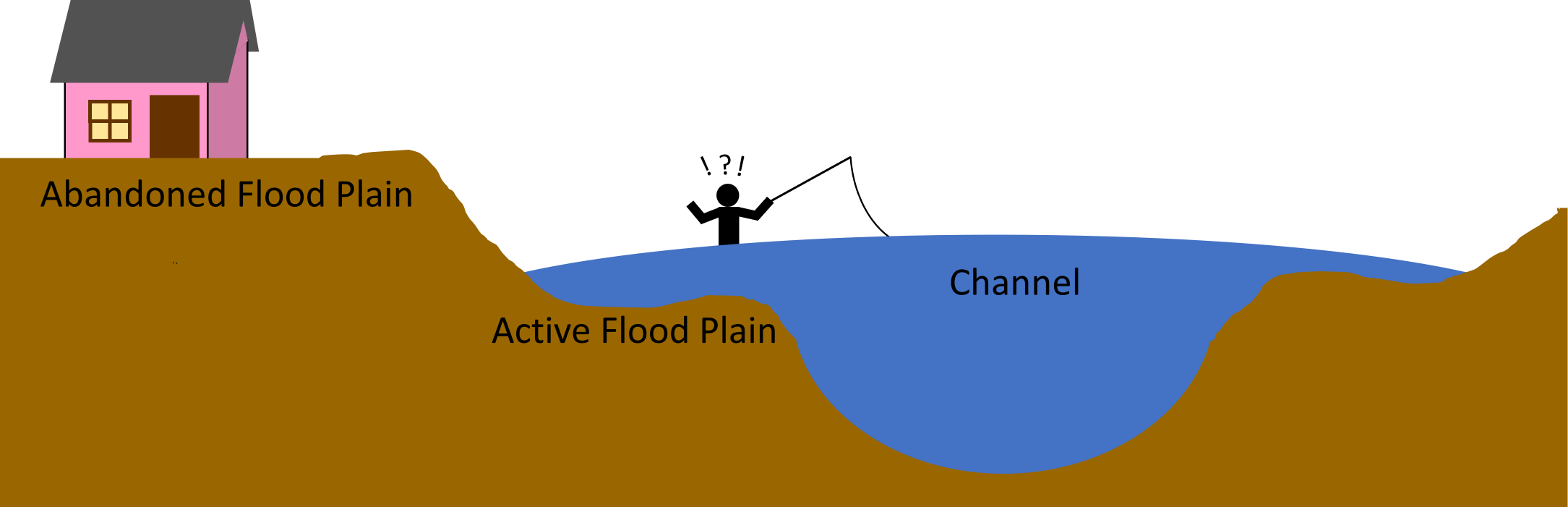
Annual flooding will fill the active floodplains. We should expect this type of high water during heavy rains and dam releases. Note that the depth of the water is not level. Due to the hydrogen bond water at the channel will be at a higher elevation than the elevation of the water on the flood plain. This is why an increase of meters in river depth may only equal an increase in centimeters of depth at the water’s edge.
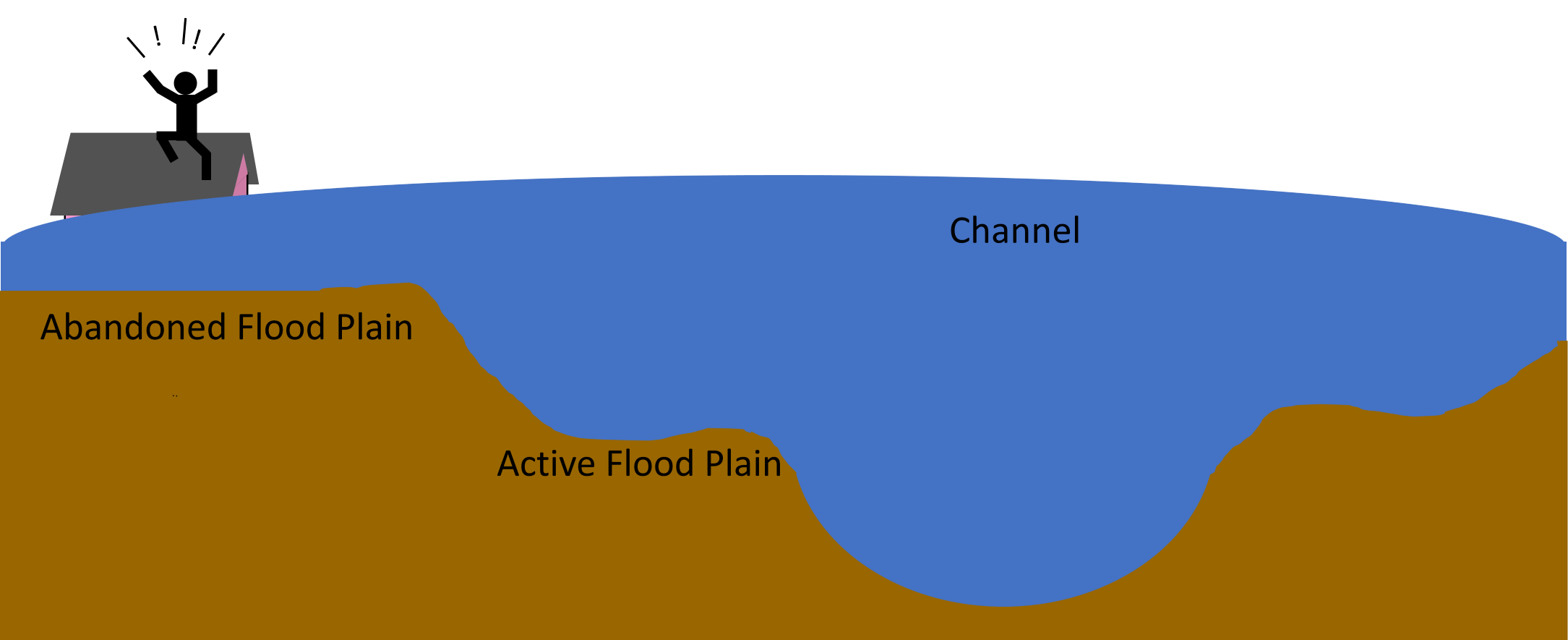
High flooding occurs when the river level reaches all the way to the abandoned flood plain.
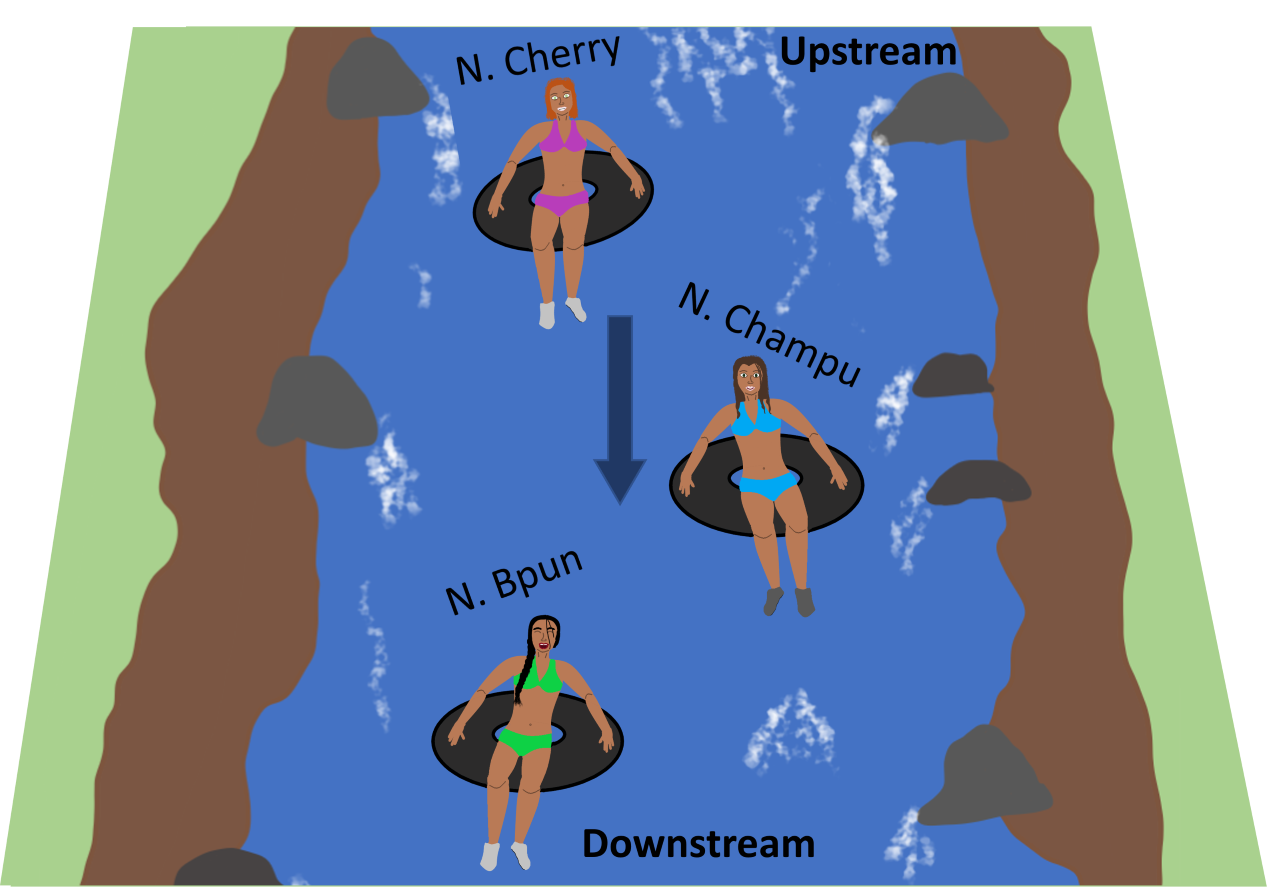
While water resource consultants and hydrologists may use more technical terms, we try to use terms that can be quickly yelled at a rescue scene.
Upstream or Up-river – any part of the river above the location we are referring to. For example, “Nong Cherry is upstream from Nong Champu and Nong Bpun.”
Downstream or Down-river – any part of the river below the location we are referring to. For example, “Nong Bpun is downstream from Nong Champu, and Nong Champu is downstream of Nong Cherry.”
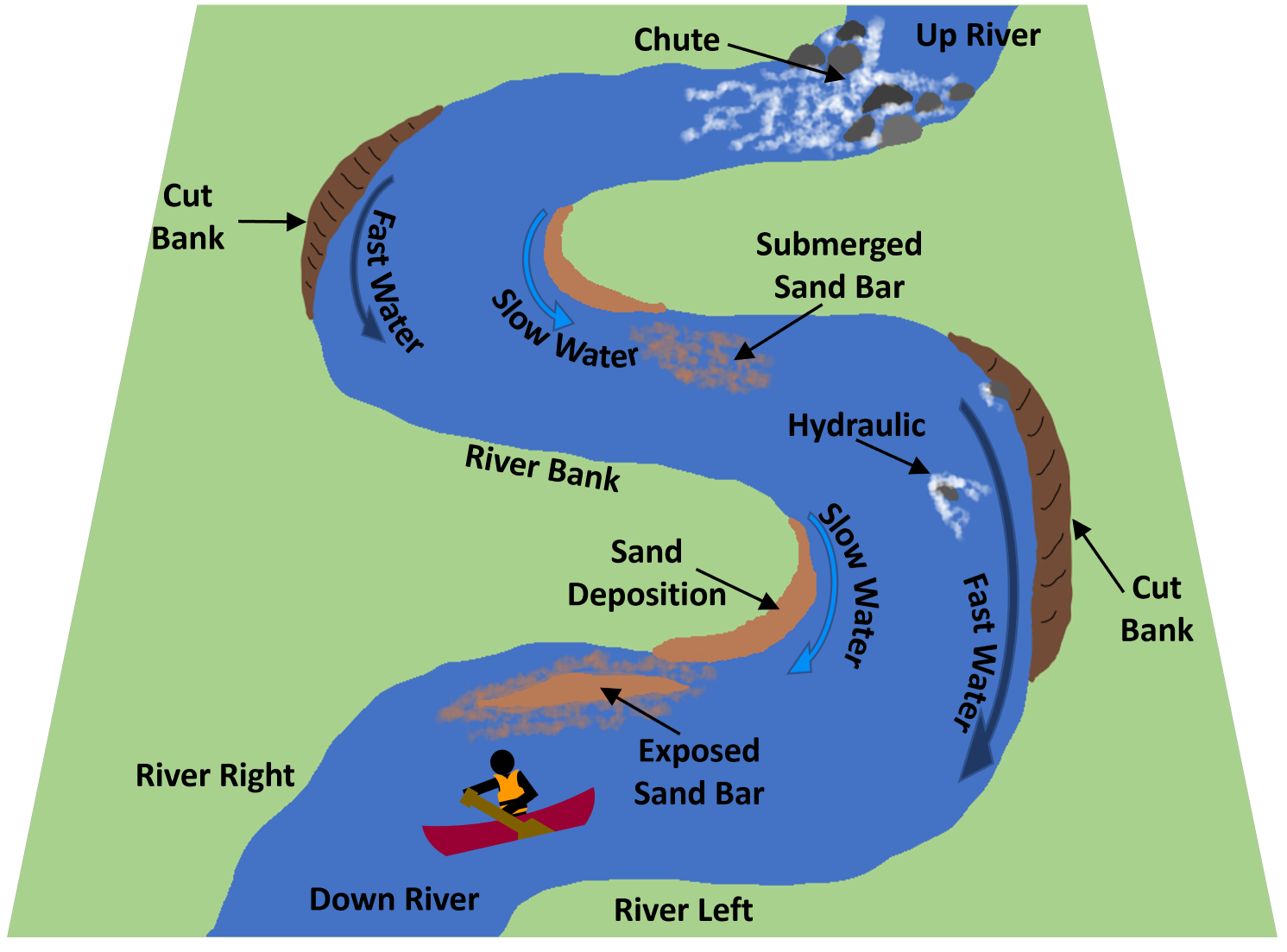
A general standard for left and right requires people to face downstream and have their back to the upstream. Imagine you are floating down the river with your feet in front able to push off of any rock you float into.
River left – this would be to your left side as you float down the river.
River right – this would be to your right side as you float down the river.
We could say “the calm water is on the right (river right).”
Sandbar - piled sediment in or around a river. Submerged sandbars can ground unsuspecting boats.
Hydraulic – water displaced by an obstruction, we often see these as causing white water
Cut bank – steep river banks that have been eroded by the river flow.
Chute – a rush of water between 2 obstructions.
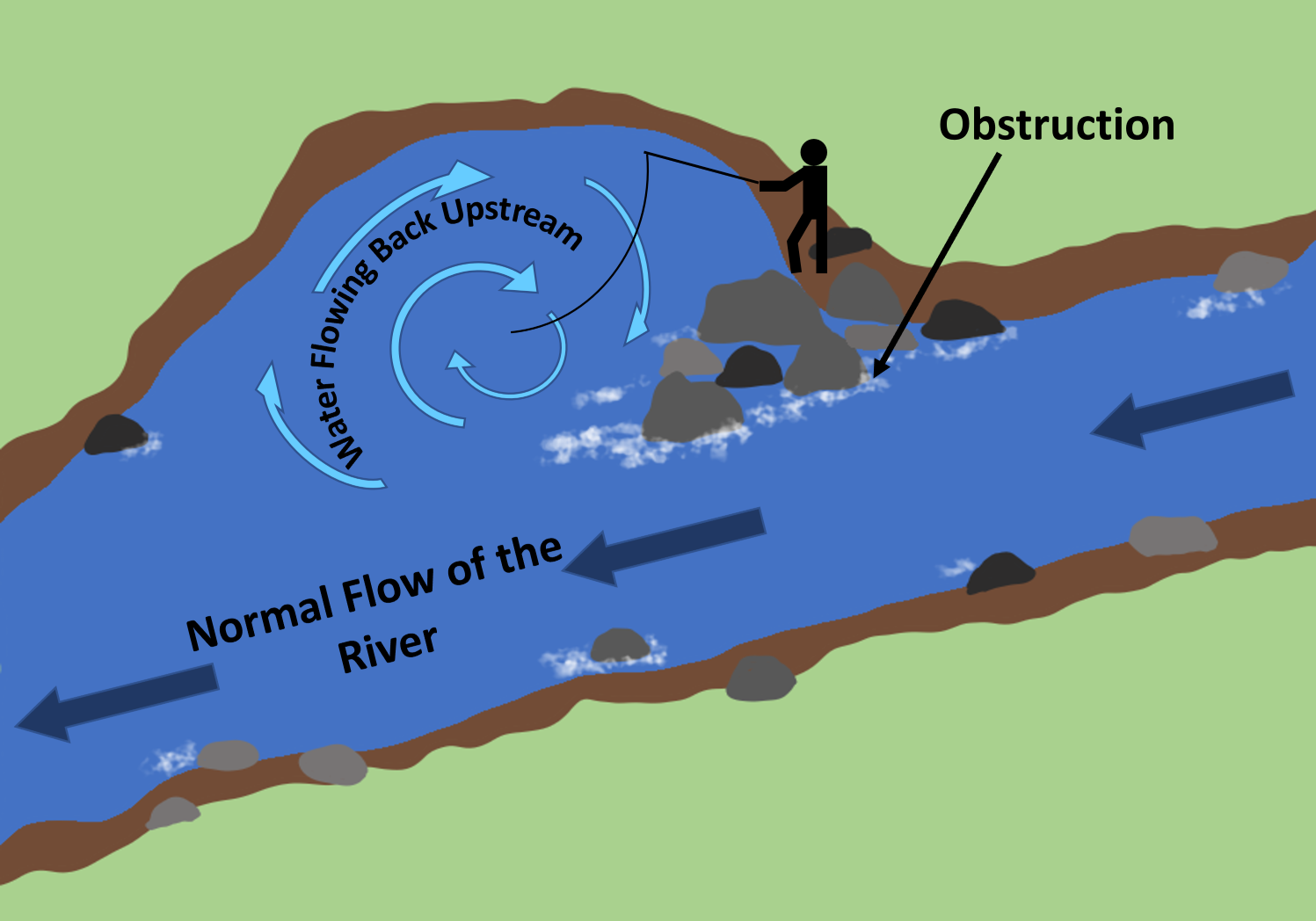
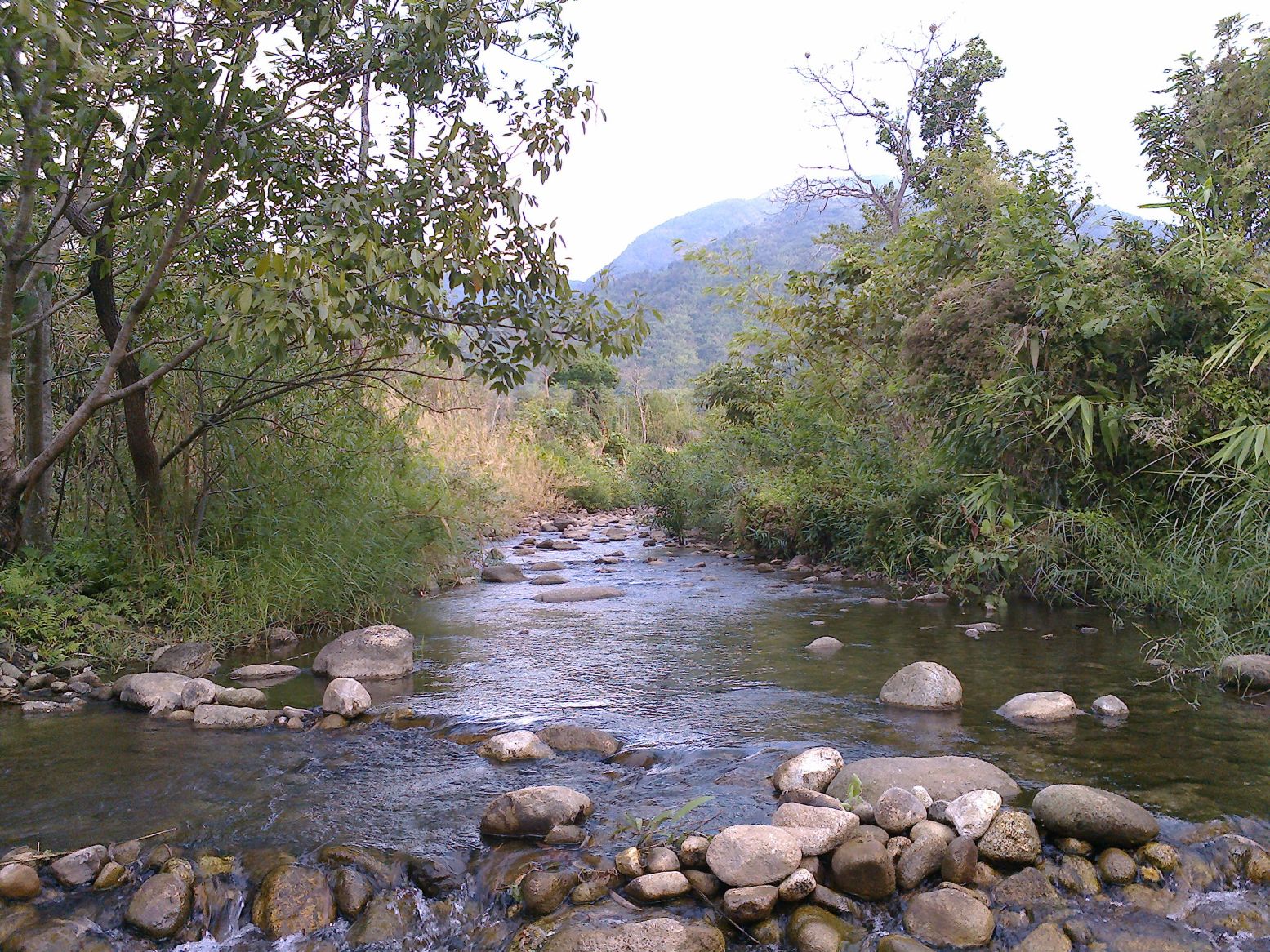
Eddy – water flowing back upstream opposite the normal flow of the river. This is because of a void left by water rushing past an obstruction, then water flows back upstream to fill the void. This results in swirling water on the downstream side of an obstruction.
There can both vertical and horizontal eddies. Vertical eddies move water similar to a front-loading laundry machine, and are usually considered a water hazard. Horizontal eddies spin like a record player, and are generally safe places to hang out and fish.
Cycles
If a river were straight the fastest water, or the channel, would be in the center. But because in nature there are bends to a river, the momentum of the water carries the channel toward the outside of most bends or turns. The slower water on the inside of a river bend usually drops sediment carried in the flow of water. Often steep river banks dug out by the faster water will lead to sandy shallow river banks, and then further downstream will lead to steep banks again. Please note that while this cycle occurs in natural rivers, cement retaining walls built in canals and urban locations have upset the natural flow of water making the flow faster and often more difficult to access victims.
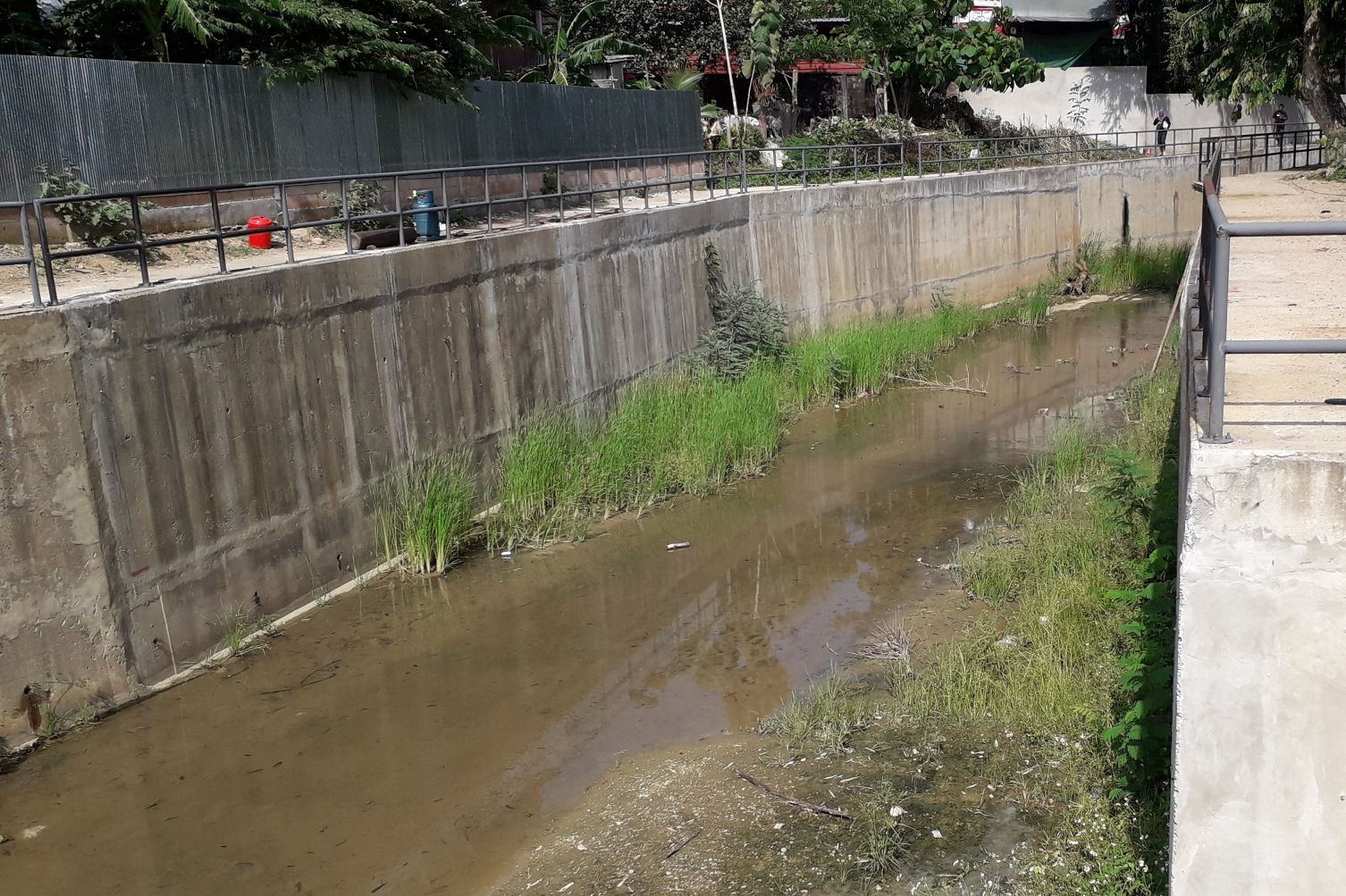
Another cycle in natural rivers is how fast rushing water leads to deep slow water. In most situations if we find ourselves caught in rushing water, instead of fighting against the current, we work to stay afloat and ride the rush to a slower section of the river where it is easier to escape. Many different kinds of cycles happen with water and rivers. Knowing about these cycles helps rescuers respond to water related emergencies, and helps communities prepare for significant water events in their area.
Conclusion
Again, the best way to understand how water and rivers function is to go out and experience water. Just make sure to be safe and go with a friend.
Thank you’s to the following; Salinee for sharing photos from past adventures, Christine Lustik for reviewing this article, and K. Kyu for translating the many confusing terms. Rescue is a team effort.