We will look at several of the major water hazards that should be considered when rescuing people from the water. We mainly think of rivers with these hazards but many of these might be hazards in open water and flooded areas as well. Awareness of our surroundings together with safety conscious thinking are vital parts of safe rescues. As we approach a scene near water, we need to look for hazards, the same as we look for hazards while approaching any emergency scene. For scene safety we should ask "what are the hazards?"
We will refer to some parts of the river when describing water hazards. Knowing about the parts of a river is important, the same as knowing about building construction is important for fighting fires in houses.
Pillow
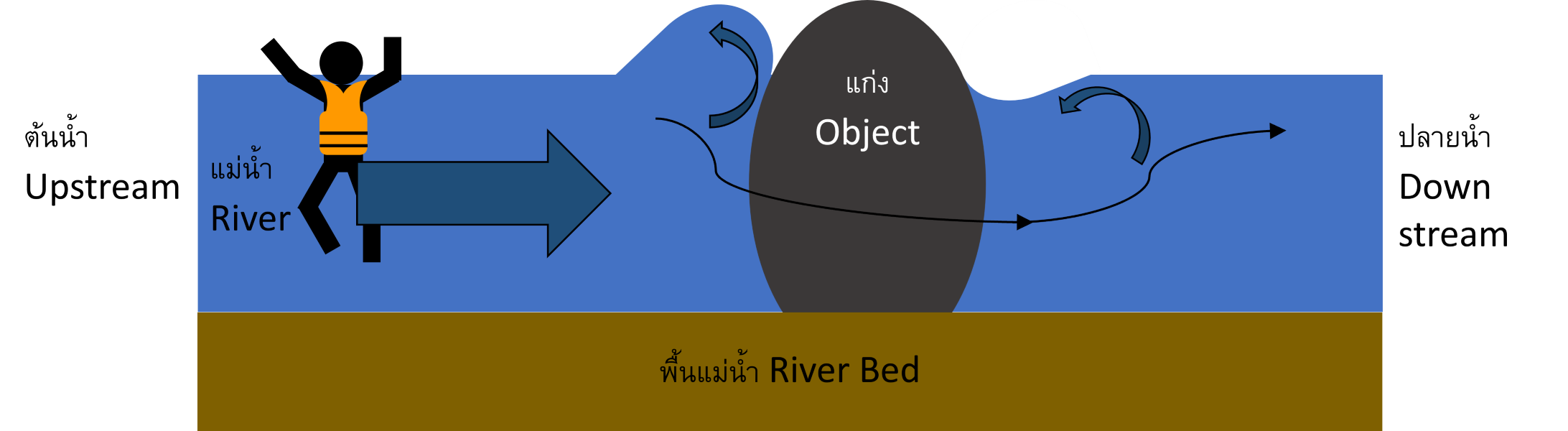
Water pushes into the upstream side of an unmoving object (rock), forming a mound or pillow. The pushing of the water from the upstream side traps floating objects (people and boats) against the side of the rock.
Standing Wave
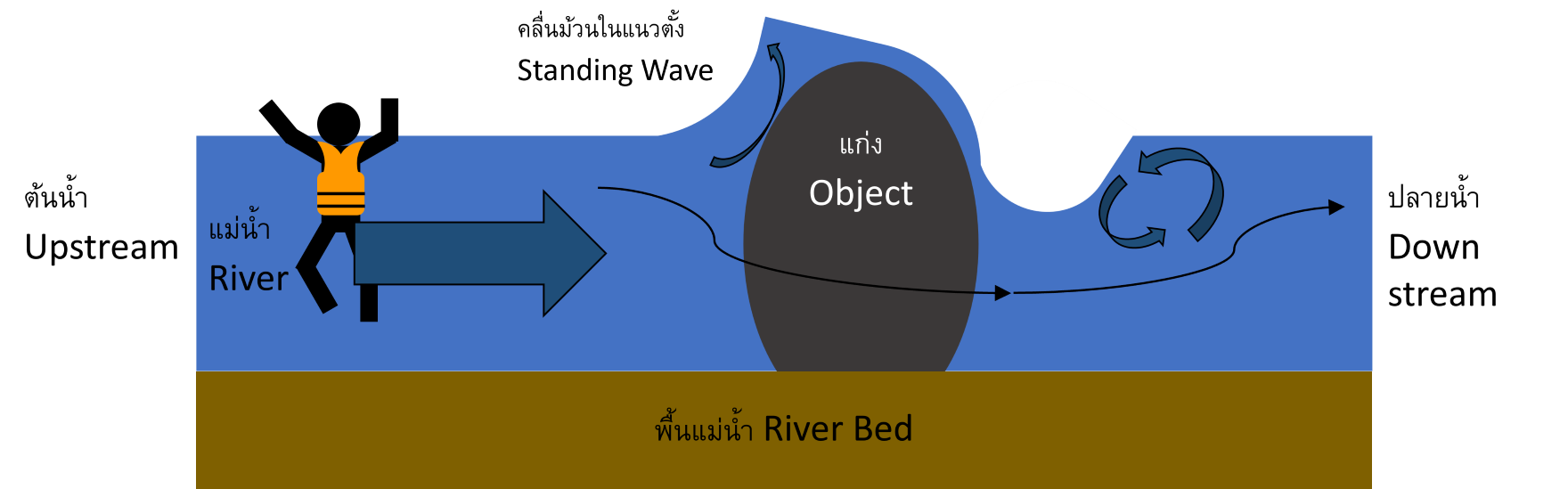
Water covers an unmoving object (rock), water pushed up on the upstream side appears like an wave standing in the middle of the river. The pushing of the water can trap objects (people and boats) against the rock.
Hole
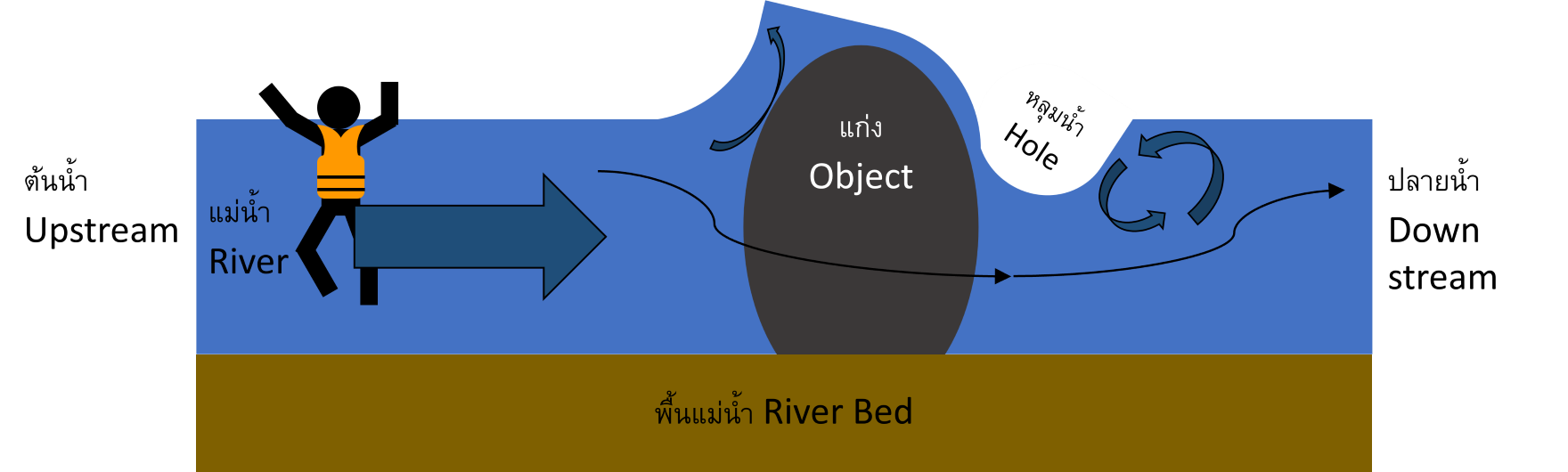
Water rushes past an unmoving object (rock) too fast to fill in the downstream side. As water swirls back upstream to fill the space behind the object/rock, an eddy of downward swirling water is created making it look like there is a hole in the river. Objects (people) can be sucked under water in this eddy and be stuck.
Strainer
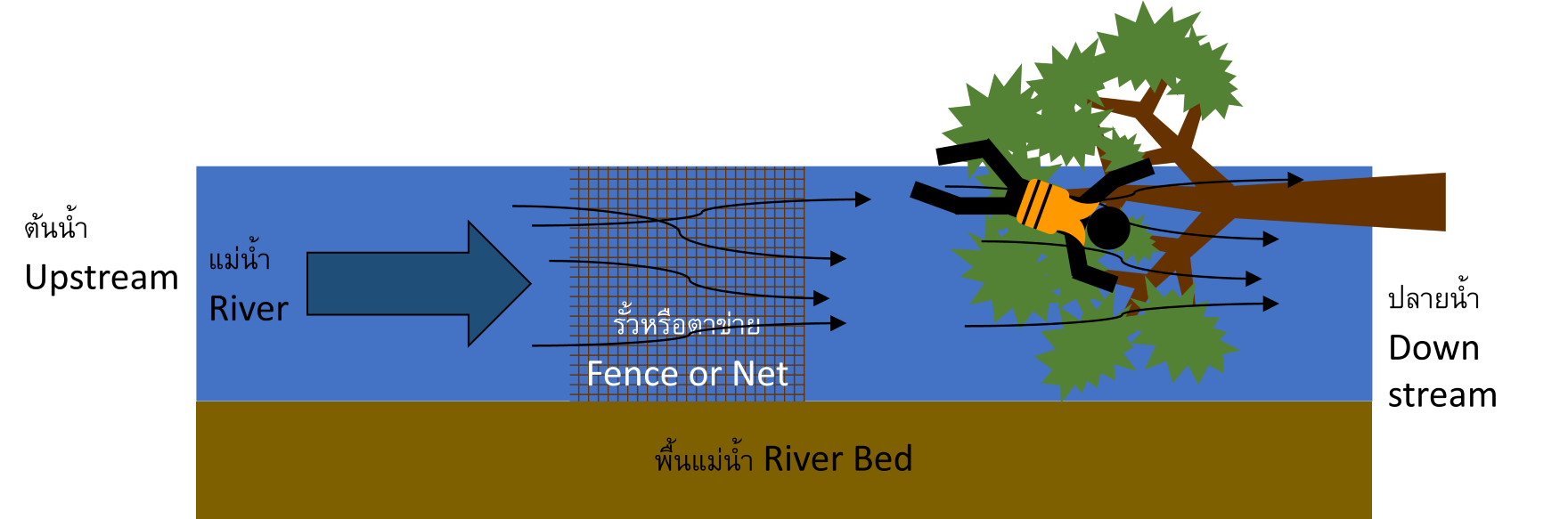
An object that allows water to pass through but catches floating objects (people and boats); could be a tree, vines, fishing net, fence, gates, and more. A tree branch or a bunch of vines may look like a life-line, but in a raging river, branches and vines are more likely to tangle a person up and trap the person under the water.
Drain
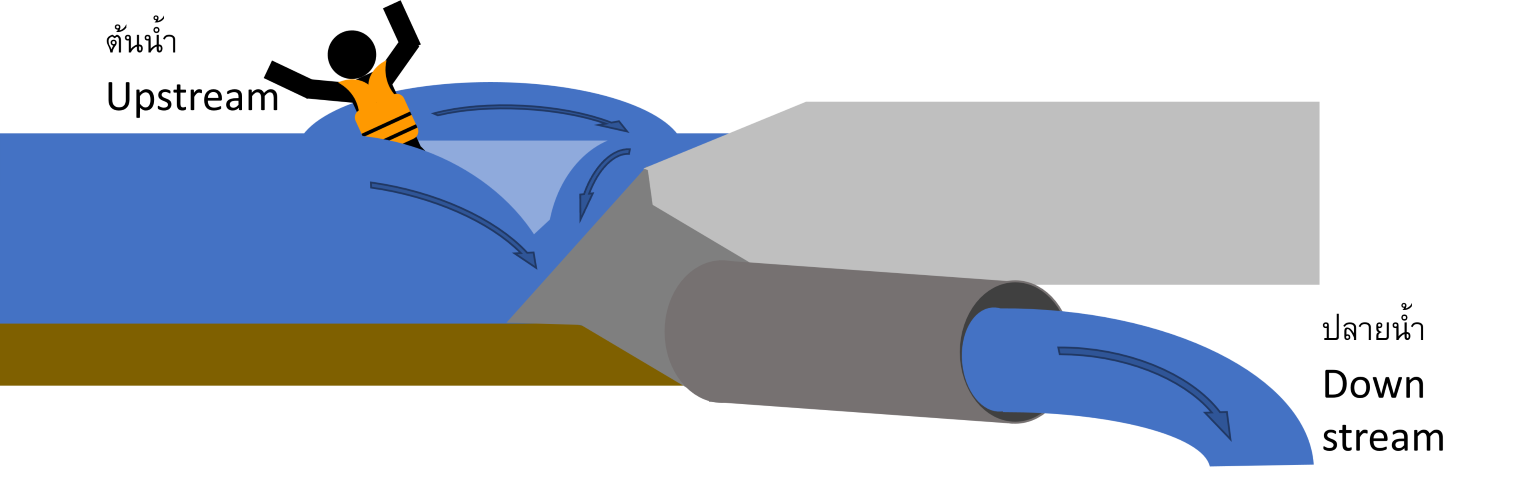
As the name implies, water drains into or down a hole or pipe. Often has a grate or barrier letting water through but not people making it like a strainer. If there is no grate people often get stuck further inside of the drain. Children often drown when playing in water on the upstream side of a drain.
Weir or Low Overhead Dam
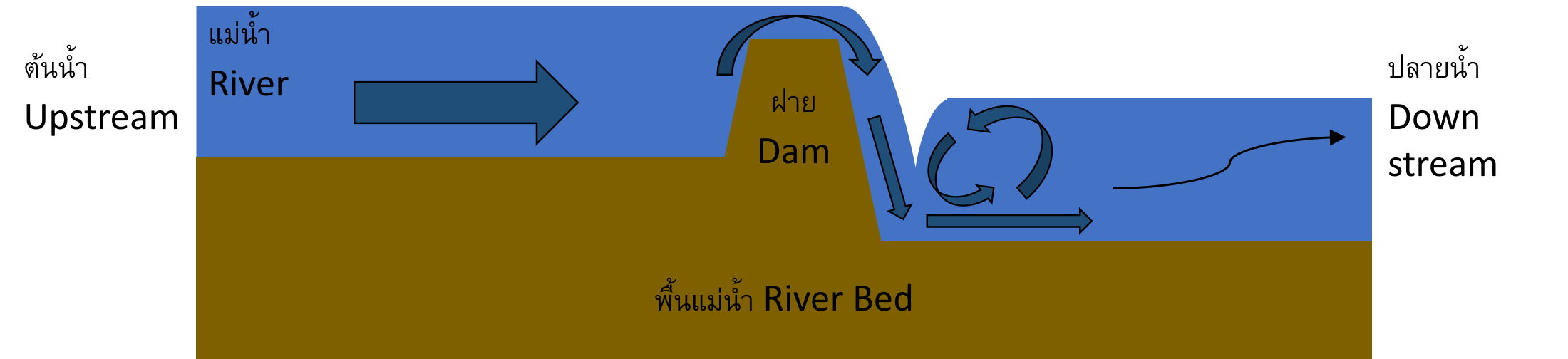
A man-made flow control feature built across the river. Water flows over the dam. The speed of the water pushes it quickly past the face of the dam. Water needs to fill the void near the dam face and flows back upstream. The swirling water makes a dangerous reverse current that traps floating objects (people and boats). This swirling effect becomes similar to a washing machine that exhausts people trying to escape.
Entrapment

A person’s foot or ankle gets stuck in rocks, mud, or objects underwater. The water pushing against the person pushes them under the water while the stuck foot holds the person in place. Think of the person as a lever being pushed by the river. The rule of thumb is to wait until knee depth before standing up.
Water Temperature
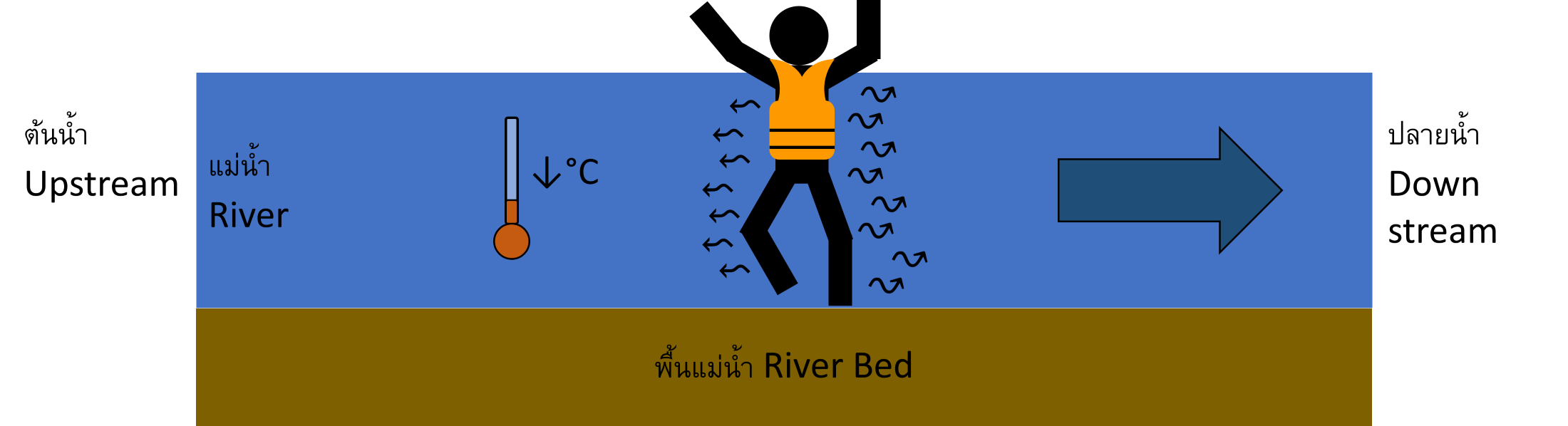
Convection, water carries heat away… out of you. Hypothermia starts when the body reaches 35°C, and at 34°C mental thinking slows down. 30°C moving water can still bring hypothermia on a sunny day.
Weather
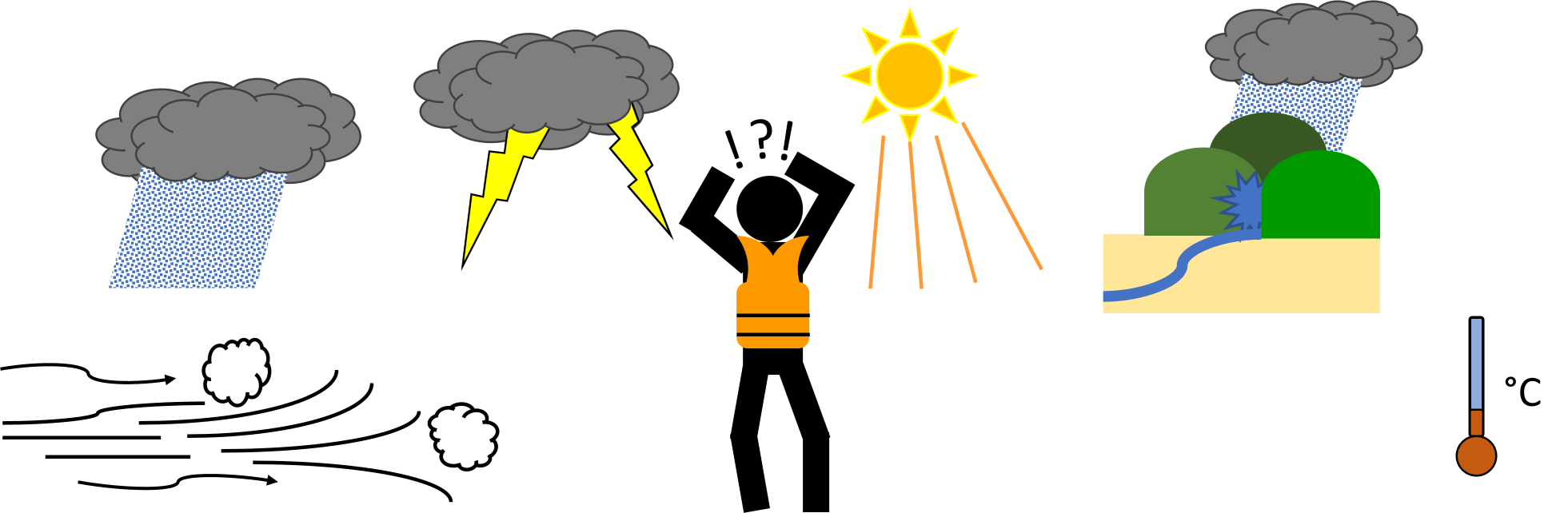
Wind, rain, lighting, heat, cold; weather can add hazards to working at the river. Remember to check the weather upstream, rain upstream might create a rush of water at your location, also called a flash flood.
Visibility
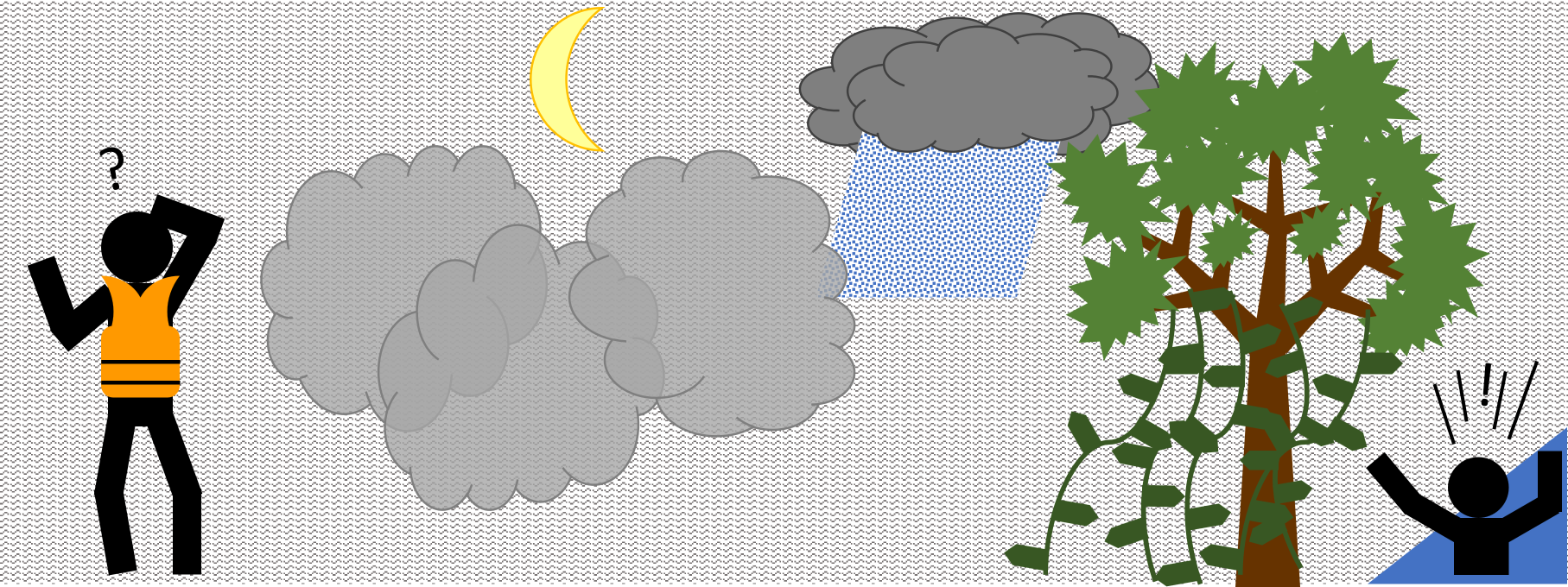
Darkness, fog, rain, and dense plants make it difficult for responders to see the river, flood water, any victims, and maybe even each other. Similar to wildfires, having someone who has seen the terrain in good visibility is necessary for successful operations.
Underwater Objects
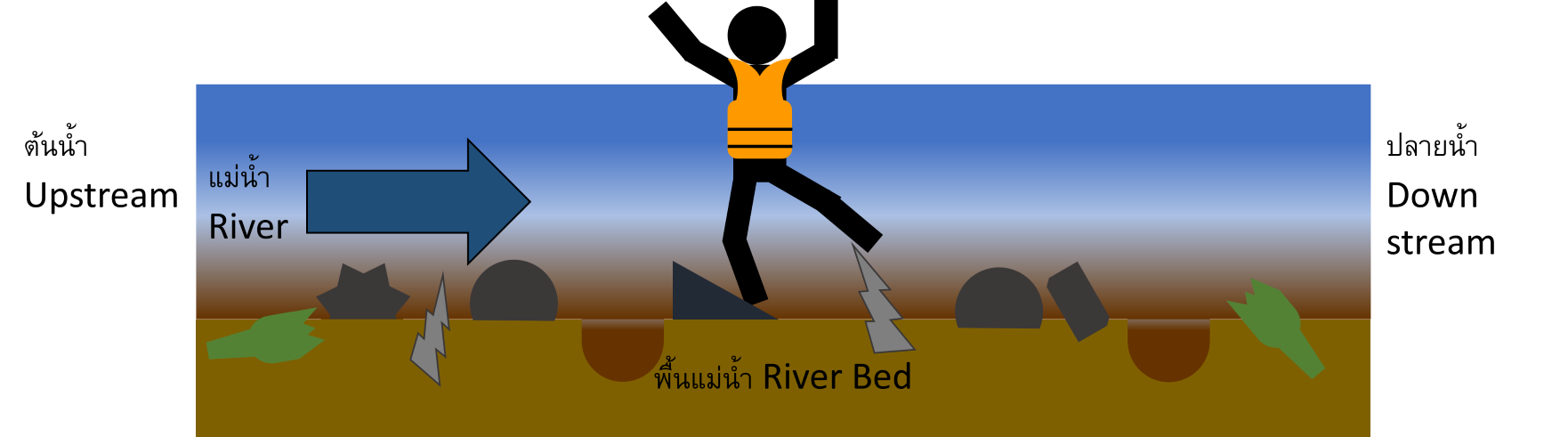
Water distorts what you can see in the water. Muddy water makes it impossible to see what is under the water. Hazards include glass, sharp metal, sharp sticks, sharp bamboo, sharp things that hurt you. Do not forget holes and rocks that might injure or trap your feet, legs, and ankles.
Floating Debris
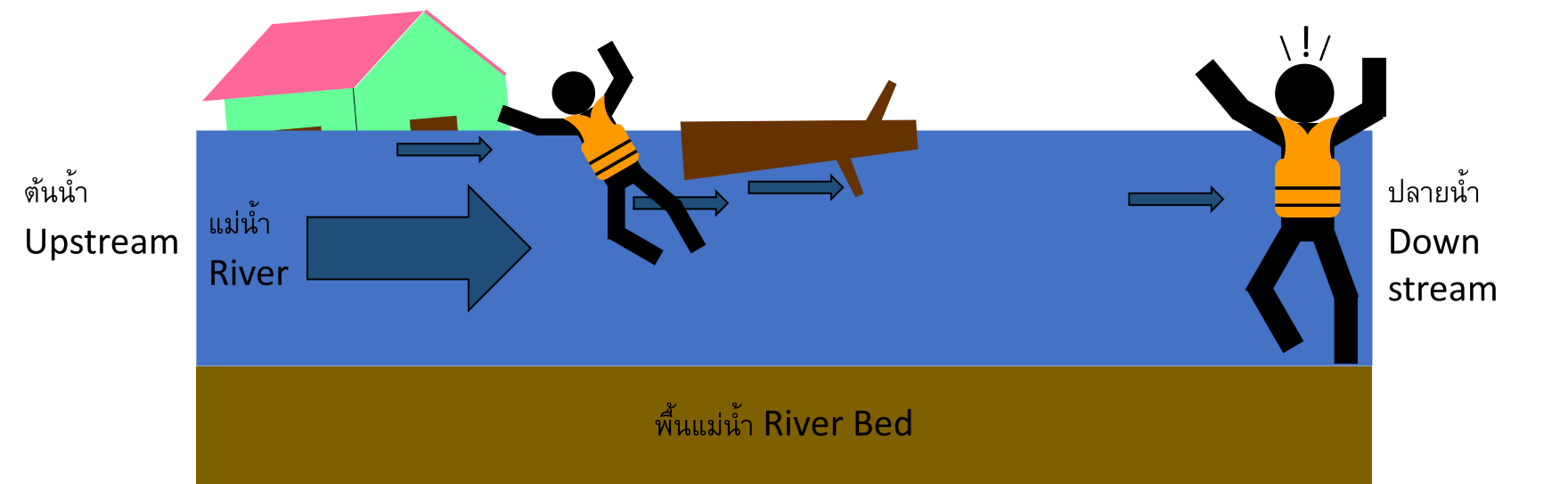
Floods and strong currents will carry objects that can pin, crush, injure a person. When choosing an object to throw to a drowning person think about what will happen if that floating object hits a person.
These are just 11 major hazards we might encounter during a water rescue. Other common hazards include;
- Tides – easy to lose track of time and forget
- Entry and exit – easy in does not mean easy out
- Pollution – sewage or chemicals are in the flood water, assume all flood water is unsafe to drink and contaminates wounds
- Electricity – floods do not automatically turn off the power, things may still be electrified
- Animals – the snakes, crocodiles, and other animals may have been displaced by the flood as well
As we spot the hazards, we can find work-arounds to avoid the hazards and continue with our rescue. Next blog we will consider how rescuers should work around water now that they know what the hazards are.
Thank you to Christine Lustik with editorial advice. Thank you to Patcharanis Pedtae and Chaiwat Maneematcha for help translating.
References
Phillips, K. (2012). National Park Service Swift Water Rescue Manual. United States Department of the Interior, National Park Service.
Royal National Lifeboat Institution. (2017). Flood Rescue Manual. Dorset, England: Royal National Lifeboat Institution.