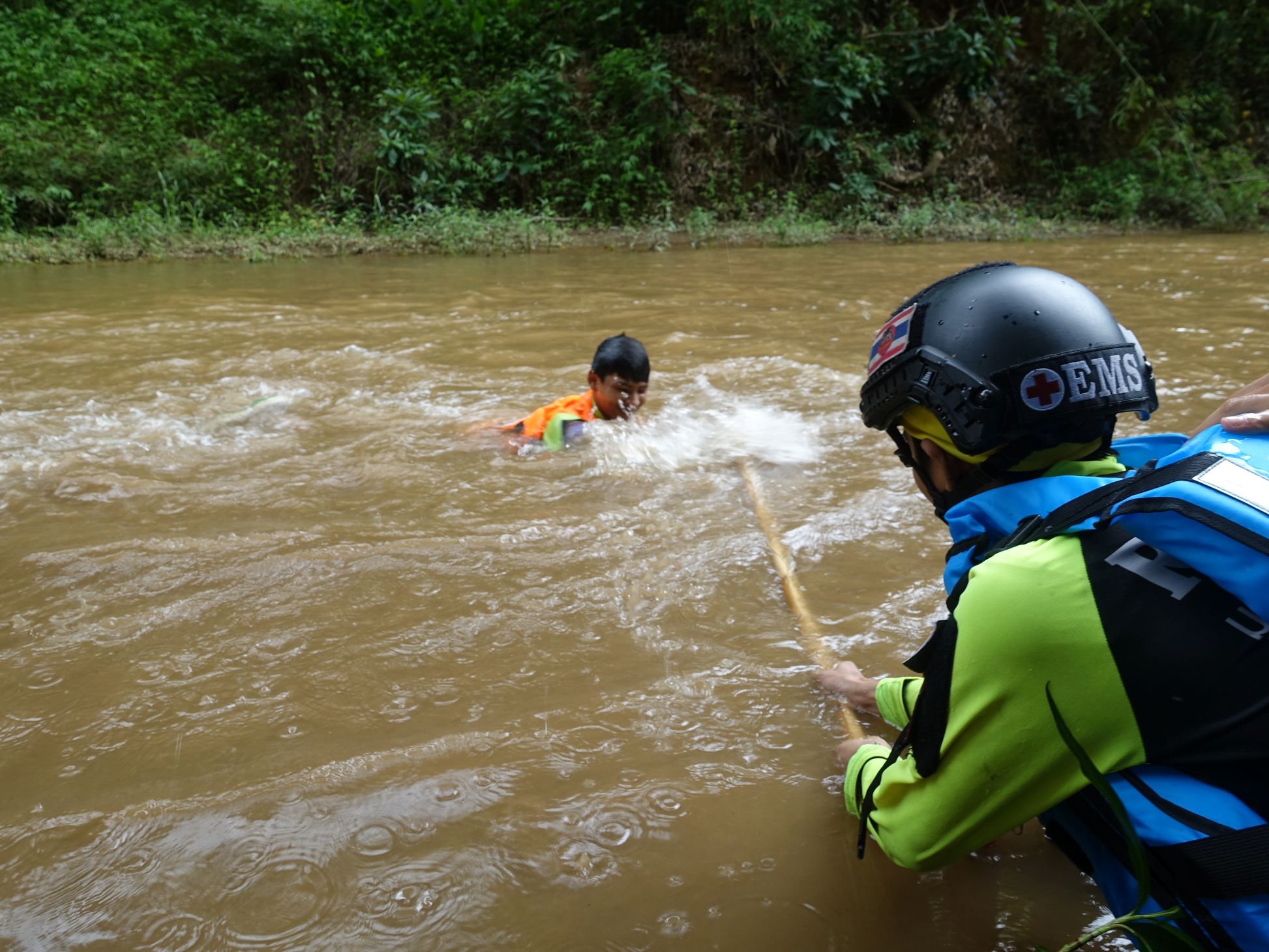
Continuing with water rescue, we will now discuss simple methods to rescue victims in water. Just like medical incidents where we start with the basics and supplement basic patient care with advanced medical care, with water rescue we start with the simple rescue methods first and supplement with the technical rescue methods. The order of rescue methods is;
yell → reach → throw → row → go → helo (helicopter)
Some regions will follow an order of; yell → reach → throw → helo → row → go
Rescue starts with being aware of our surroundings. When we notice someone in trouble, we check by yelling “are you in trouble?” and signal with our hands to ask if “ok?”. Tap the top of your head with either your palm or fist to signal “ok”.
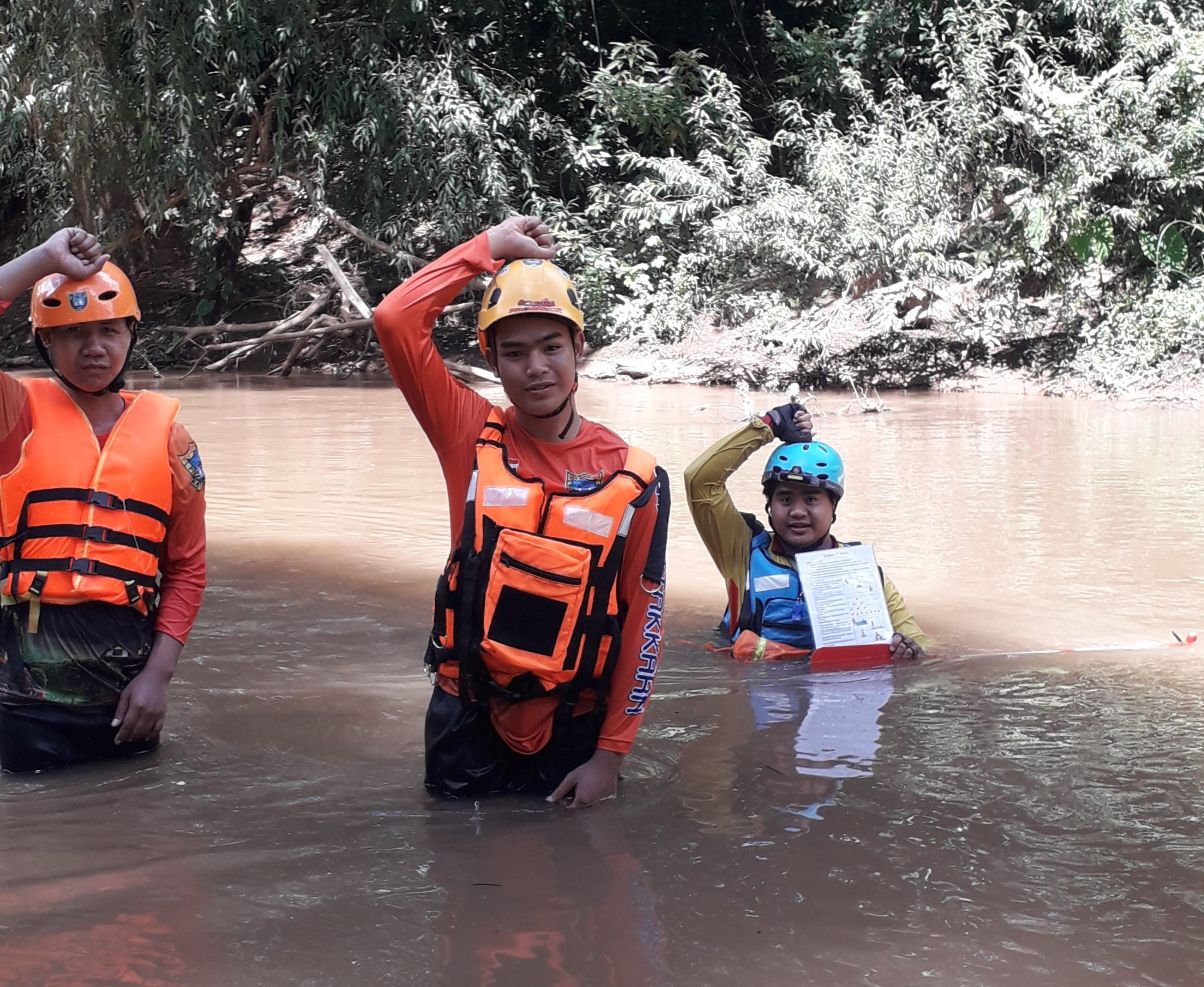
Consider 4 possible options for people in trouble;
- People playing - they will usually will respond that they are ok.
- Distressed victims - they are in trouble, can yell or wave their arms. This is when the hand wave signal for “need help” can still be made.
- Drowning victims – not able to swim any more, usually they can not respond, their body is vertical as they try to stand, arms out to the sides, mostly under water, trying to push up hardly coming above the surface, their airway up as high as they can get it.
- Drowned victim or Passive drowning – stopped moving, under the water or floating.
Realize that people can go from normal to drowning in seconds. I am not recommending you be a mess of anxiety around water, rather be aware and in the moment while at the water.
We will make the assumption that you will work together with other people at the scene, whether you are enjoying the water with friends or family, or responding to an incident as an emergency responder. We will refer to other people working together with you as your team.
Yell
- Call for help, if it has not been called already. In Thailand call 1669, in the United States call 911.
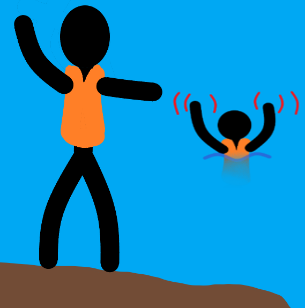
- If the victim is struggling to stay above the water tell them to float “Float!” “Put your head back!” “Ears under the water and float!!”
If the victim is close to safety and still swimming, encourage them to swim to safety “Swim to me!” “Keep kicking!”
Choosing what to yell is situationally dependent, in most cases defensive floating has better outcomes.
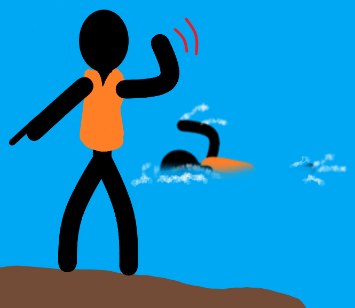
- Point positive, point to safety, where the victims should swim. If we point at hazards they will go into the hazards.
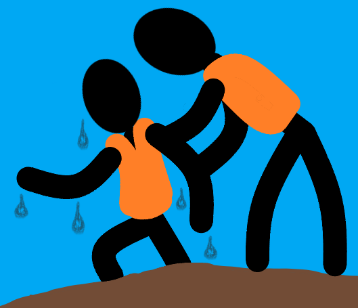
- We then help the victims stand up in knee deep water.

Be proactive! We encourage the victim to aid in their own rescue, do not count on it. While yelling to the victim, be preparing other rescue methods.
Reach
While part of your team is yelling to the victim, look for options to reach the victim.
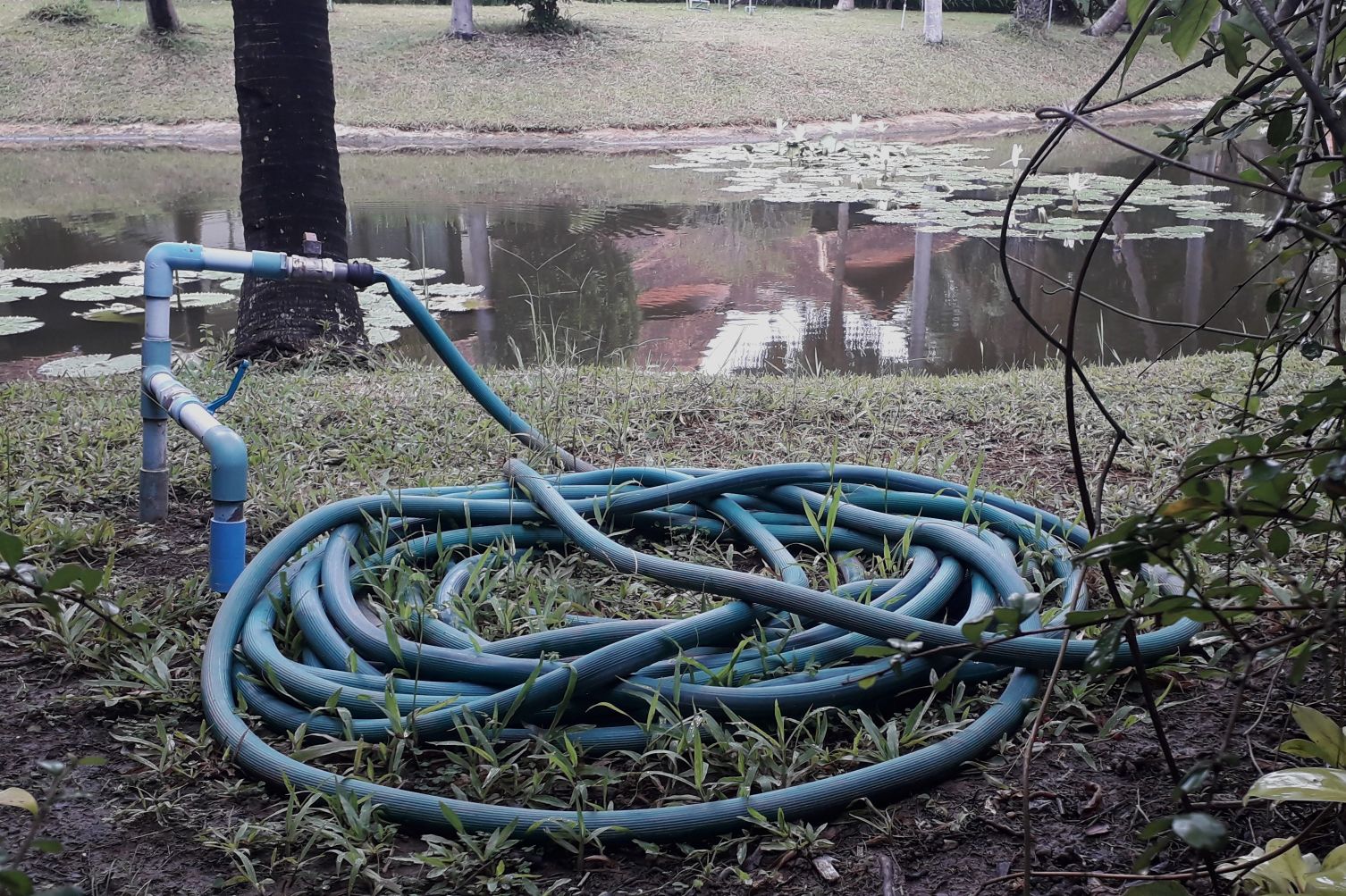
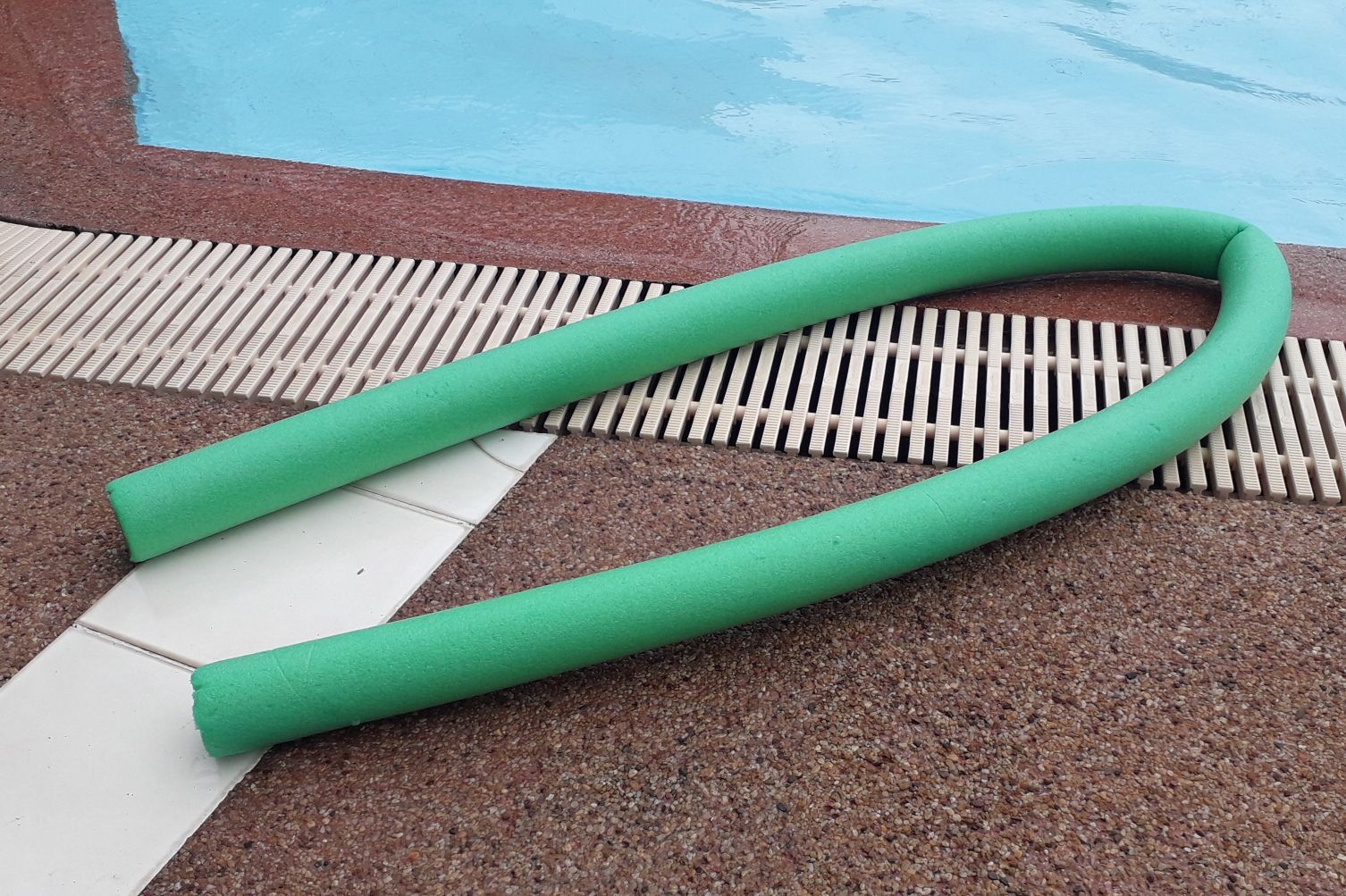
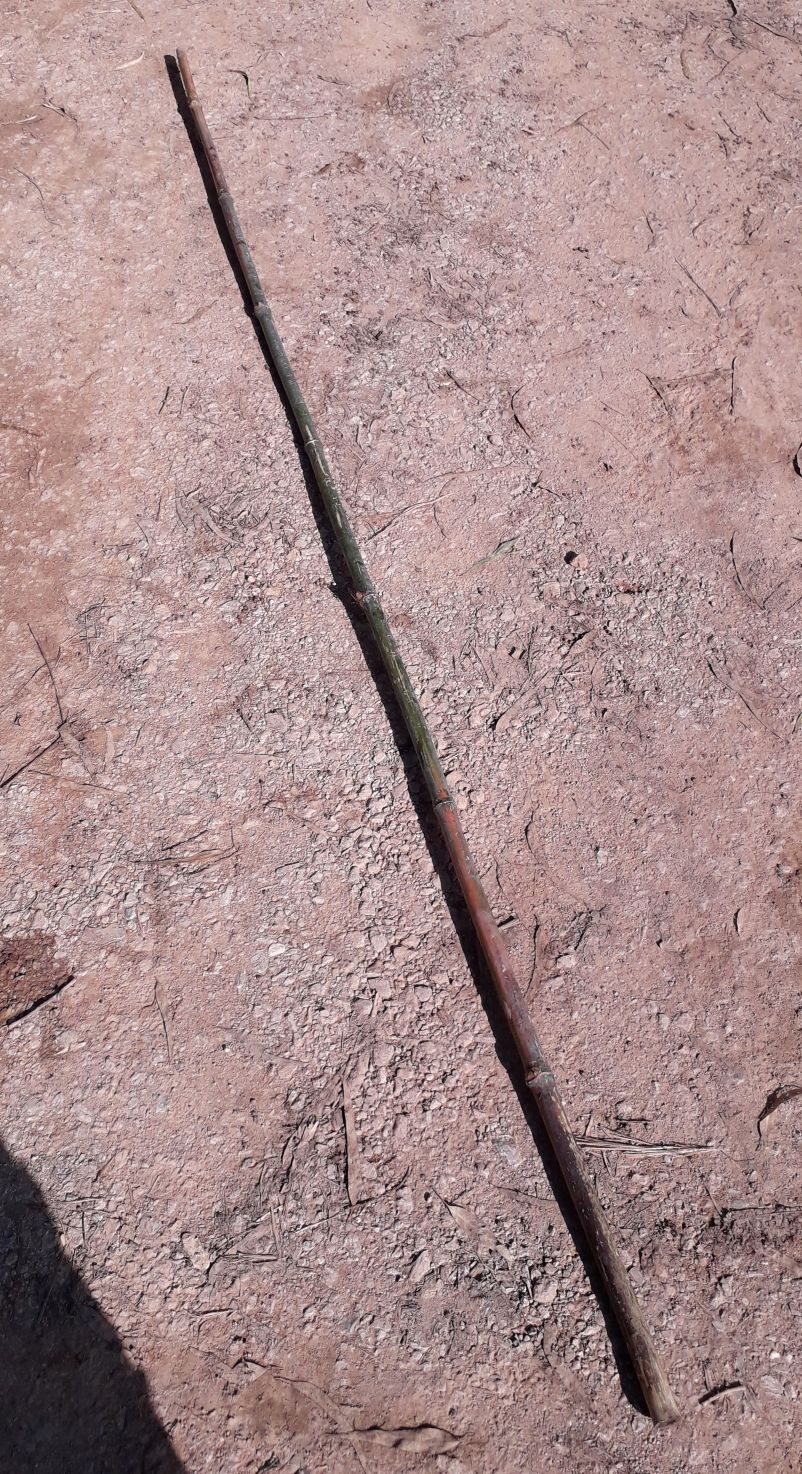
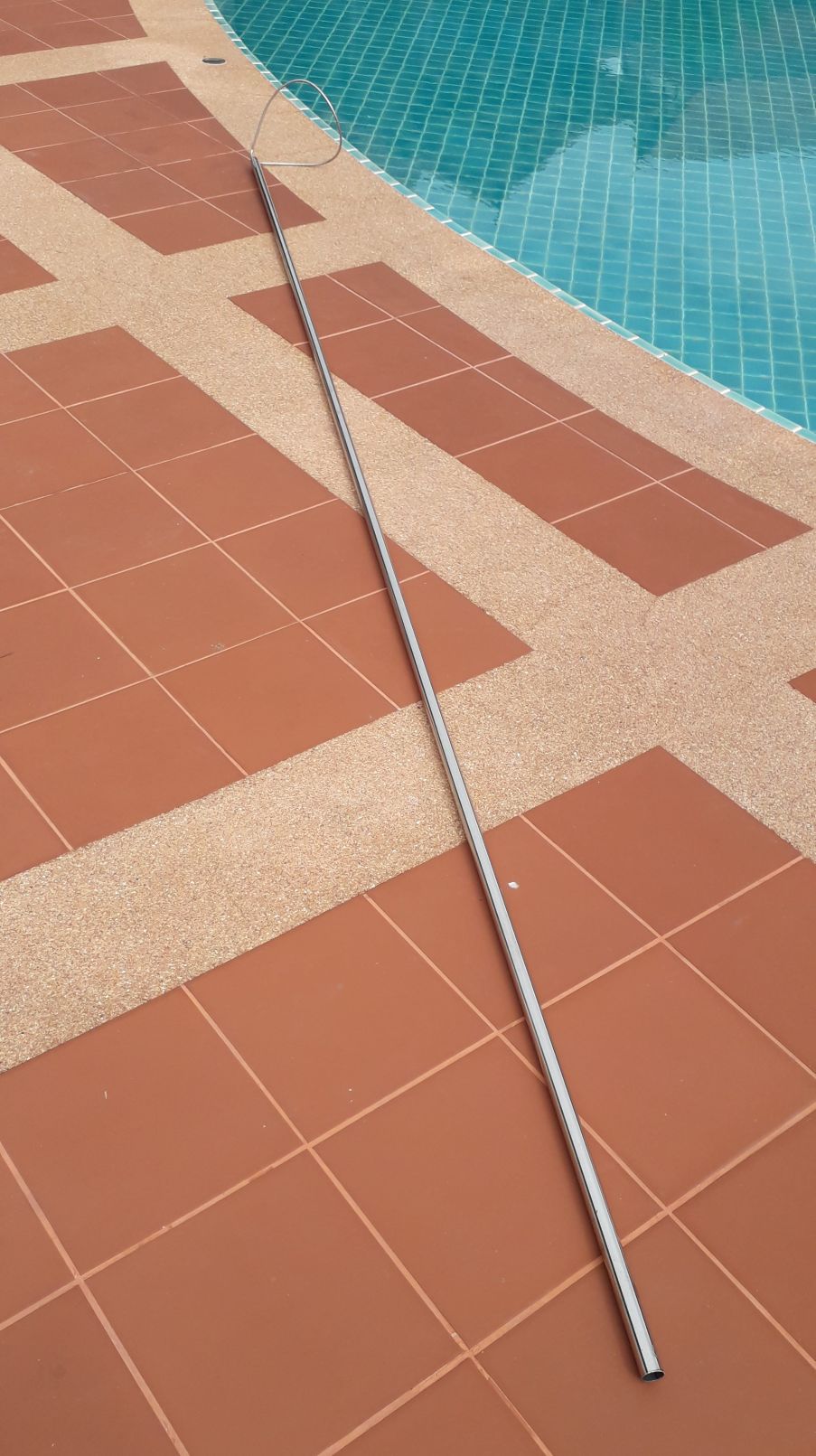
Examples of items that might be used to reach victims
- Look around to see what can be used to grab the victim. Many swimming pools have designated reach poles, shepherd’s crooks, or pool cleaning equipment that can be used. If the victim is close enough, we can use a towel. At rivers and canals use paddles, bamboo poles, tools, sticks, be creative.
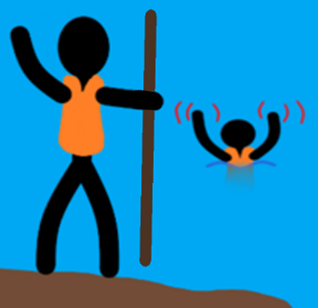
- We must be firmly grounded or laying on our stomach, so that we do not get pulled in the water and become a second victim.
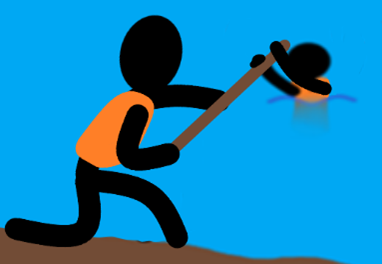
- We place the pole or stick on the victim’s arm so the victim can grab the pole. Be careful not to injure the victim by hitting or stabbing them.
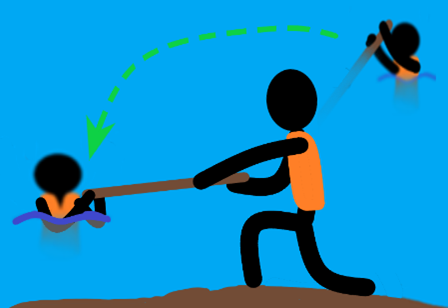
- Pendulum or swing the victims to the river bank, using the flow of the river not fighting the river (at a swimming pool just pull them to the edge).
- When the victim arrives in knee deep water, we help the victims to stand up.
Does your family and friends know about reaching drowning victims?
Throw
For open water situations it is standard to throw floatation devices while in swift water it is standard to throw rope bags.
Floatation Device
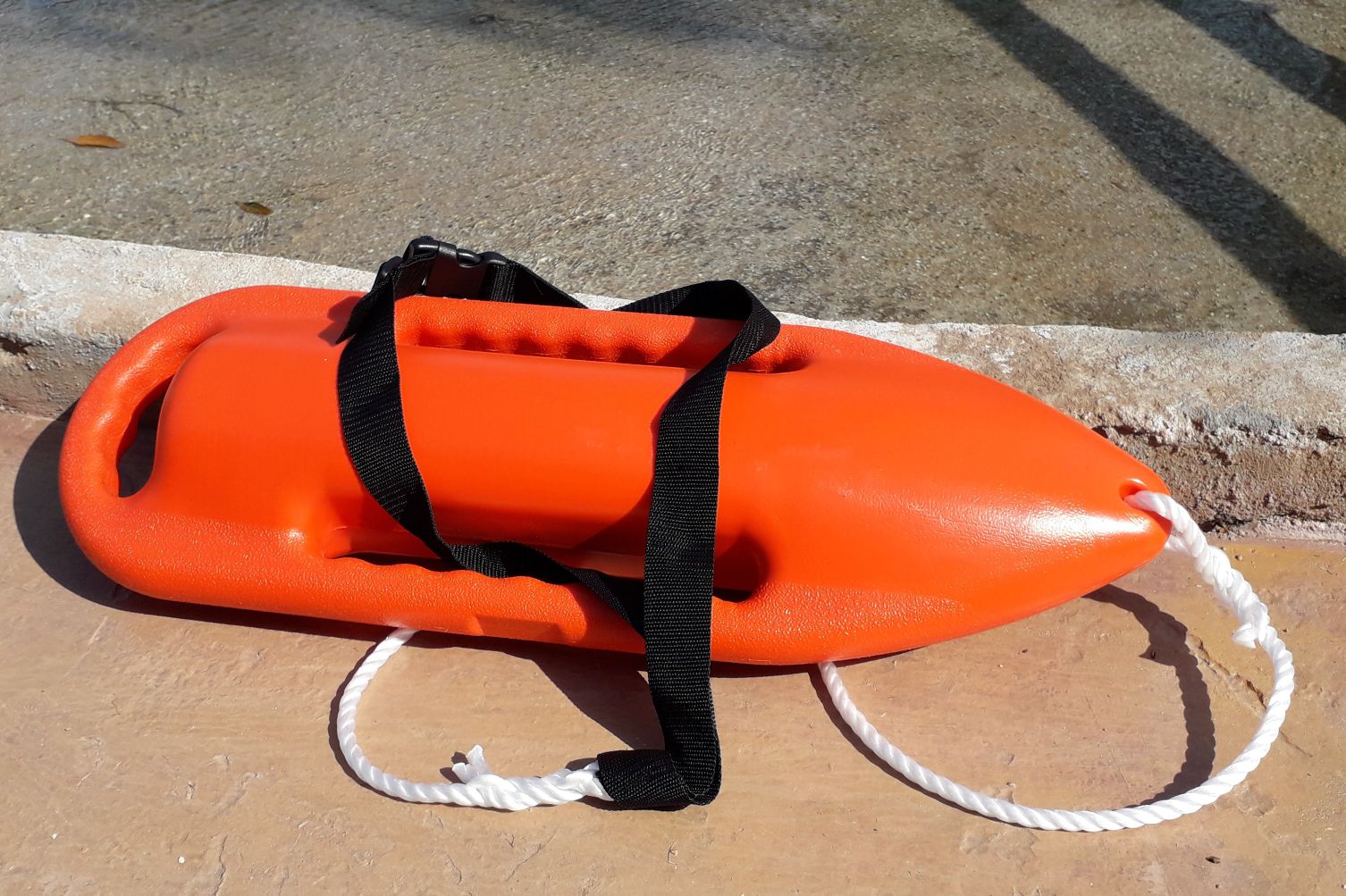
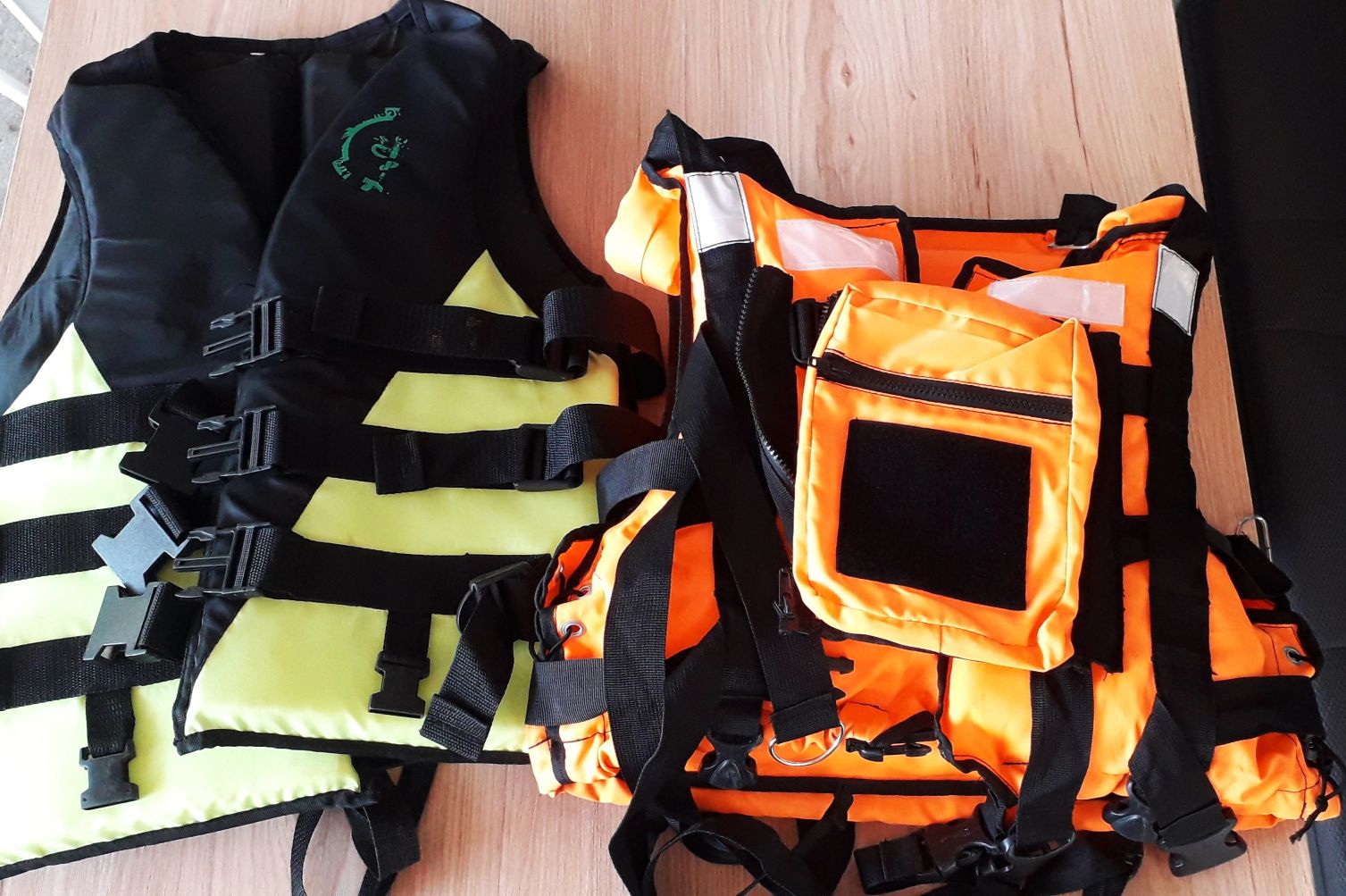
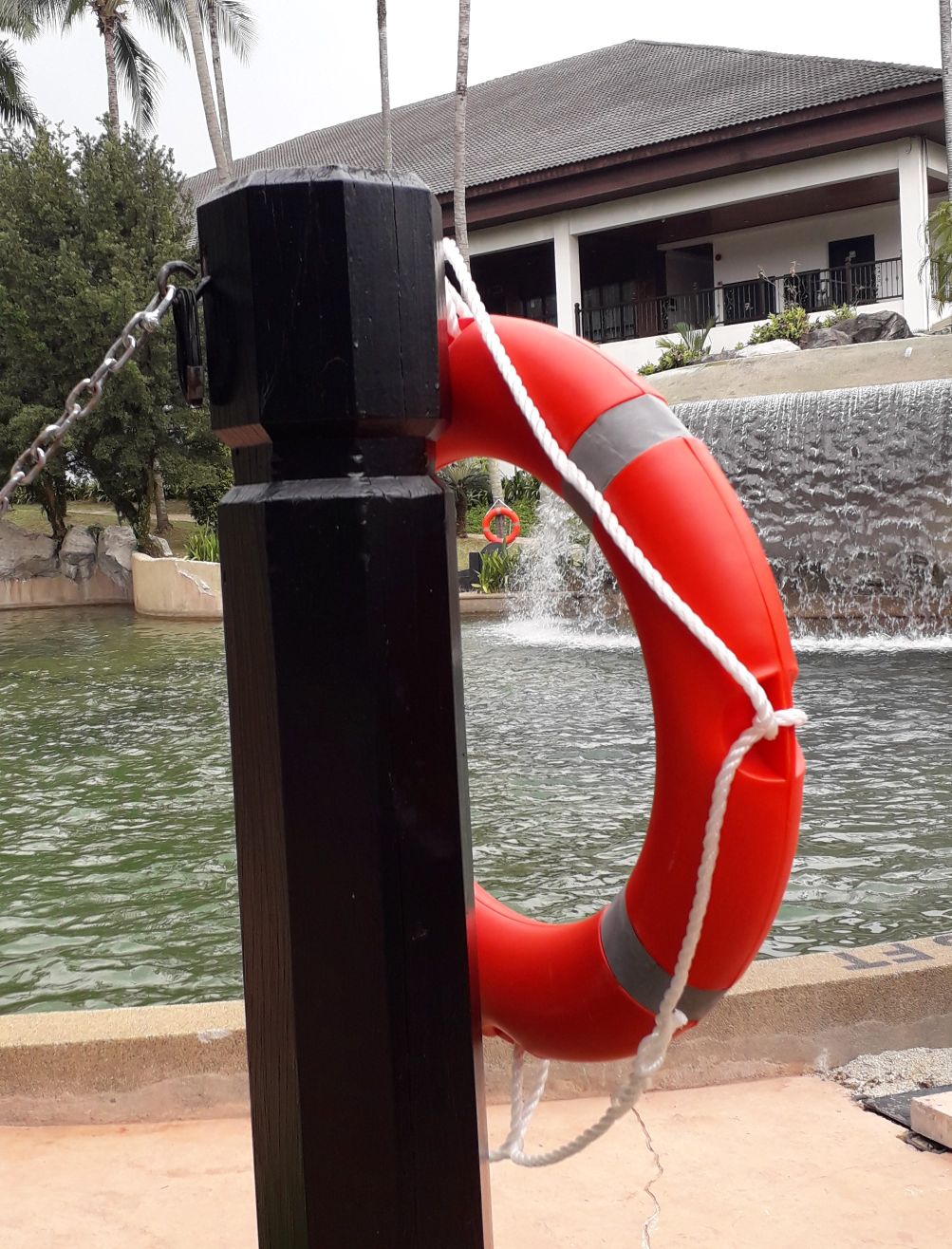
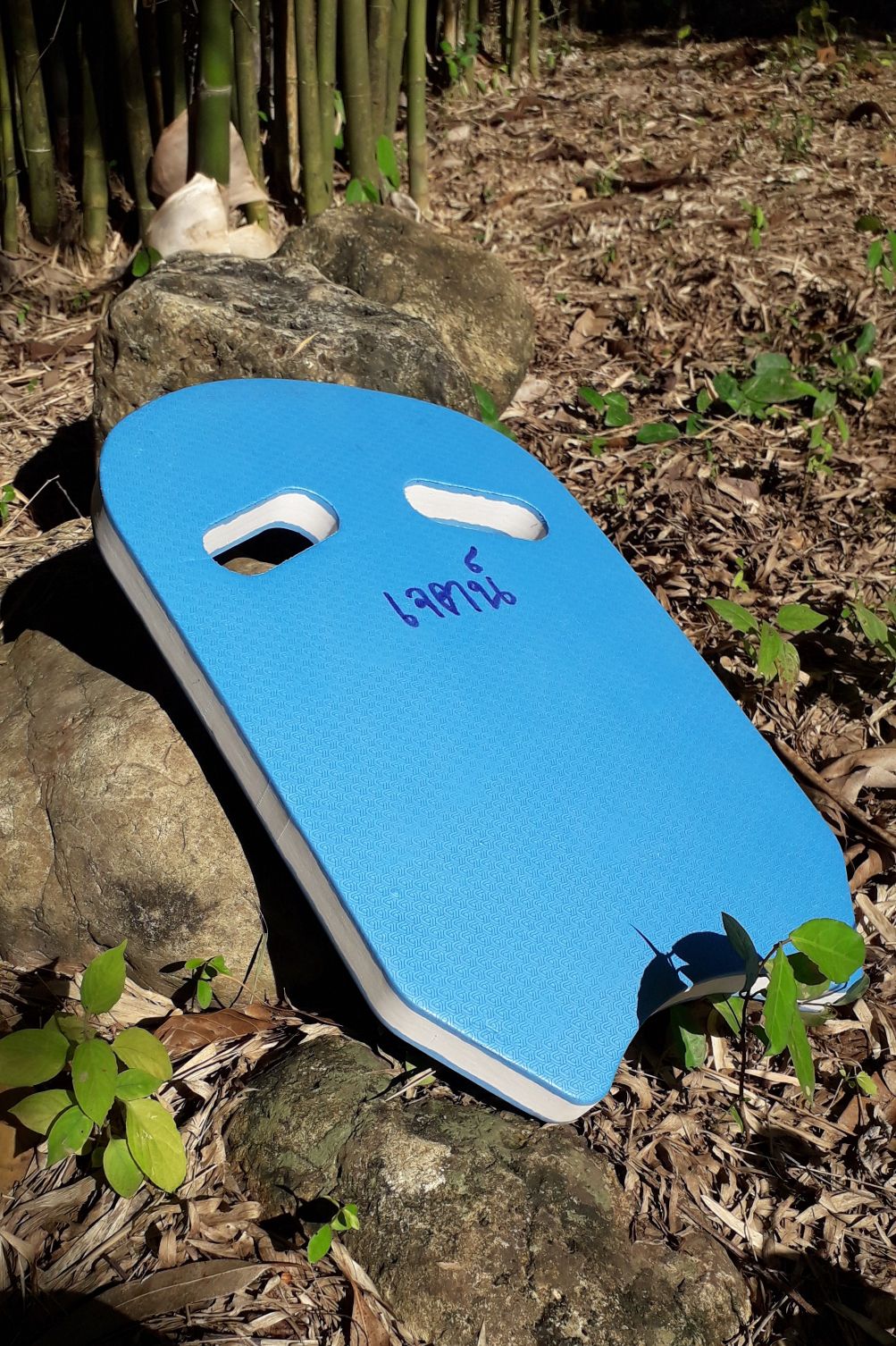
Examples of Floation Devices
- Look for something to use as a floatation device, ring buoy, rescue torpedo, seat cushion, pool ball, beer cooler, be creative.
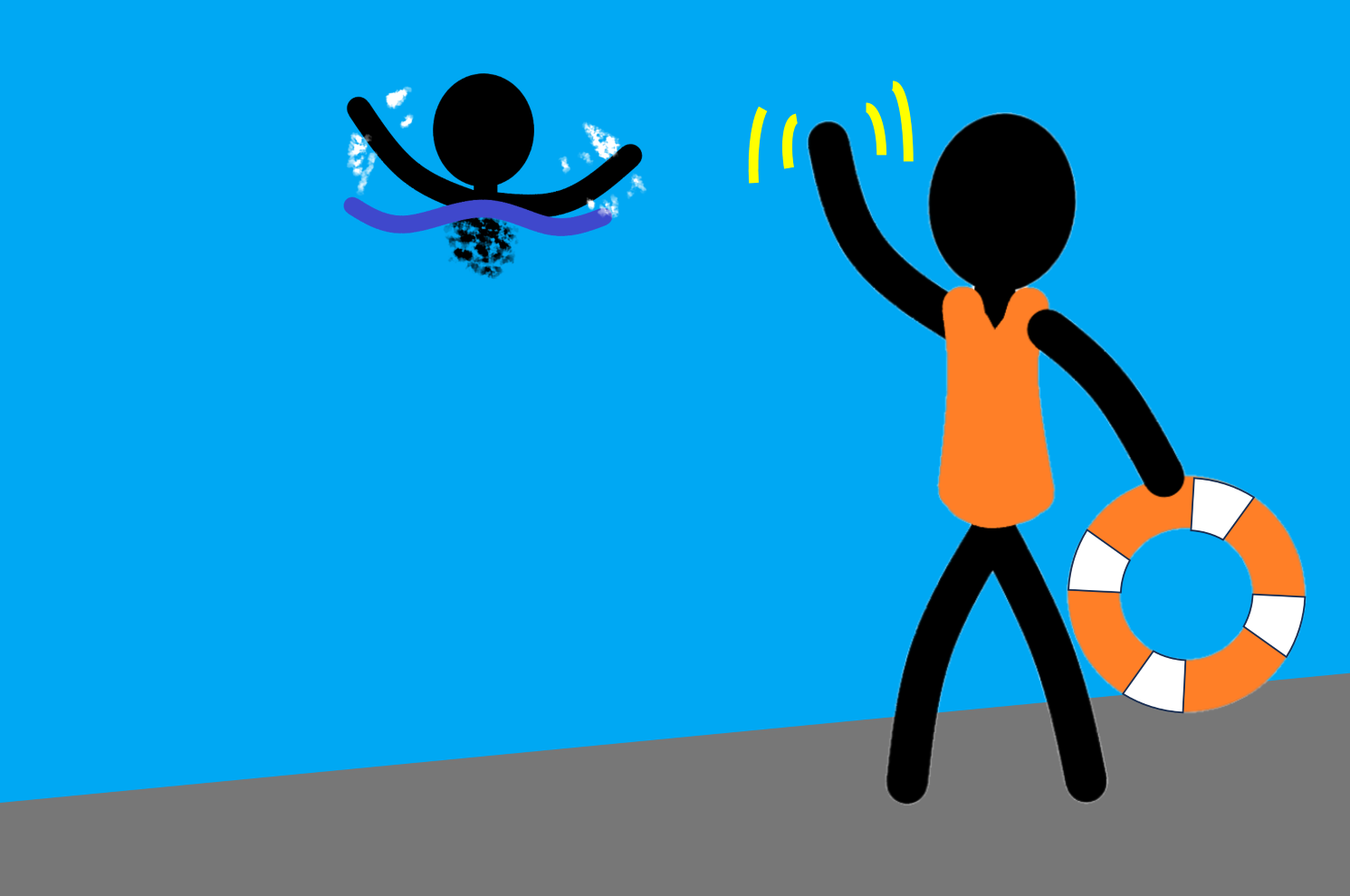
- Let the victim in the water know you are throwing a floatation device.
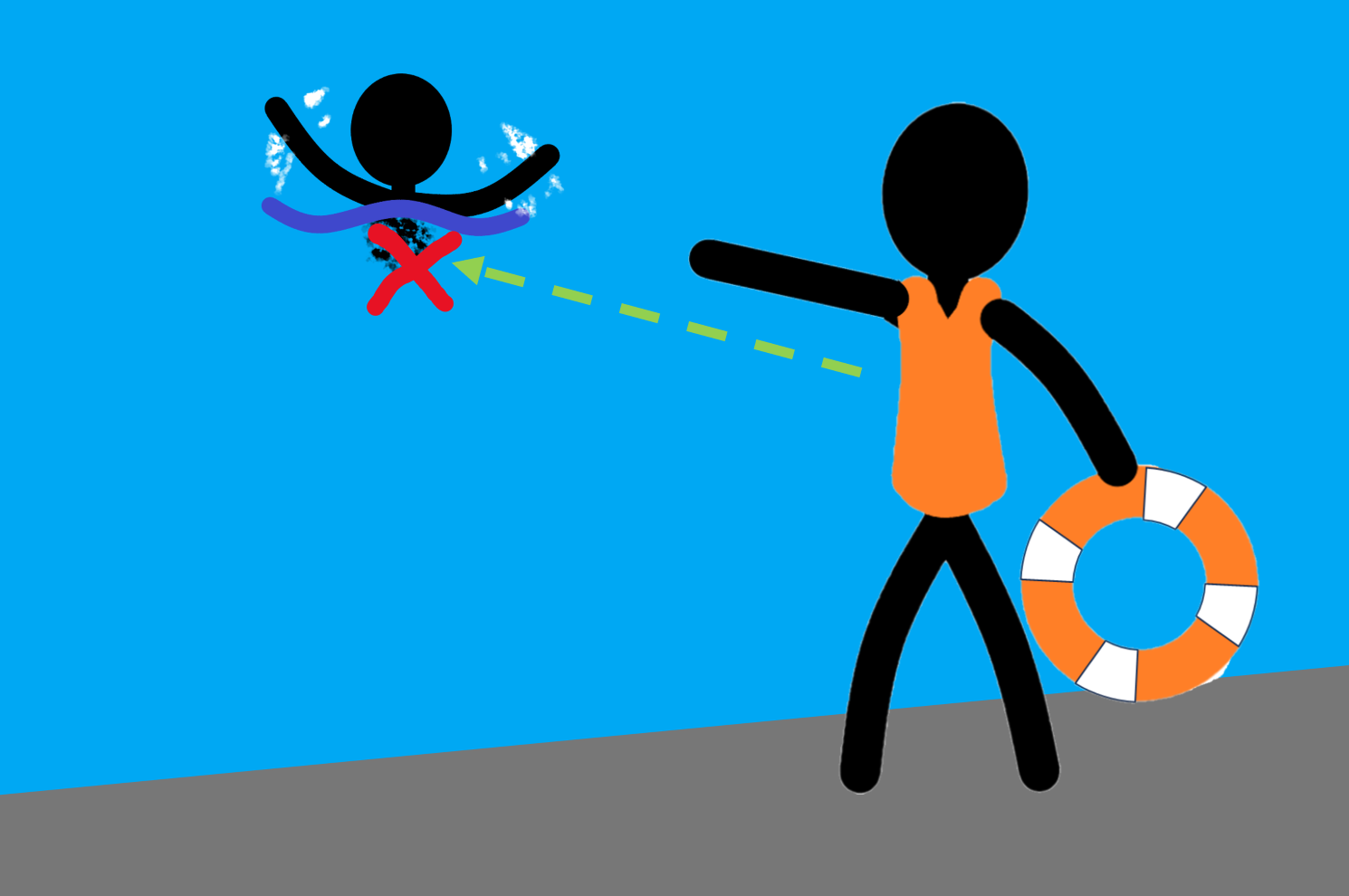
- Aim in front of where the victim will be. (An alternate version that only works for floatation devices with ropes attached is to throw past the victim and to use the rope to pull the device into the victim.)
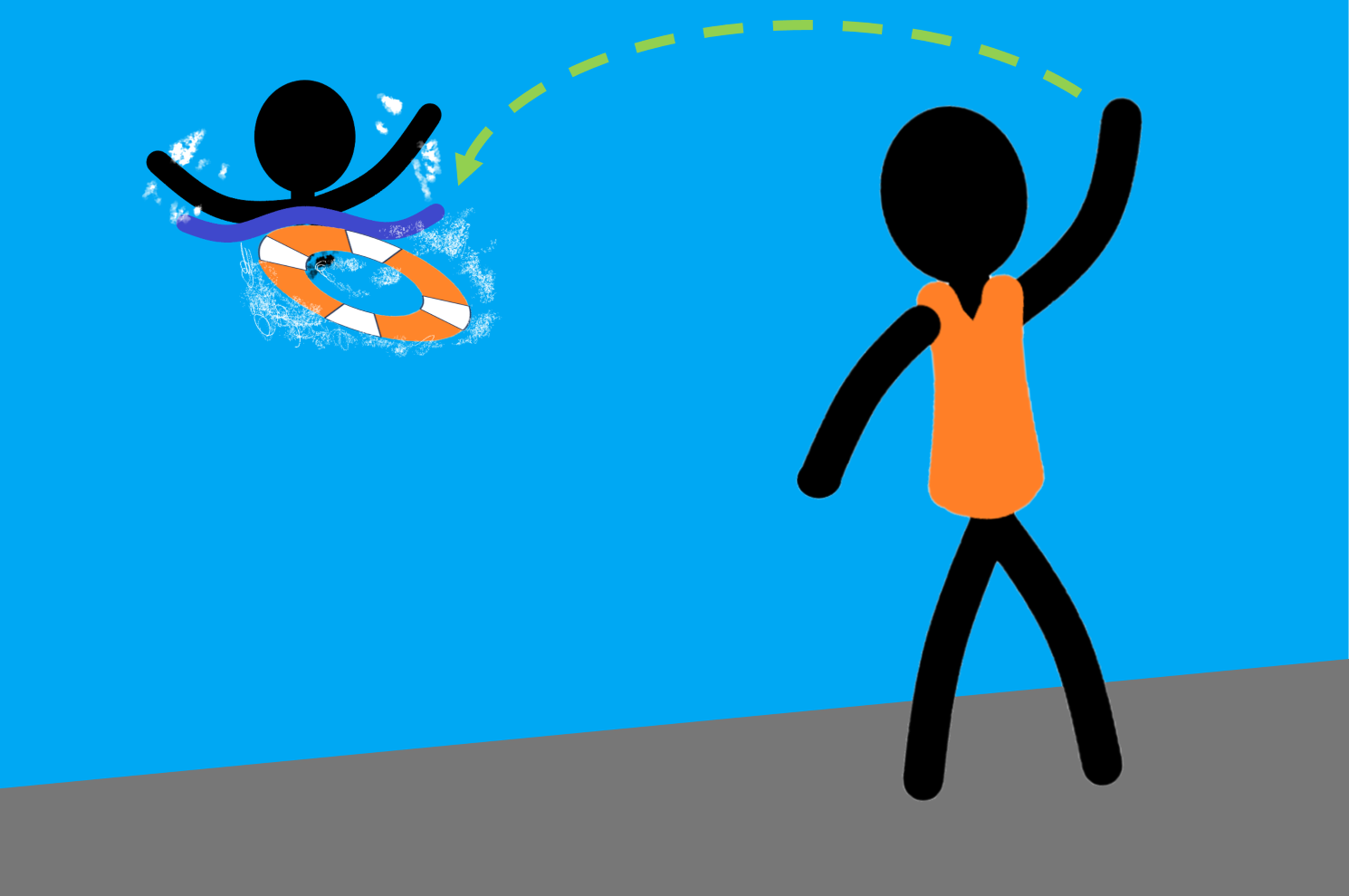
- Throw the floatation device. If there is a rope attached, do not let go of the end!! Ideally the device lands directly in front of the victim and they grab it.
- Tell the victim to swim to the river bank; “kick your legs”, “swim to shore”. If there is a rope attached, work to pull or swing the victim to the river bank.
Throw Rope Bags
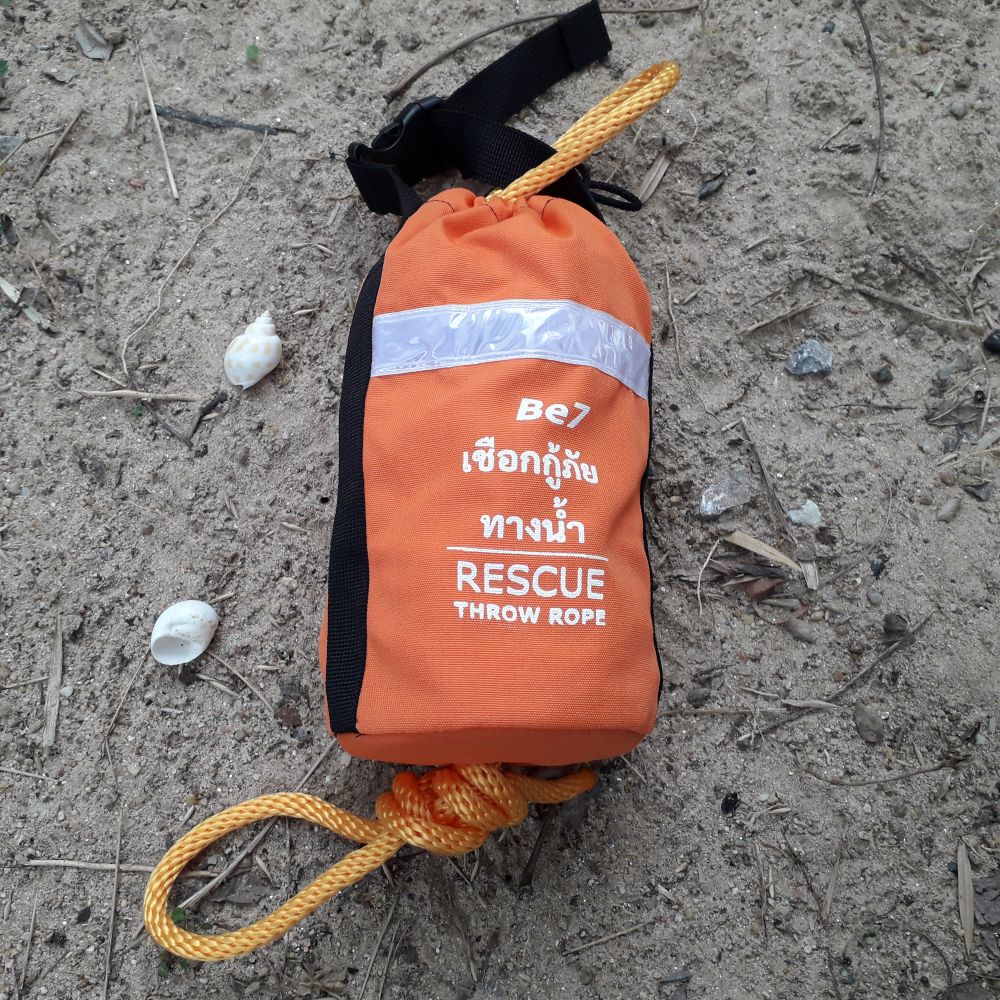
Do notwrap the rope around any part of your self during a rescue. Every time you throw a rope into the water it puts a new hazard into the water that might choke and tangle others. Think before you throw.
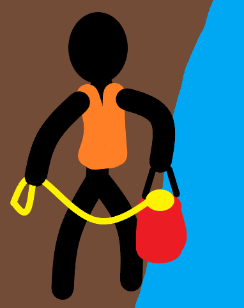
- Loosen the top of the bag. Unclip and pull out the end of rope. Hold onto this end. Do not let go!!
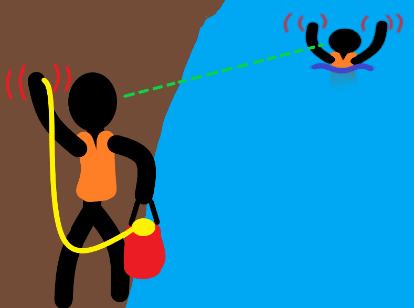
- Establish contact with the victim in the water so they know you are throwing the rope.
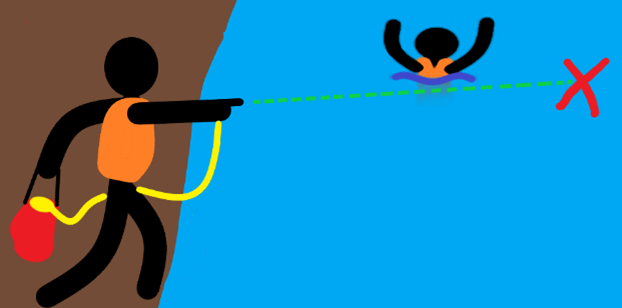
- Aim past where the victim will be. Take into account branches, bushes, wires, or other obstacles that will block your throw.
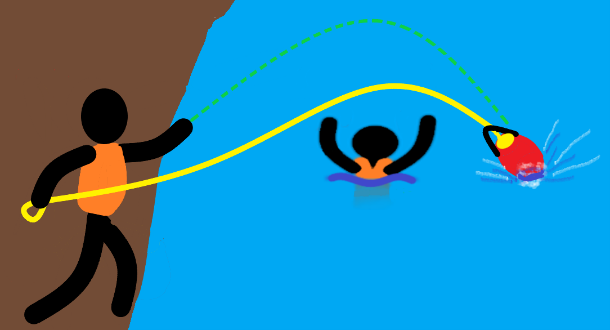
- Yell “Rope!” and throw the bag. Do not let go of the end!! Ideally the bag lands past the victim with the rope on top of them.
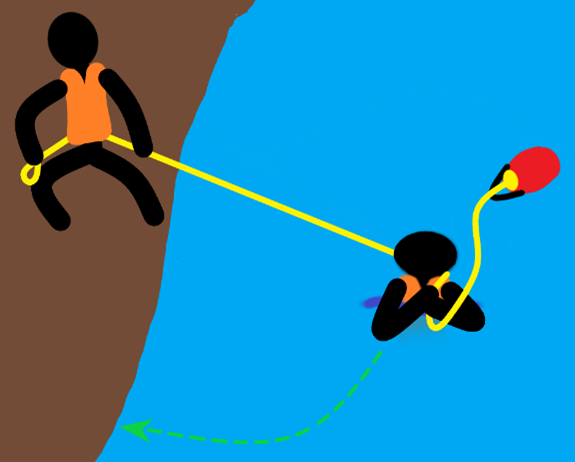
- If the victim grabs the rope, instruct them to place the rope over the shoulder furthest from you. Pendulum the victim to the shore. A tree, rock, or cement post can help absorb some of the force.
- If the rope misses the victim, quickly coil the rope starting with big loops to small loops. Repeat steps 2, 3, and 4.
Throwing a rope bag takes practice. Coiling and throwing a rope takes even more practice. Please practice in safe locations where no one will get hurt or drown.
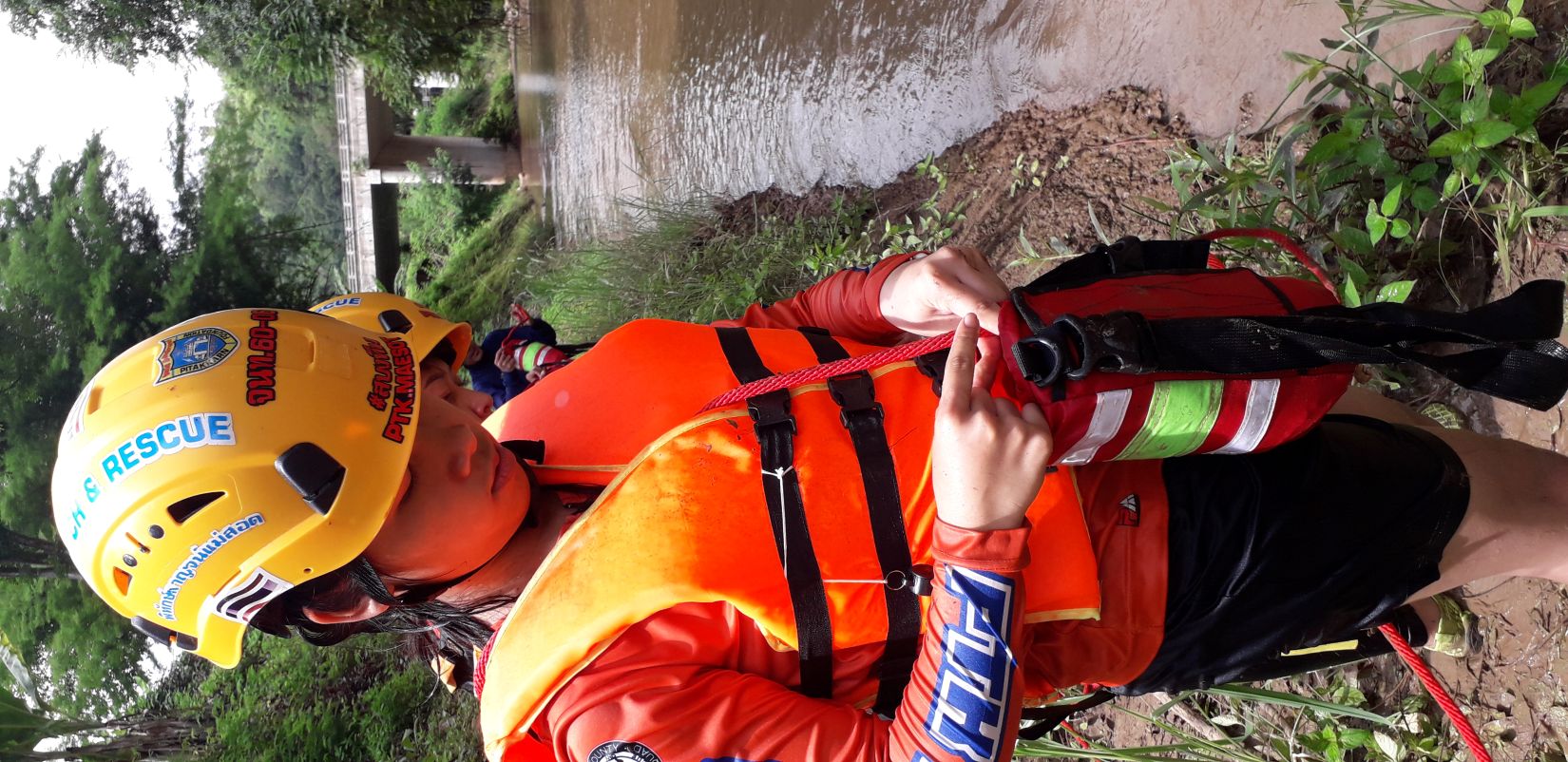
To pack ready for use, stuff the rope into the bag only a few centimeters (or inches) at a time until all of the rope has been stuffed inside. Close the top with the figure eight in the buckle so that it is easy to find during the next emergency. Where do you keep your throw rope bags so they are ready to use?
Row
Using boats to rescue victims is a technical skill but all rescuers should know how to get into and out of a boat in case they need to be ferried somewhere. If assisting with supplies, do not overload boats. 2 trips are better than 1 sunken boat.
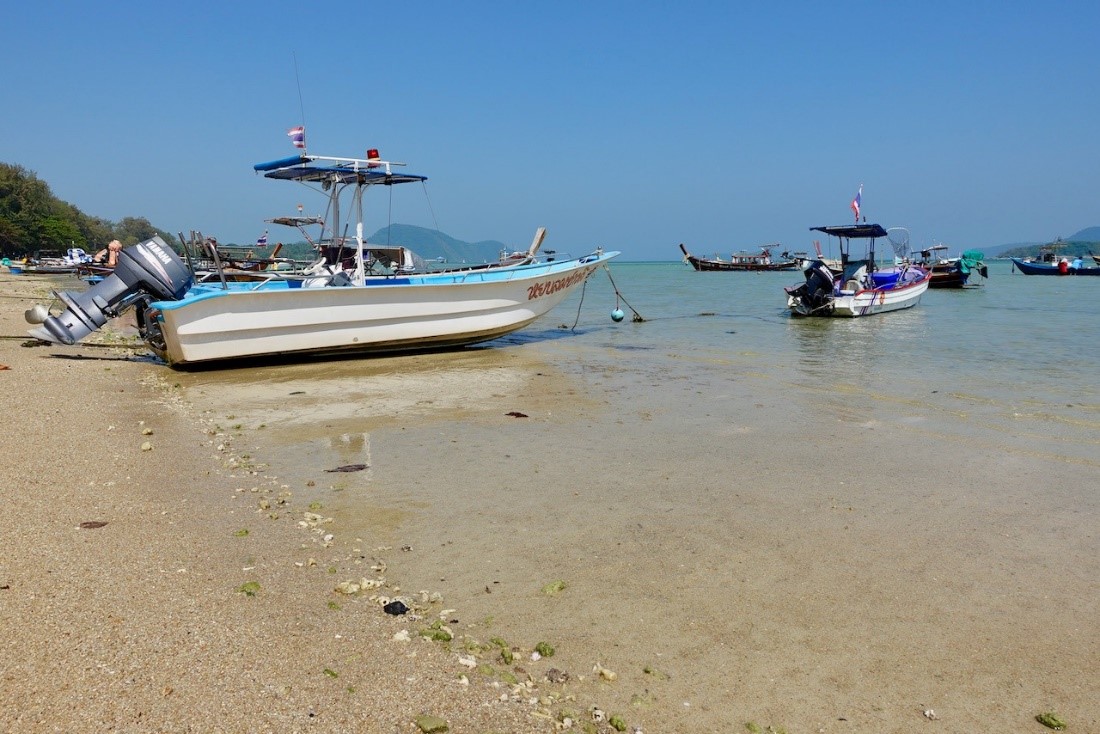
While we often would like dedicated rescue watercraft, my experience with disasters shows that we often have to work with the boats that are available at the time of the incident. What boat operators regularly work in your response area?
Go
Going out to a confused victim without getting ourselves pulled under, takes training, practice, and skill. Please start practicing with the simple methods shown above then find classes that teach swift water rescue or lifeguarding to add more technical methods to your bag of rescue skills. What water rescue training is offered in your area?
Helo or Helicopter
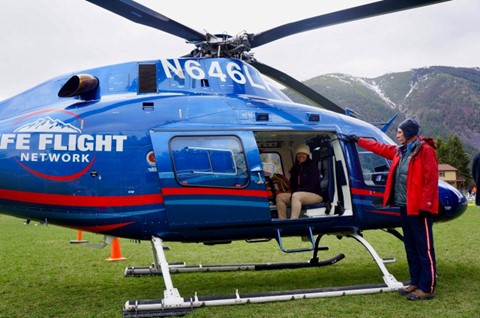
Helo, or helicopters, can put rescuers in danger even more as a helicopter often possesses risks for the crew and anyone in the vicinity of the scene. But helicopters have great capabilities to quickly reach into locations that are difficult for the rest of us. If the incident might need a helicopter call for it early on, and try our best with the other rescue methods until the helo gets to the scene. If we have not made the save by the time helo arrives on scene, then switch methods.
Conclusion
Water rescue should be about thinking of contingencies, not only one method over all others. Start with the simple methods all while the technical options are preparing to attempt a rescue. One rescuer might be yelling to the victim while another rescuer reaches with a pole, and another rescuer prepares to throw a rope, all while the rescue technicians preparing to jump in the water. Look around a rescue scene and ask “what can I do?”
Thank you to Christine Lustik for editorial advice and K. Kunsirilanchakorn Kongpok for translating my excess of words and Nong Prae and Pi Big for sharing photographs.
References
Chaikul, T. (. (2014). Maritime and Aquatic Life Support Guidelines Manual. Nonthaburi, Thailand: National Institute for Emergency Medicine.
Kauffman, R. B. (2018). Swiftwater Rescue Course Manual. McHenry, Maryland: Garrett College.
Phillips, K. (2012). National Park Service Swift Water Rescue Manual. United States Department of the Interior, National Park Service.
Pia, F. (1974, July-August). Observations on the Drowning of Non-swimmers. The Journal of Physical Education, pp. 164-181.
Royal National Lifeboat Institution. (2017). Flood Rescue Manual. Dorset, England: Royal National Lifeboat Institution.