When helping a person who is sick or injured, we assess to understand what is happening to the patient. Please avoid jumping to conclusions that could lead to false, possibly harmful treatment. We attempt to follow our mantra for patient care of 'do no further harm'. We start understanding the patient’s situation with a primary patient assessment checking for life threatening issues and getting a general idea of what is troubling them.
This article is written for first responders and first aid caregivers coming to the scene where the patient is. We have already covered scene size-up and scene safety, the initial steps in arriving at a scene, in a previous article. We assume that we work together as a team to help the patient and work from the understanding that both trauma and medical emergencies start from the same initial assessment and then follow assessment methods that match what we find.
Assess → Find/Diagnose → Treat according to findings → Assess
Realize that as first responders we may assess a patient and might find that the only help we can give is guiding them to a doctor for a higher level of care.
Initial Assessment Questions
We will give you some open ended questions (in bold) that can be useful for figuring out what is happening with the patient; such as How does the patient look? This question is asked as we approach the patient. This sometimes is simplified as ‘sick or not sick’, meaning while walking up are your initial thoughts;
- “Not sure what is going on but it does not look that bad” = Not Sick
- “Oh God! Please do not die on me!” = Sick
This just gives us a rough idea of how urgent we need to handle the situation and what areas of treatment we should focus on. Also, do we see any key indications of what might be happening. Use the bolded questions as a guide for how to initially assess a patient.
Introducting Yourself
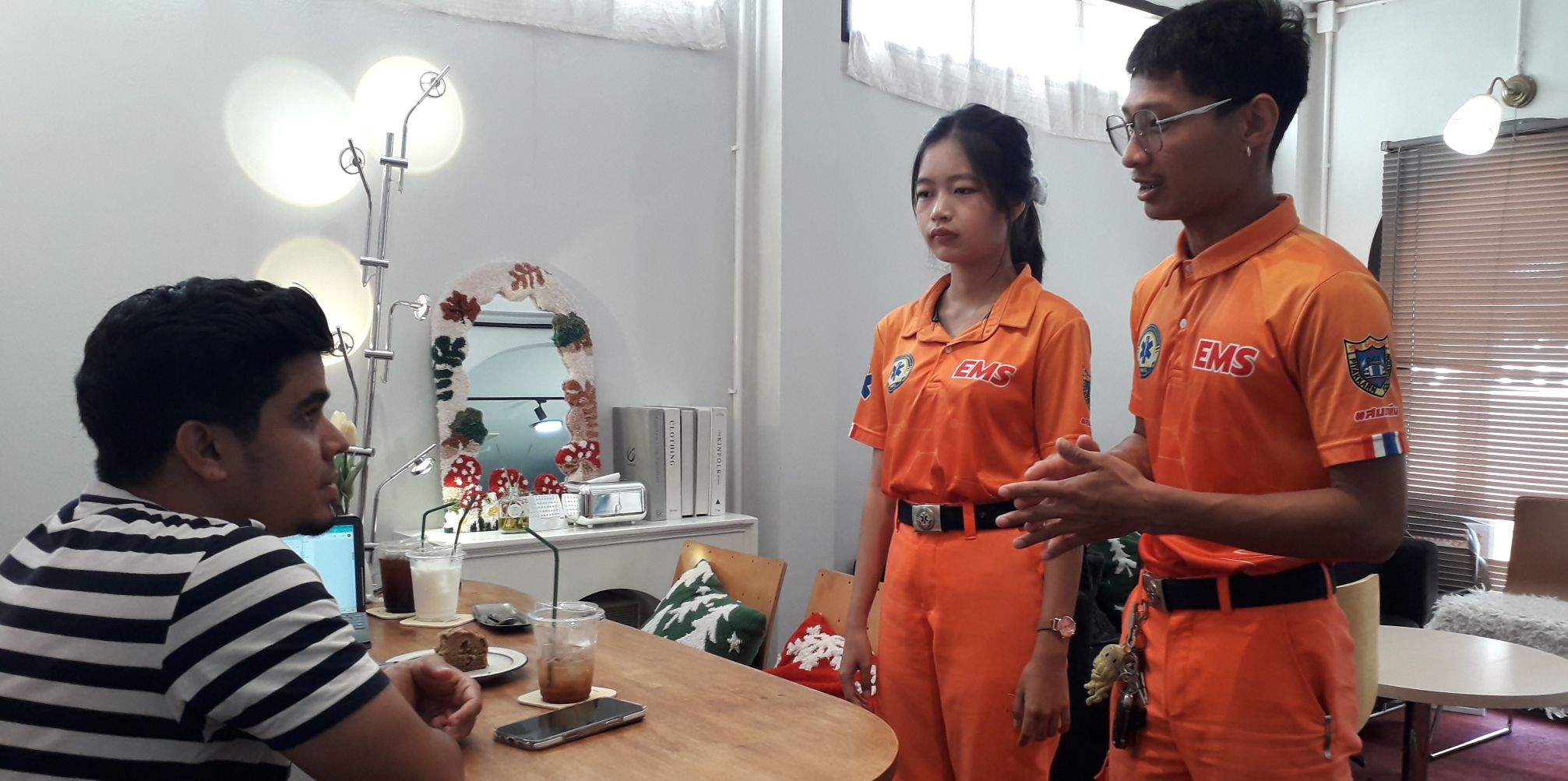
Often we start by stating, “Hello, my name is __________. I am with __________ (ambulance, first aid team, fire/rescue). What is the problem today?” It may seem awkward or strange to explain who you are, but patients are afraid for their life and sometimes confused. This reassures them and sets a professional tone. Watch the nonverbal responses to see what the patient is struggling from and how people around the patient respond. (If the person says everything is ok you might have the wrong person and might need to check for where the patient is.)
Unresponsiveness
Does the patient respond? If there is no response, we check quickly for responsiveness and follow the CAB path (circulation, airway, breathing) for an initial assessment. Check for responsiveness both verbally, calling to the patient in a loud voice “Hello, sir/ma’am, excuse me!” and physically at the same time, tapping or shaking their shoulder. If the patient still does not respond we look for a response to painful stimuli; putting smelling salts under the patient’s nose, or pinching under the collar bone (for infants slide a stick or pen cap on the bottom of the foot). If the patient still does not respond we move forward assuming the patient is unresponsive, and ask people nearby “when were they last seen acting normal?”.
- C (Circulation) - With unresponsive patients, we check for circulation at the carotid artery on the neck by sliding two fingers in the notch between their windpipe (trachea) and the muscle (sternocleidomastoid muscle) on the side of their neck. We feel for roughly 10 seconds to find a pulse, if we do not find a pulse then we initiate CPR (cardio pulmonary resuscitation). We discuss CPR in another article.
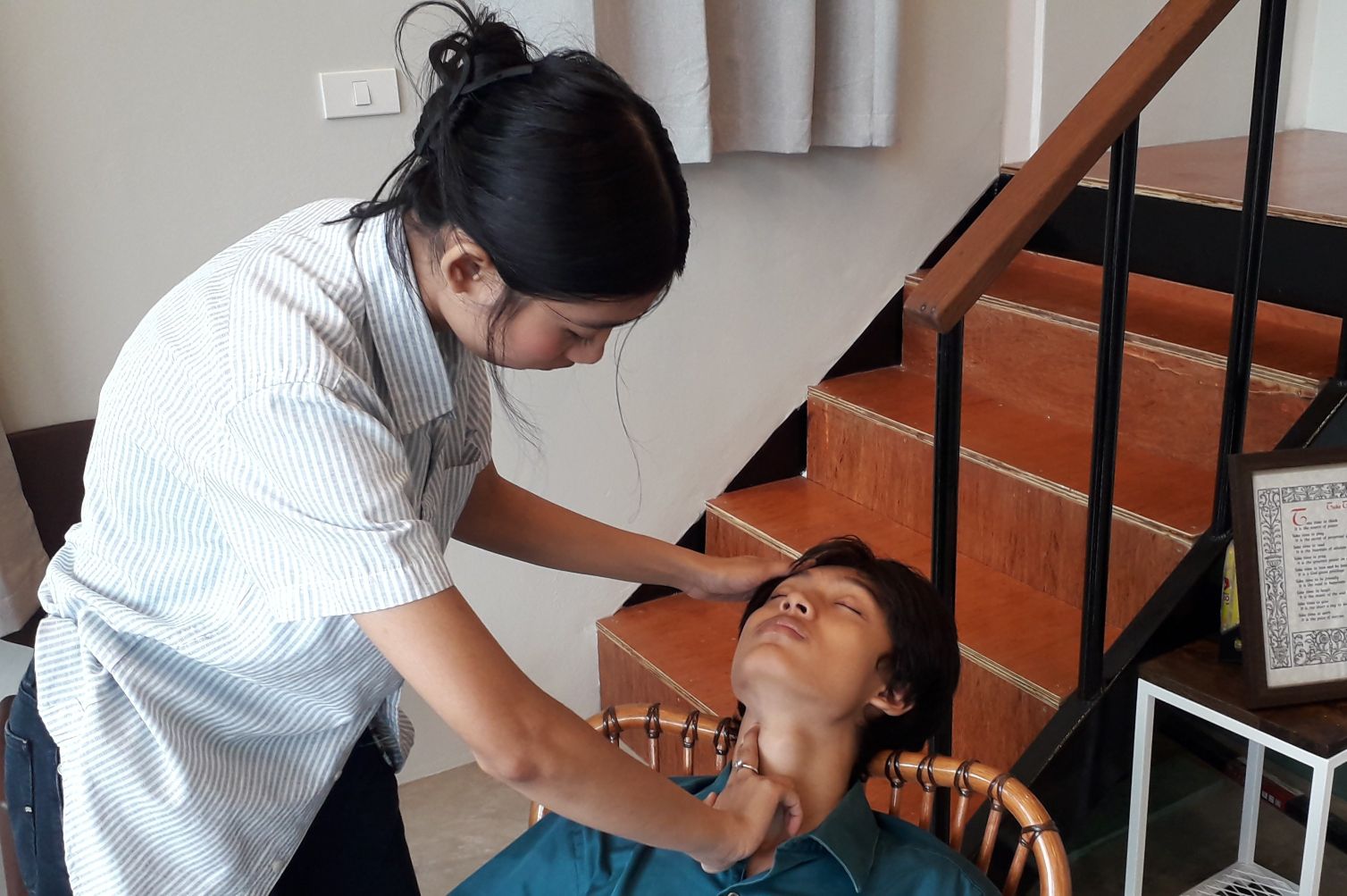
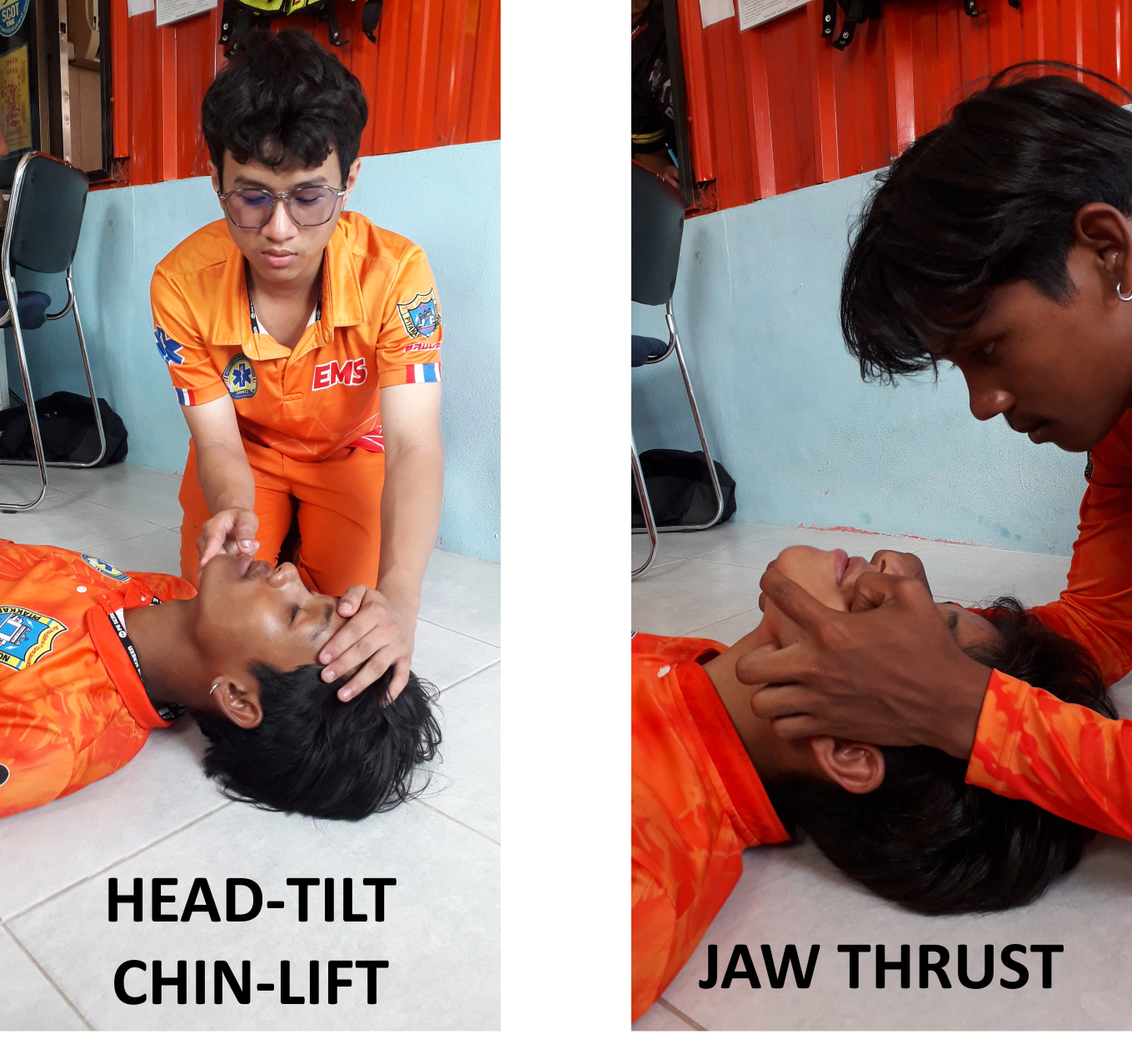
- A (Airway) – If there is a pulse, we make sure the airway is open using the appropriate method, and look if we can see an obstruction. If something is blocking the airway, we work to use an appropriate method to attempt to get the obstruction out of the airway, turning the patient on their side to drain the obstruction out, using suction, reaching to pull the obstruction out.
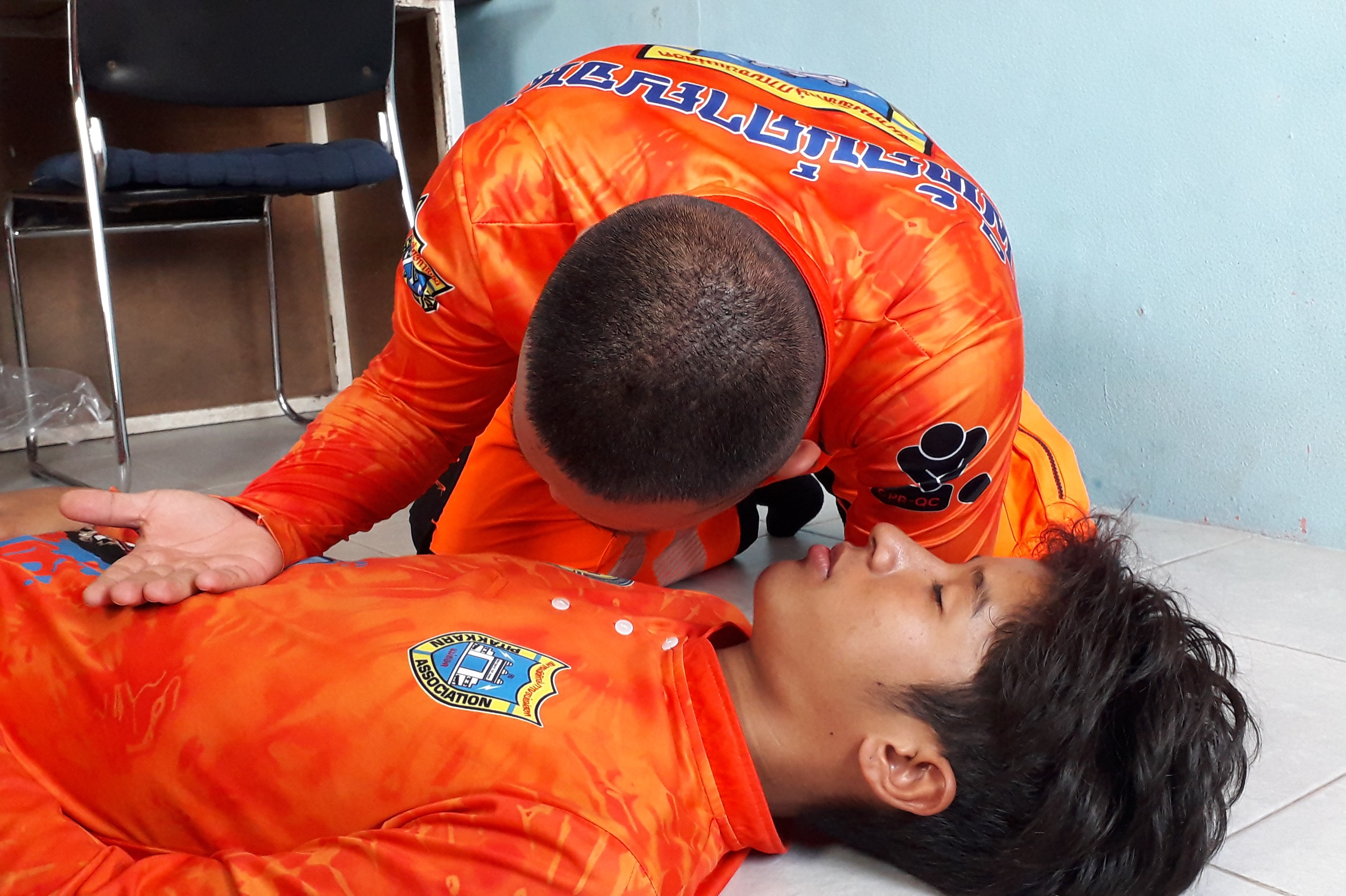
- B (Breathing) – With an open airway, we put our face close to the patient’s mouth and nose to check for breathing; looking for their chest or abdomen to rise and fall, listening for the sound of air going in and out the mouth and nose, and feeling for air blowing against our face when the patient exhales. When looking for breathing on a patient, look down along the midline or sternum of the patient and watch for movement.
Responsive Patients
For patients that respond to questions we follow the ABCDE path (airway, breathing, circulation, disability, environment) for an initial assessment. Note we are still checking the same things just a slightly different order. Getting the order right all the time is not the most important part, if we realize that we forgot to check something, we go back and assess that item. If the patient responds when we ask “what is the problem today?”, how does the patient respond? The verbal answer the patient gives us is called the chief complaint, giving us a rough direction to follow in our further assessment. The chief complaint is like a big road sign pointing which way to check first. Simultaneously we look at the following;
- A (Airway) – Do they have an airway? Maybe they are still conscious but their airway is slowly closing. What does the patient’s voice sound like? Do you hear wheezing, whistling, or sounds of a troubled airway?
- B (Breathing) – What is their breathing like? Sometimes patients struggle to get air in, sit up and maybe lean forward to get each breath in. Maybe their skin color looks more blue, green, or purple in color.
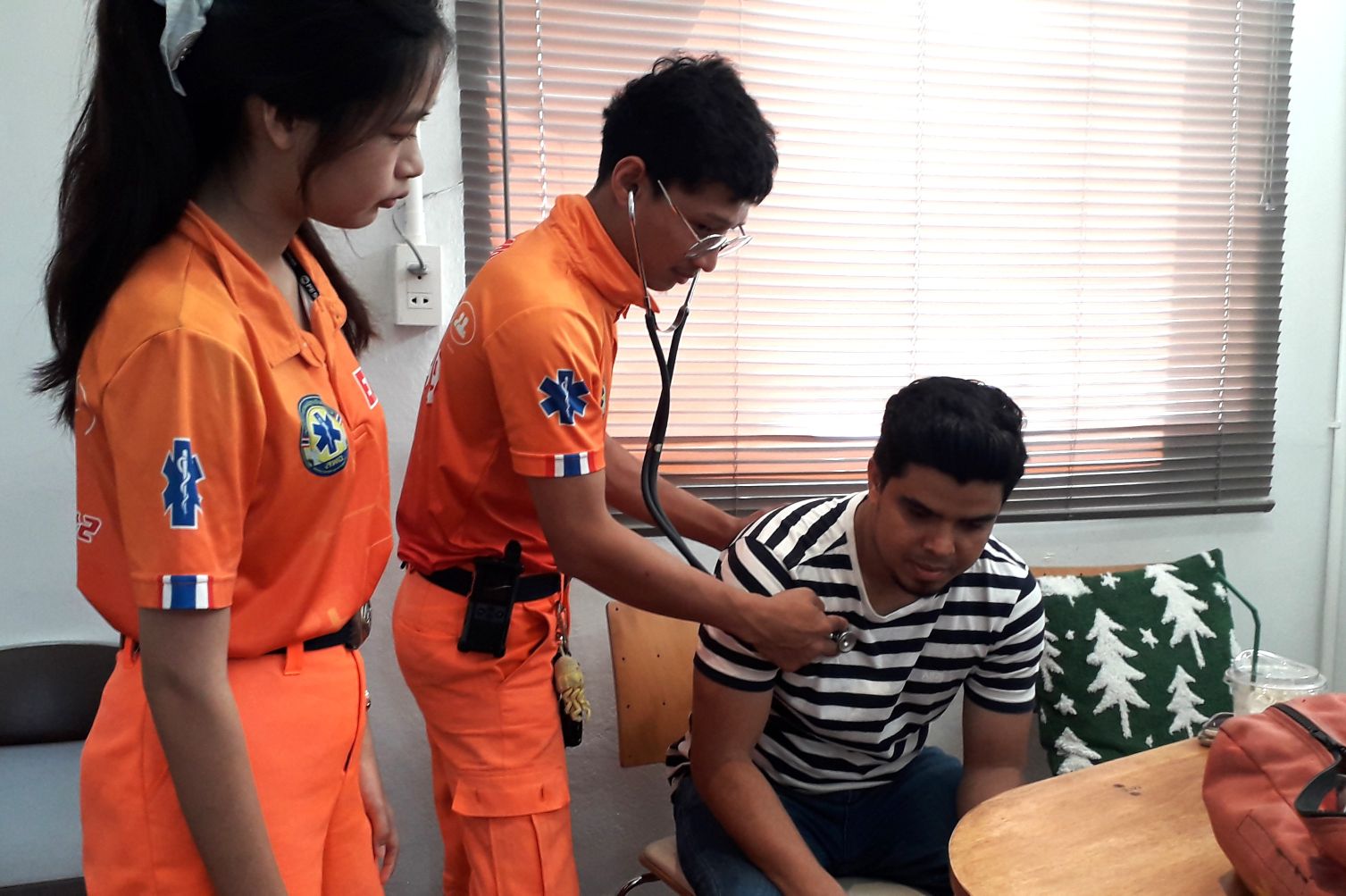
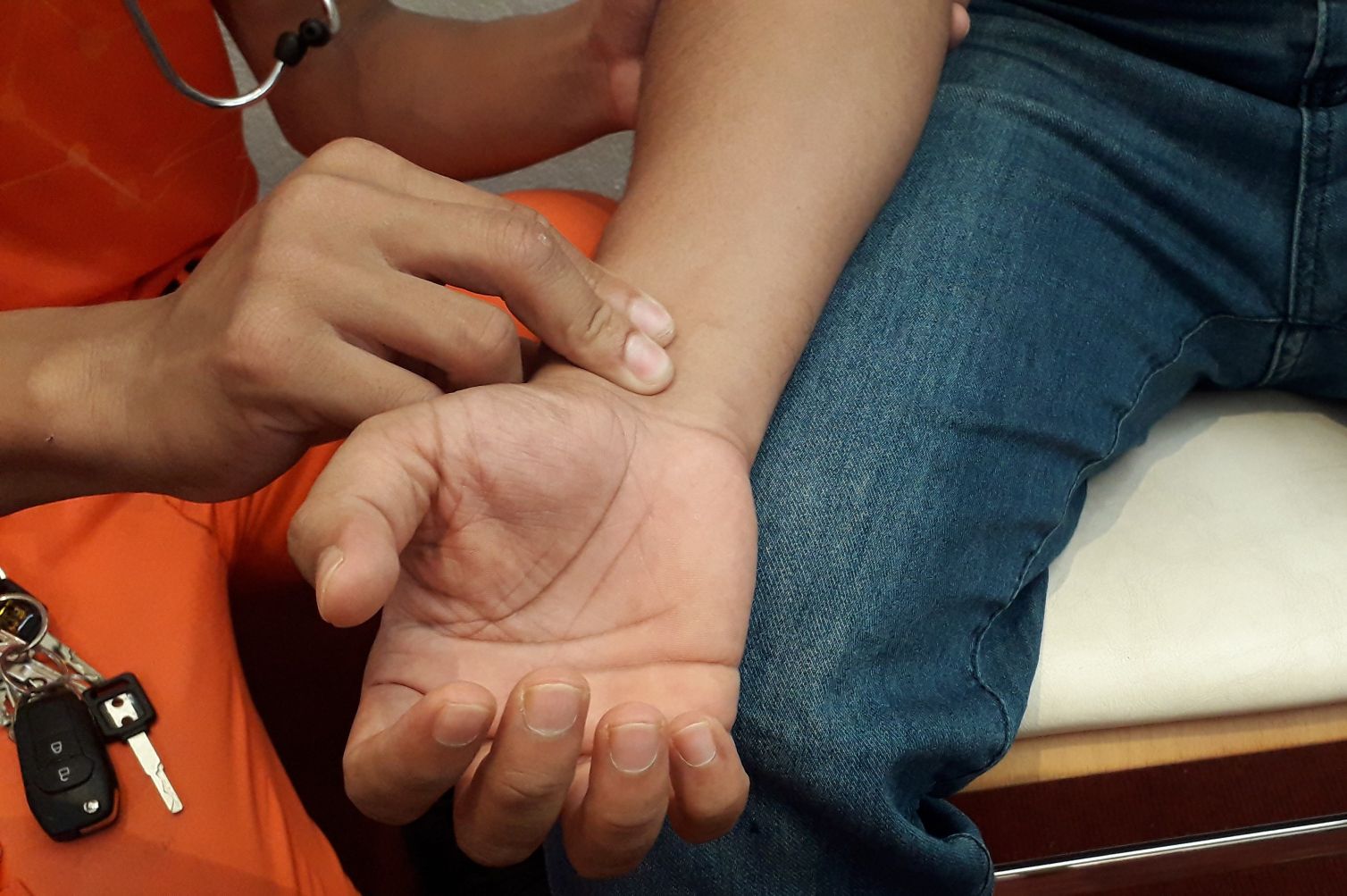
- C (Circulation) – “Can I feel your wrist?” We feel the radial pulse in the notch between the bone closest to the thumb (radius) and the tendons on the front of the wrist (flexor tendons). Is the pulse fast, slow, bounding, weak?
- D (Disability) – We often ask “How old are you?”. How does the patient answer our questions? If you think there is a mental disability, ask further; “Are they normally this way?” or “How much alcohol have you drank?” or “Do you suffer from diabetes?”. Maybe even check their head to see if they have a head injury.
- E (Environment) – Is something nearby making the patient’s problem worse, causing the problem, or maybe even endangering us and the patient? While this can include less obvious things such as spotting allergens or toxins, in an initial assessment we primarily look for items immediately threatening the patient’s health and safety; pouring rain, hot sun, toxic chemicals, violent people.
These questions focus on the function of the vital organs with heart, lungs, and brain. We want air going in and out, blood going around and around, and a thinking brain. If these functions deviate from normal, we have problems. The questions written above are a guideline on how to approach a scene, yet each scene will be different and may require a bit of variation. For example, if we approach a trauma scene where the patient is screaming while blood squirts out. We know the patient is awake because they are screaming, and we know they have an airway and are breathing because they are screaming. We also know that we probably will start by controlling their bleeding.
Conclusion
The initial assessment helps us check for life threatening issues and get pointed in the direction of the patient’s issue. From here we can gather a more detailed understanding with further assessment. For trauma cases we tend to follow the primary assessment with a physical exam searching for other injuries, while with medical cases we tend to gather patient history after the initial assessment. Both trauma and medical assessments include a physical examination and patient medical history, but in a different order.
Thank you to the Shade Tree Foundation for making this article possible together with first aid training for community workers, to Dr. Honey for help translating this article, and Dr. Kay (Dr Kyaw Soe Naing) for providing medical guidance. Emergency medical service is a team effort.
References
McEvoy, D., Moore, G., and Blelcher, J. (2012). Wilderness Medicine 12th Edition. Missoula, MT: Aerie Backcountry Medicine.
McNamara, E. C. (2020). Outdoor Emergency Care: A Patroller’s Guide to Medical Care (6th Edition). Burlington, MA: Jones and Bartlett Learning.