Calculate Your Patient's Score
We often use the AVPU method for assessing level of responsiveness quickly during our initial assessment. Yet, when we have a patient with any kind of an altered mental status we should consider where they rate on the Glasgow Coma Scale (GCS). In the heat of the moment at 3:00 am in the dark corner of a house it is difficult to remember exactly how the Glasgow Coma Scale works while bystanders are screaming and our patient vomits. We can break this system down into 3 parts, that total 15 points, but instead of 5 point per part, points per part are 4 (eyes), then 5 (speech), and then 6 (motion). Try to remember 4, 5, and 6 and eyes, speech, and motion, when struggling to remember the GCS.
Eyes
We are looking for eyes opening or moving around in response to what we are doing.
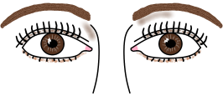 | Score | Eye Response/Opens Eyes |
|---|---|---|
| 4 | Spontaneously | |
| 3 | When speaking to the patient | |
| 2 | When pressure is applied to the patient | |
| 1 | They do not do not open |
Note this can not be assessed for patients who have eye injuries.
Verbal Response/Speech
 | Score | Verbal Response for Adults | Verbal Response for Infants |
|---|---|---|---|
| 5 | Alert and oriented | Normal | |
| 4 | Confused | Irritable, consolable crying | |
| 3 | Words, just able to say words | Persistent crying, pain crying | |
| 2 | Sounds, only able to make sounds | Moans or grunts to pressure or pain | |
| 1 | They do not make a sound | They do not make a sound |
Note this can not be assessed for patients who have advanced airways inserted or normally can not speak. The column listed for infants is based on the Adedaile Scale and intend for children less than 5 years old.
Motor Response/Motion
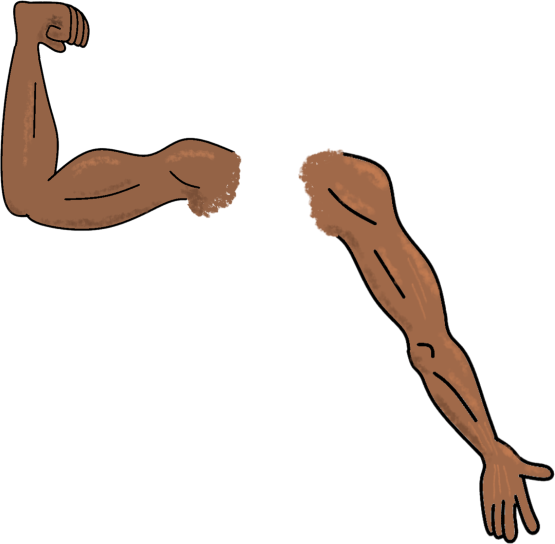 | Score | Motor Response for Adults | Motor Response for Infants |
|---|---|---|---|
| 6 | Moves with intention | Moves with intention | |
| 5 | Localizes pressure or pain | Withdraws to touch | |
| 4 | Pulls aways from pressure or pain | Withdraws to pressure or pain | |
| 3 | Posturing with flexing inward (Decorticate) | Abnormal flexing (Decorticate) | |
| 2 | Posturing with extending outward (Decerebrate) | Abnormal extending (Decerebrate) | |
| 1 | No movement | No movement |
Note this can not be assessed for patients who are paralyzed.
Calculating the Score
When a part can not be assessed, instead of giving the patient a lower score, document the parts that can be assessed and for the untestable part clearly write “not testable”.
To calculate a GCS figure out the score number for each category, and then add the numbers together. If a patient is making eye contact while speaking (eye score = 4), talking with us about their condition (verbal score = 5), and adjusts their sitting position (motor score = 6), we add 4 + 5 + 6 together for a score of 15, even if the patient is a crazy old lady who thinks the aliens are eating our brains.
If the patient opens their eyes briefly when forced to smell ammonia (eye score = 2), yells random words at us when we try to shake them awake (verbal score = 3), pushes us way when we try to wake them (motor score = 5), we add 2 + 3 + 5 together for a score of 10.
Should the patient not open their eyes (eye score = 1), only makes breathing sounds (verbal score = 1), and not move their body (motor score = 1), we add 1 + 1 + 1 together for a score of 3. Yes, even a rock has a GCS of 3.
Again, any possible brain or head injury we should rate their GCS.
Select here for a printable quick reference card English ภาษาไทย
References
Royal College of Physicians and Surgeons of Glasgow. (2026, 6 4). GSC Aid. Retrieved from The Glasgow Structured Approach to Assessment of the Glasgow Coma Scale: https://www.glasgowcomascale.org/gcs-aid/
RxMedCalc. (2026, June 7). GCS Calculator. Retrieved from RxMedCalc: https://rxmedcalc.com/medical-calculators/gcs-calculator
Teasdale, G. (2014, October 15). Forty years on: updating the Glasgow Coma Scale. Nursing Times, pp. 12-16.