We intend for this section to focus on providing CPR to a patient and assume that beginning parts of scene size-up, scene safety, and an initial assessment of an unconscious patient has already occured. It is understood that effective early CPR given by people witnessing the event greatly increases the patient’s chance of survival.
- After recognizing that the patient is in cardiac arrest based on:
- unresponsiveness, (check for responsiveness)
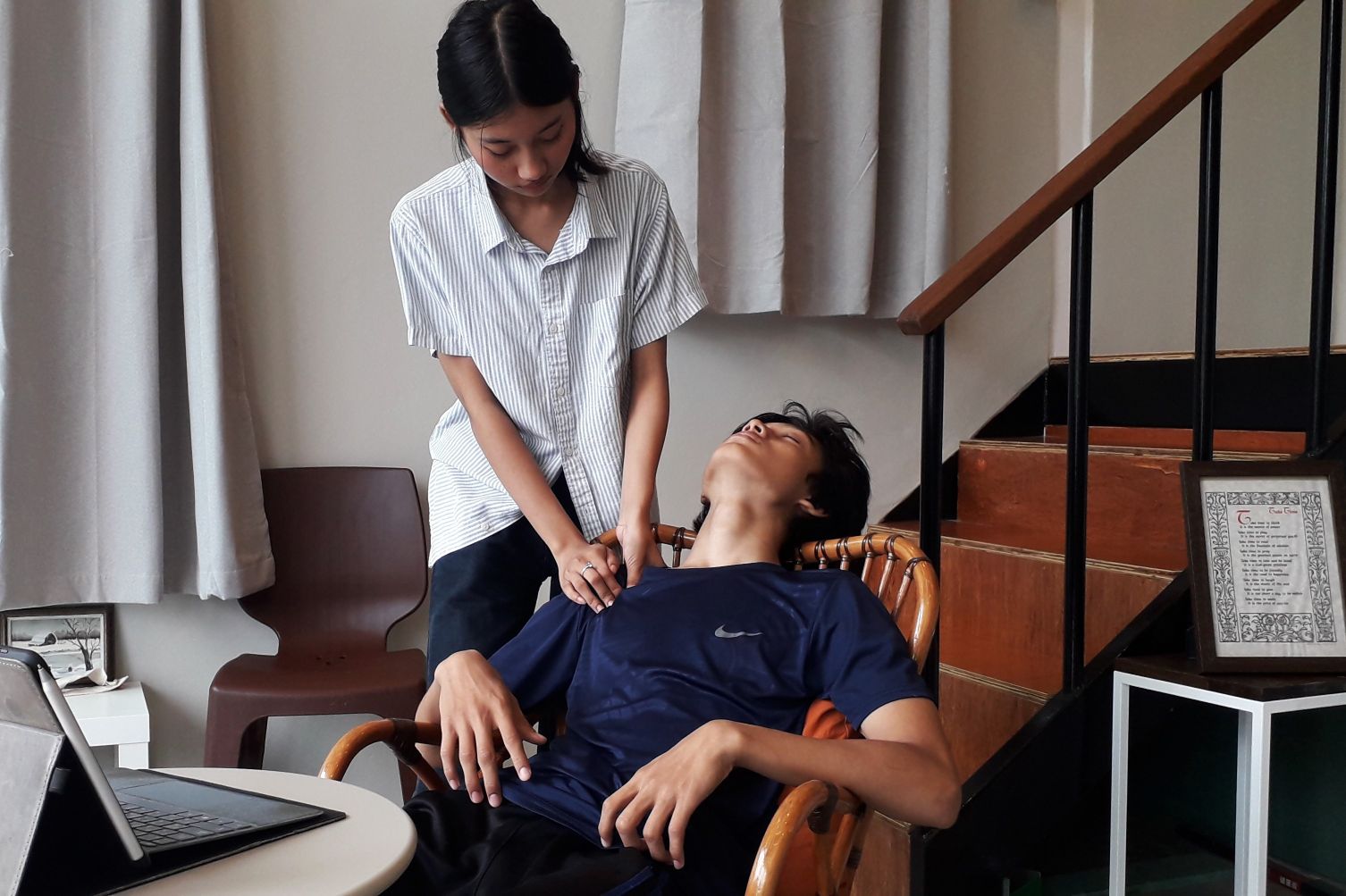
- not breathing, and has no pulse, (check for breathing and pulse)
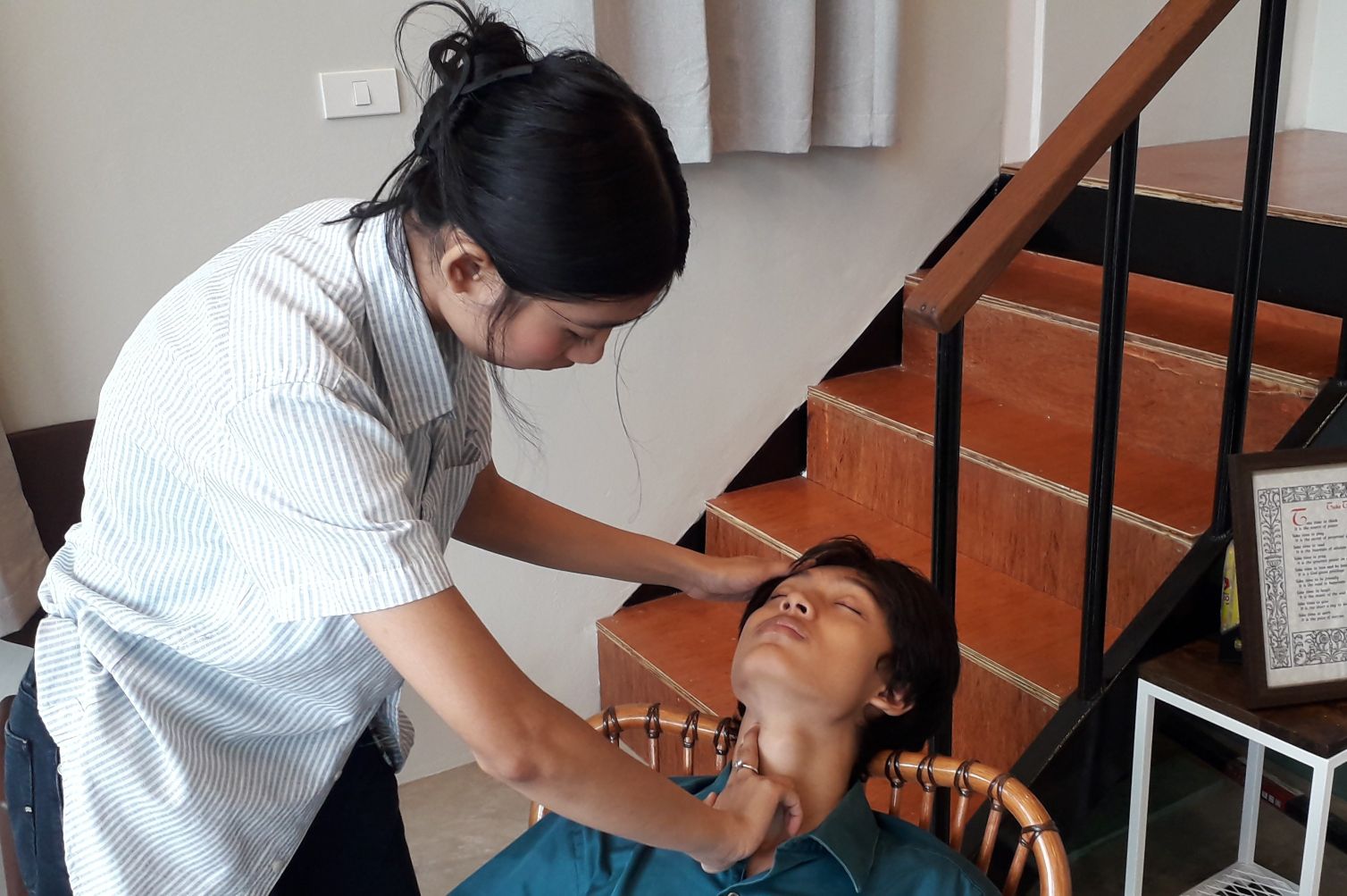
- call for medical assistance or ask someone else to do it.
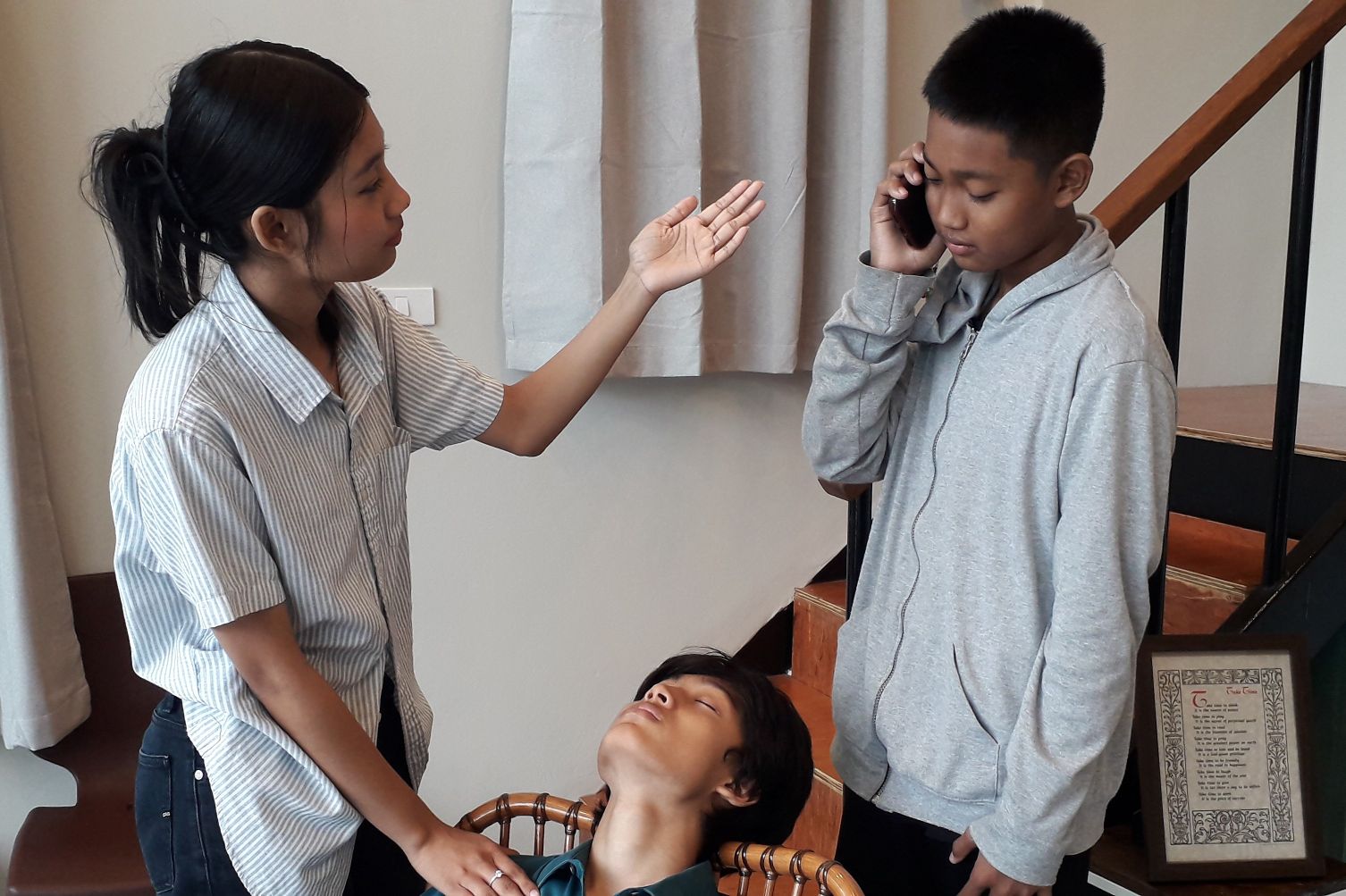
- unresponsiveness, (check for responsiveness)
- If an AED is in the area, send someone to get the AED/defibrillator and emergency equipment.
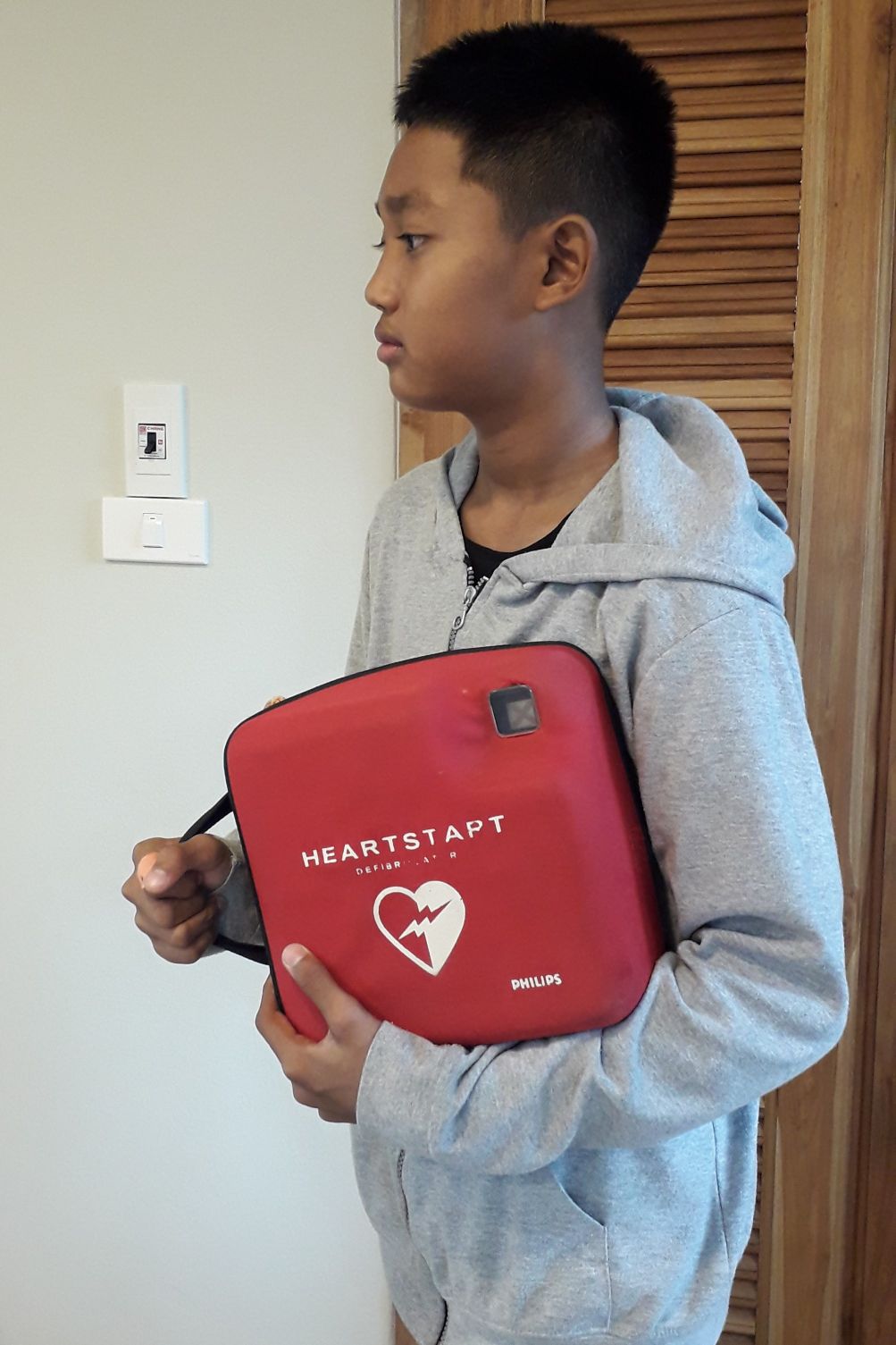
- Move the patient to a flat hard surface with space to work. Lay the patient on their back.
Compressions
High quality compressions form the foundation of effective CPR.
- Feel the patient’s chest to find the breast bone (sternum).
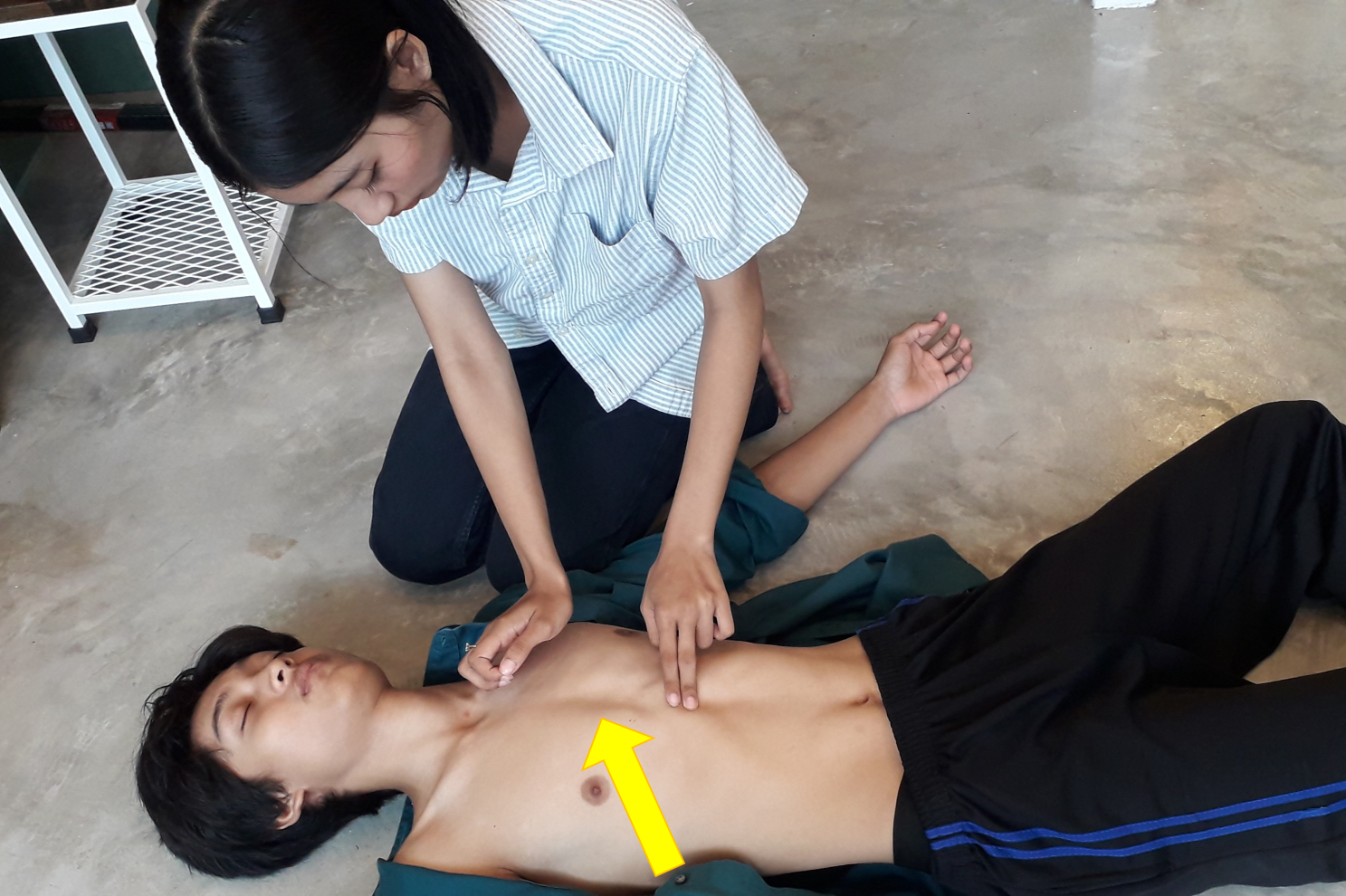
- Put the heel of one hand in the center of the victim’s chest, on the lower half of the breastbone. Put the heel of your other hand on top of the first hand.
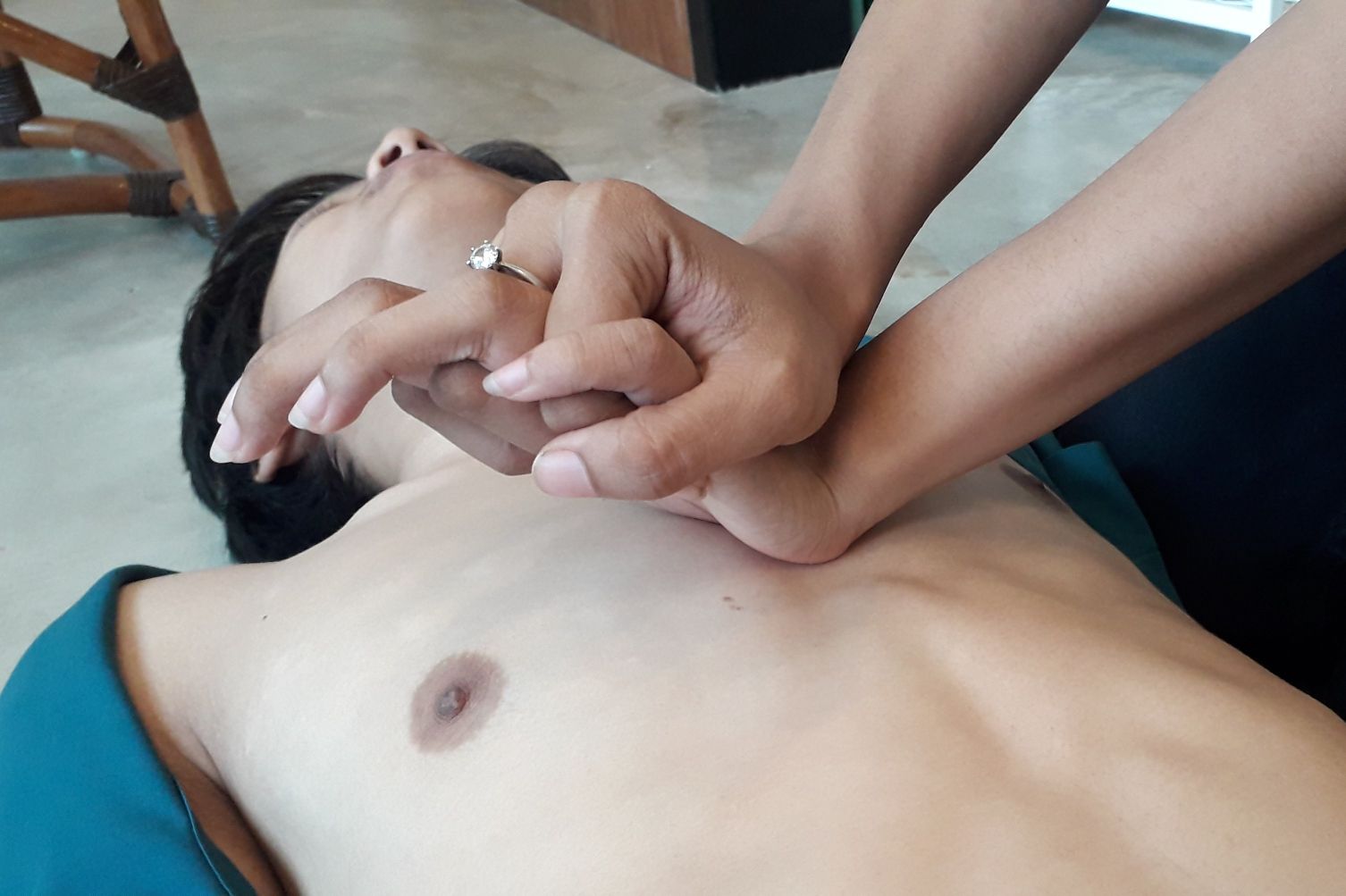
- Straighten your arms and position your shoulders directly over your hands.
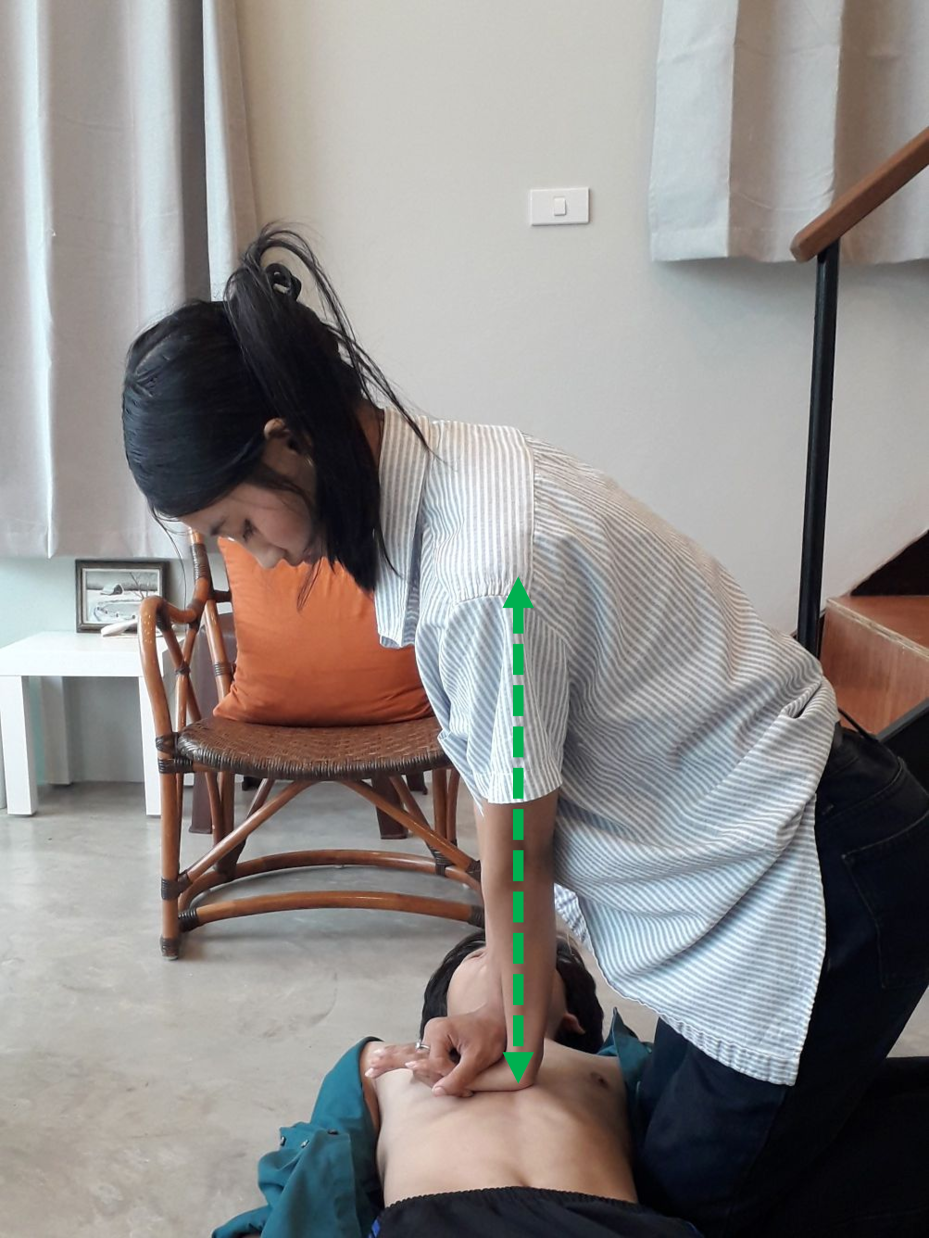
- Press down at least 5 - 6 cm (2 - 2.4 inches) with each compression or 1/3 of the chest depth for pediatric, infant, and smaller patients. For each chest compression, make sure you push straight down on the patient’s breastbone. Allow the chest to recoil completely with each compression.
- Give chest compressions at a rate of 100-120/minute. Count in sets of 30 compressions to keep track.
Airway and Breathing
A single rescuer with little training and limited equipment who witnesses a cardiac arrest might provide only chest compressions until help arrives. For providing airway and breathing assistance;
- Open the airway with either
- Head tilt–chin lift
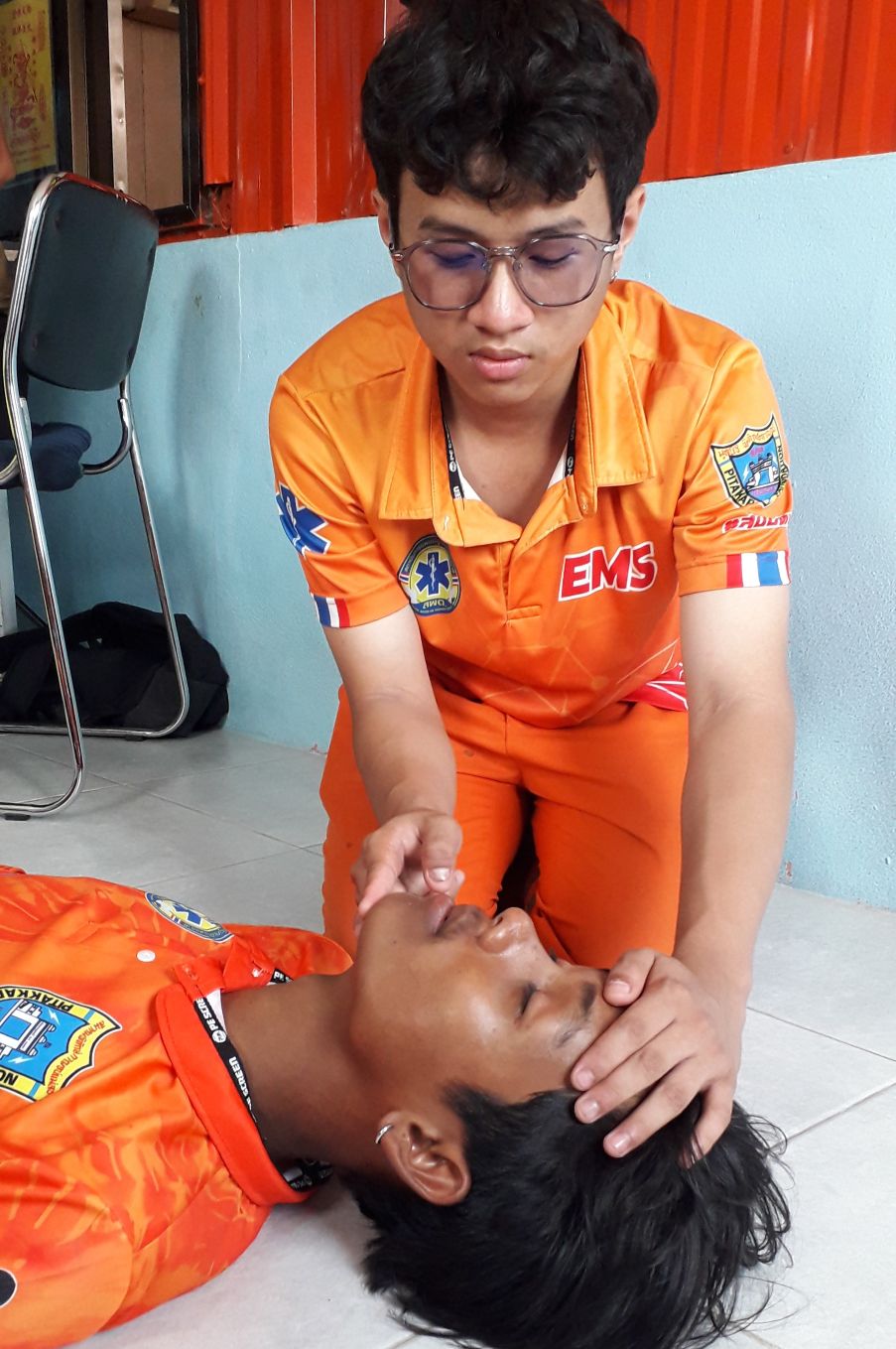
- Jaw thrust
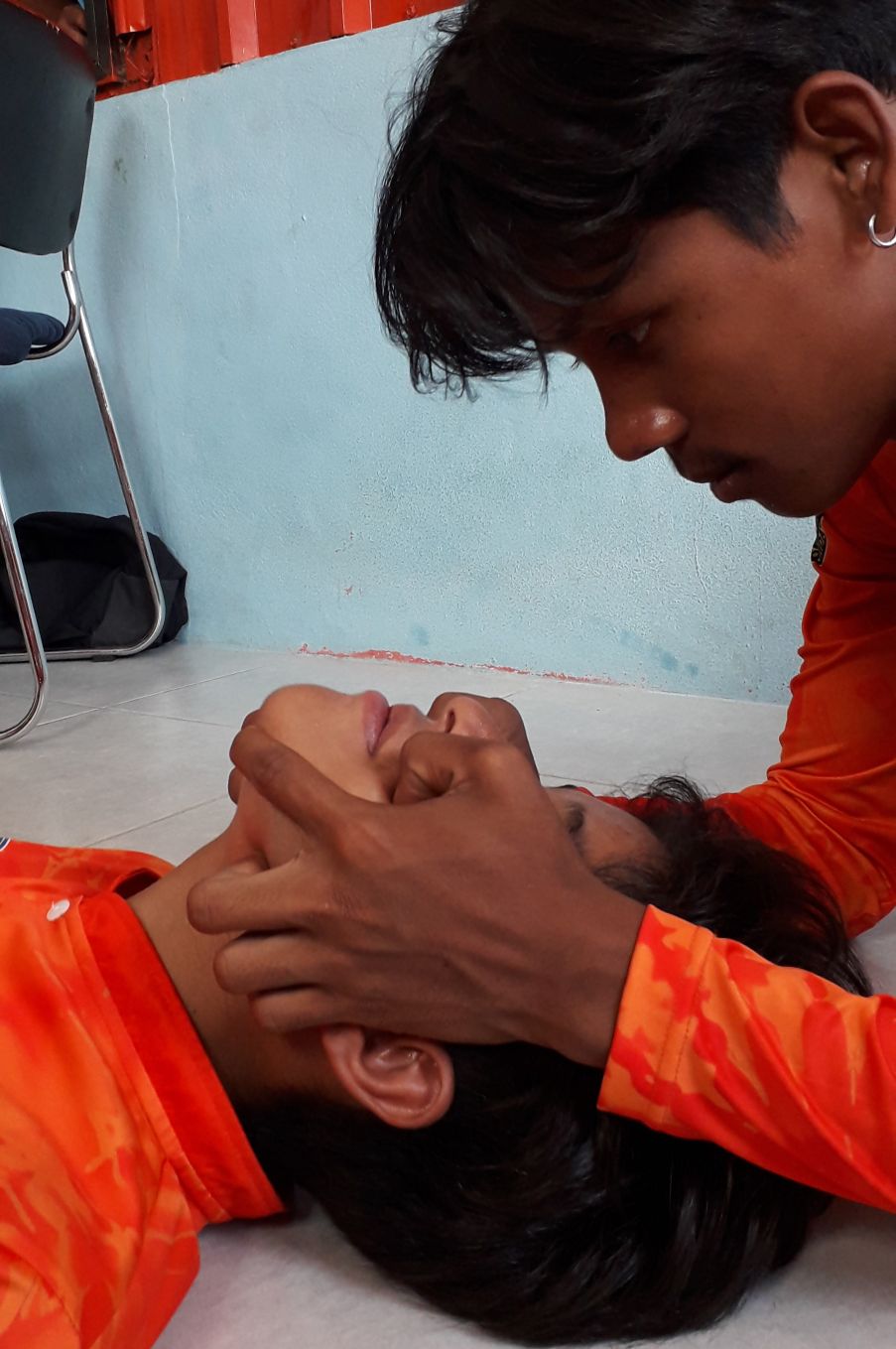
- Head tilt–chin lift
- If using a mask, place the pocket mask on the patient’s face, using the ridge of the nose as a guide for positioning.
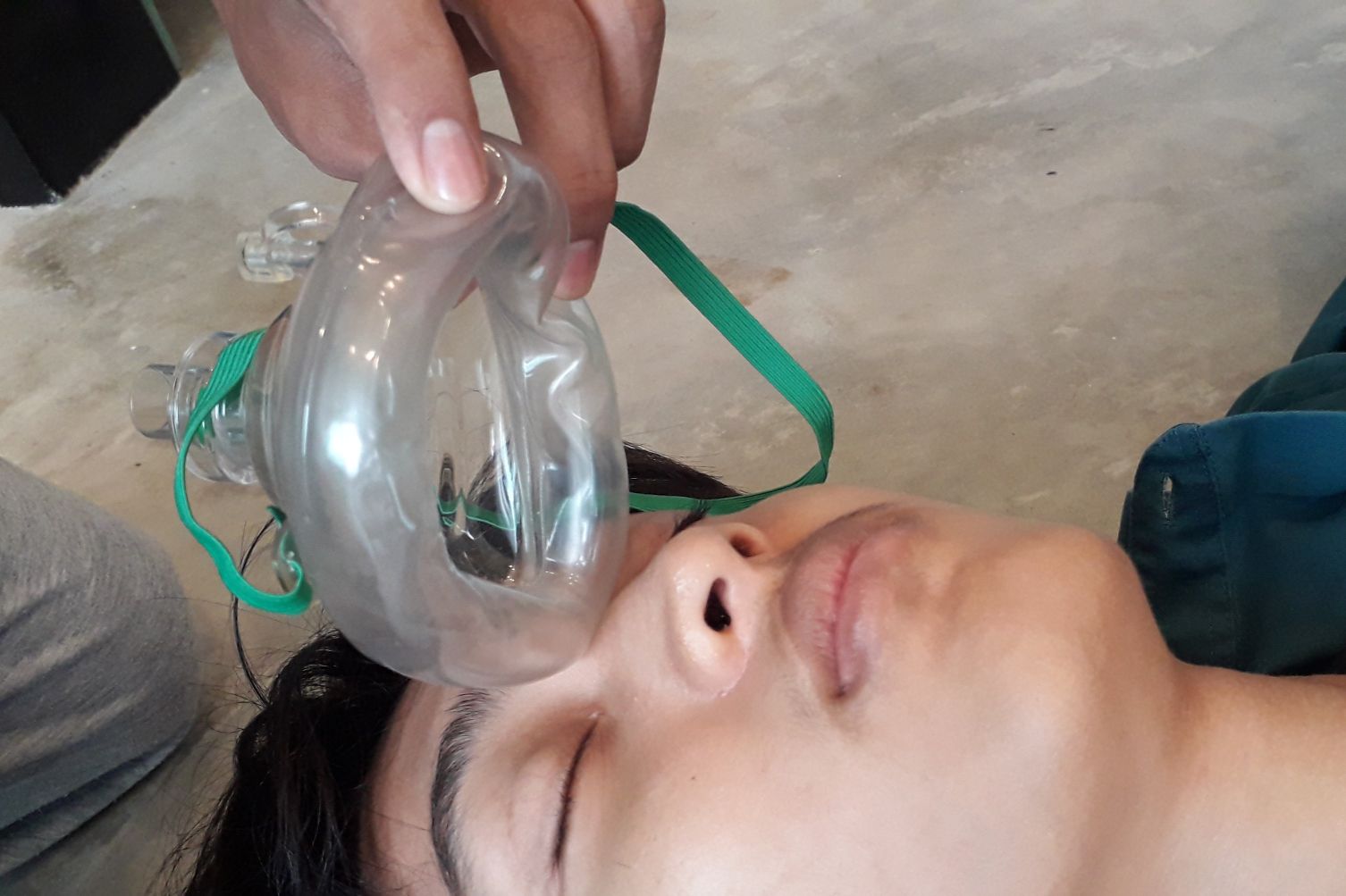
- Use your fingers to pull the mask tight into the face and seal it.
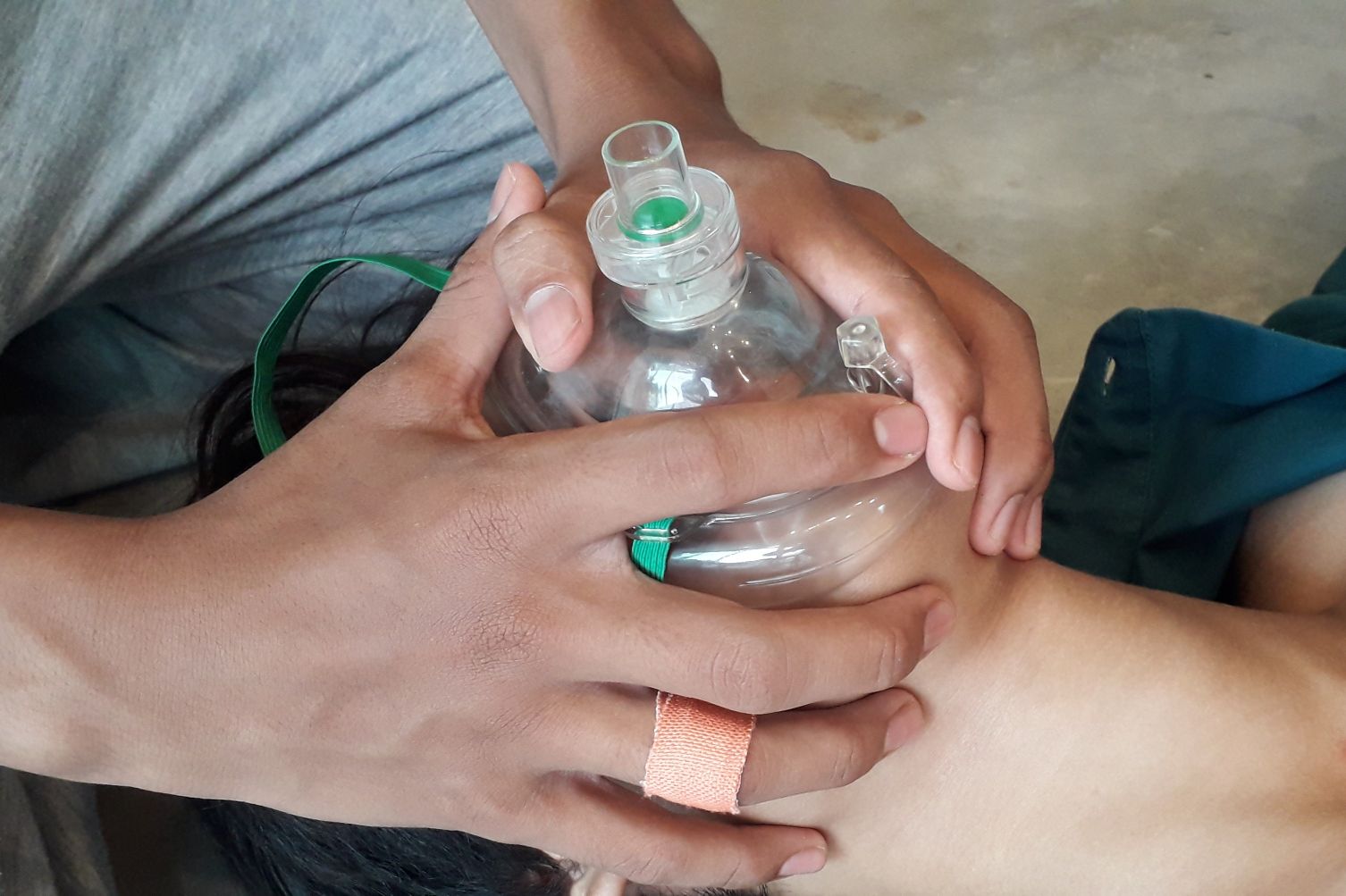
- Give 2 breaths into the mask 1 second each watching for visible chest rise. Resume chest compressions in less than 10 seconds.
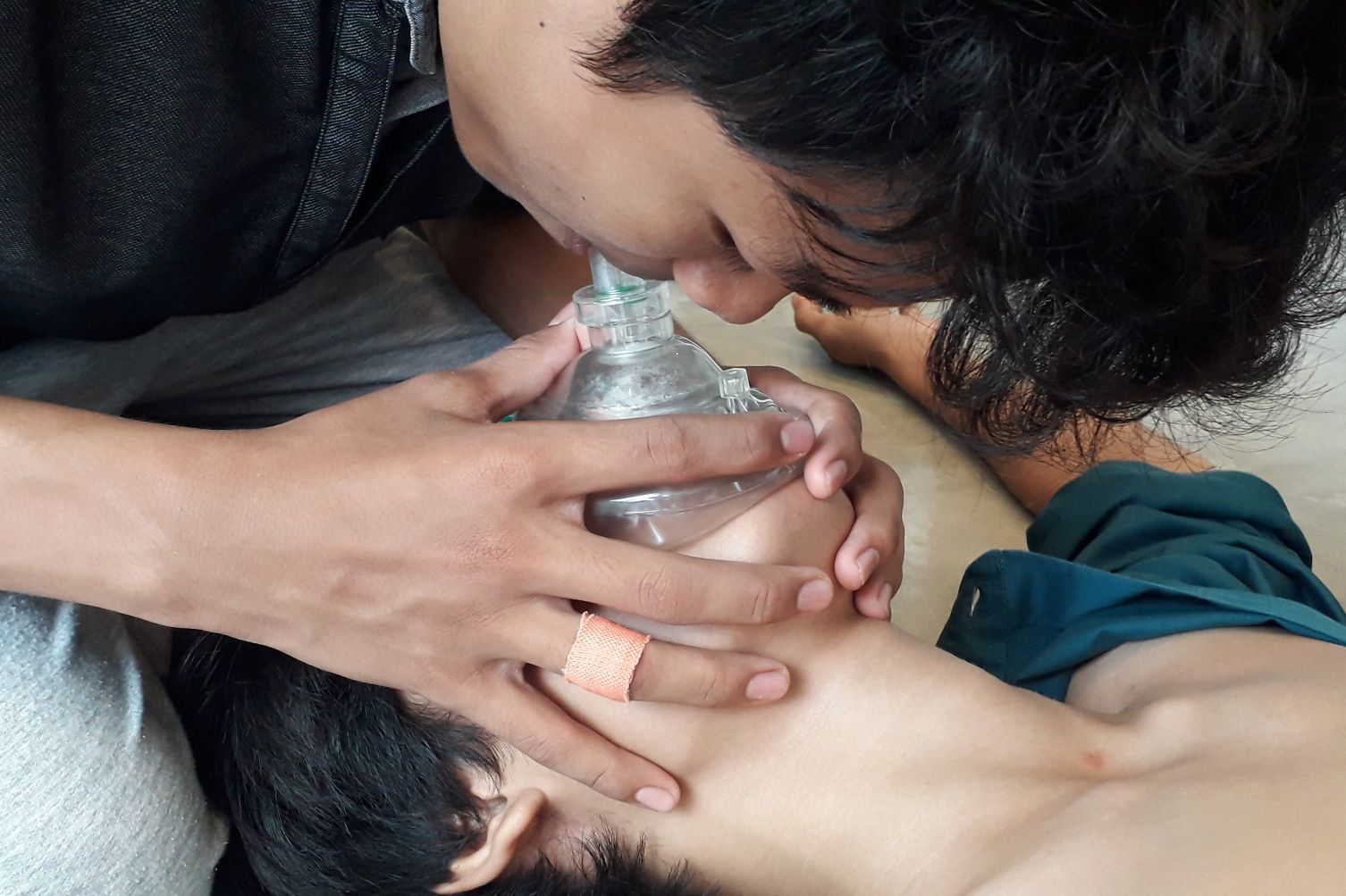
Give CPR using a ratio of 30 compressions to 2 breaths.
Automated External Defibrillator (AED)
The AED is a lightweight, portable device that can identify lethal heart rhythms and delivers a shock to terminate the abnormal rhythm and allow the heart’s normal rhythm to resume. When the AED arrives, pause compressions to analyze with the AED.
- Open the AED case. Power on the AED if needed, some devices will “power on” automatically when the lid opens.
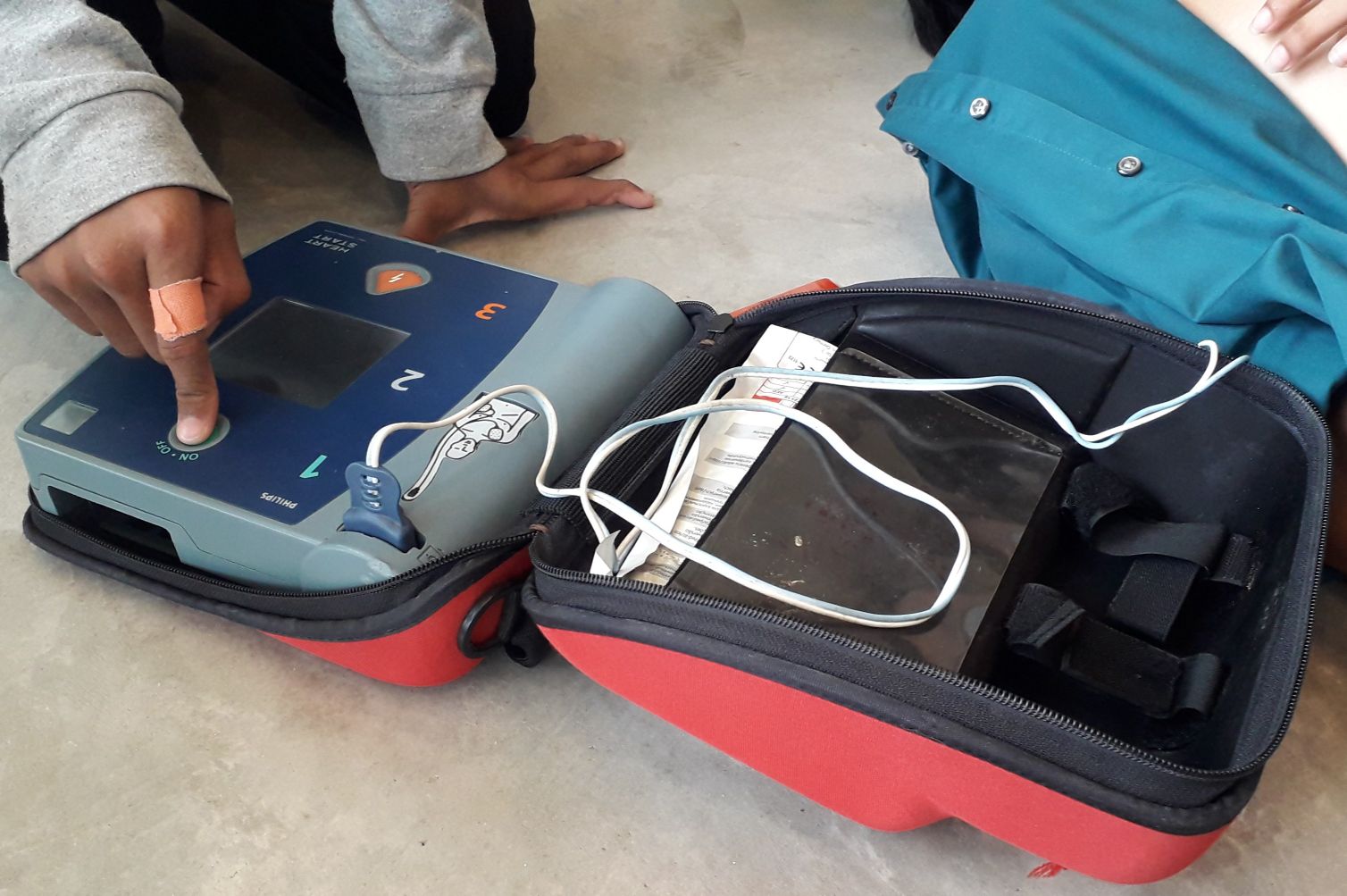
- Follow the AED prompts as a guide for what to do.
- Attach AED pads to the patient’s bare chest. Attach the pads’ connecting cables to the AED (some AED cables are preconnected).
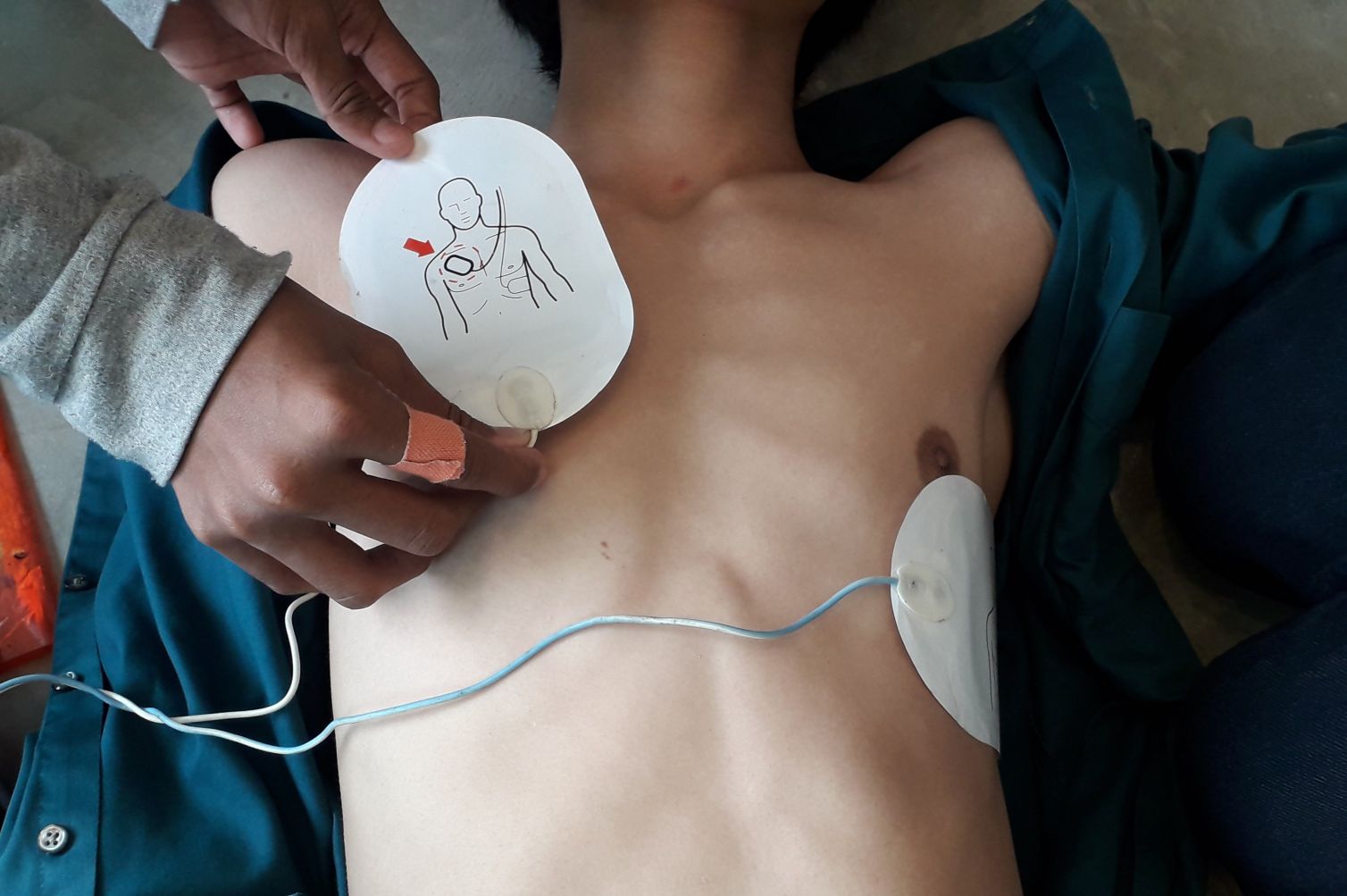
- When the AED says it is analyzing, clear the patient during analysis. Be sure that no one is touching the patient.
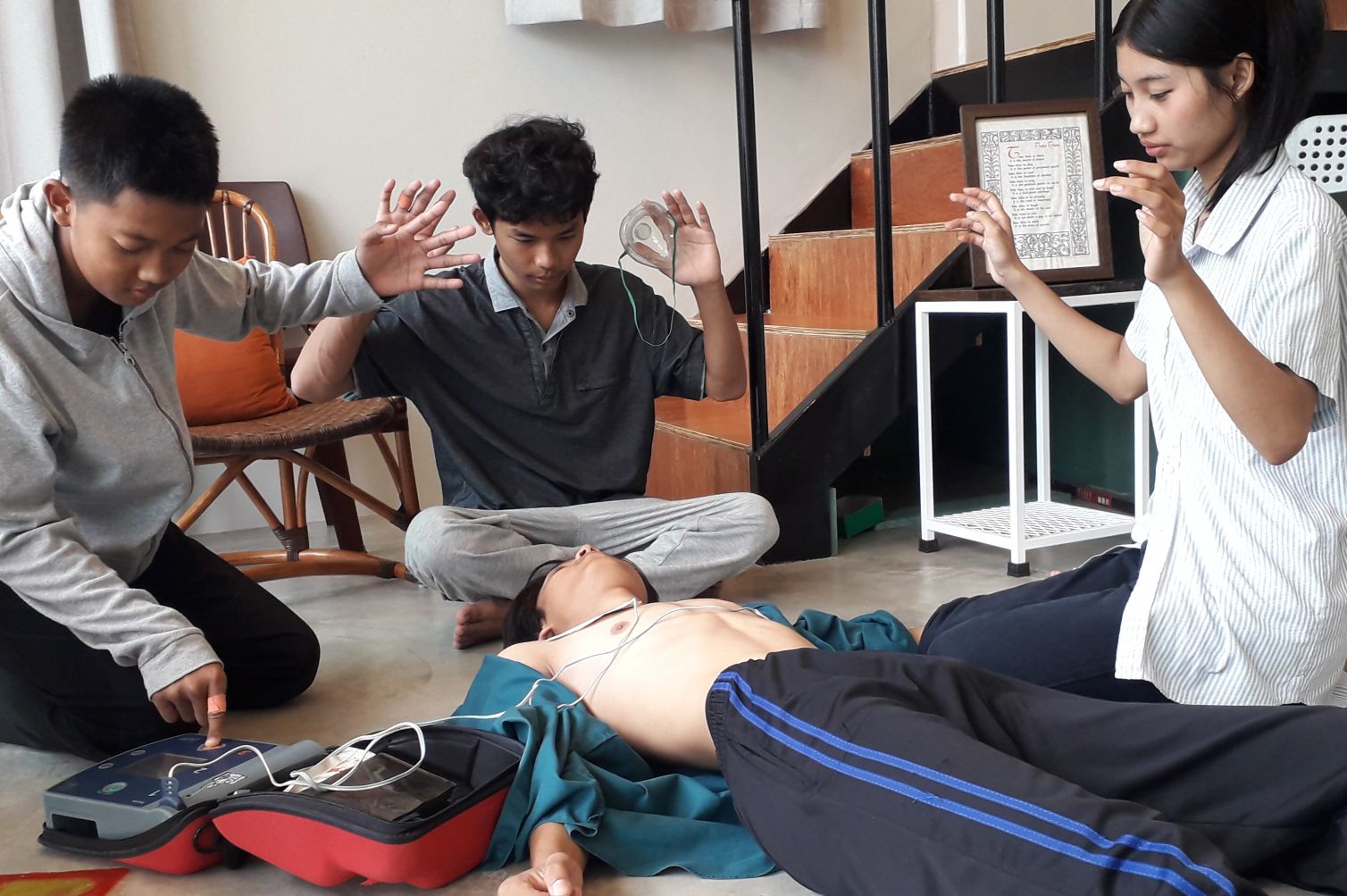
- If the AED advises a shock, clear the patient before delivering the shock. Make sure that no one is touching the patient. Loudly state “clear the victim” or “clear.” Look to be sure that no one is in contact with the victim. Press the shock button.
- Restart chest compressions. If no shock is needed, and after shock is delivered, immediately resume chest compressions.
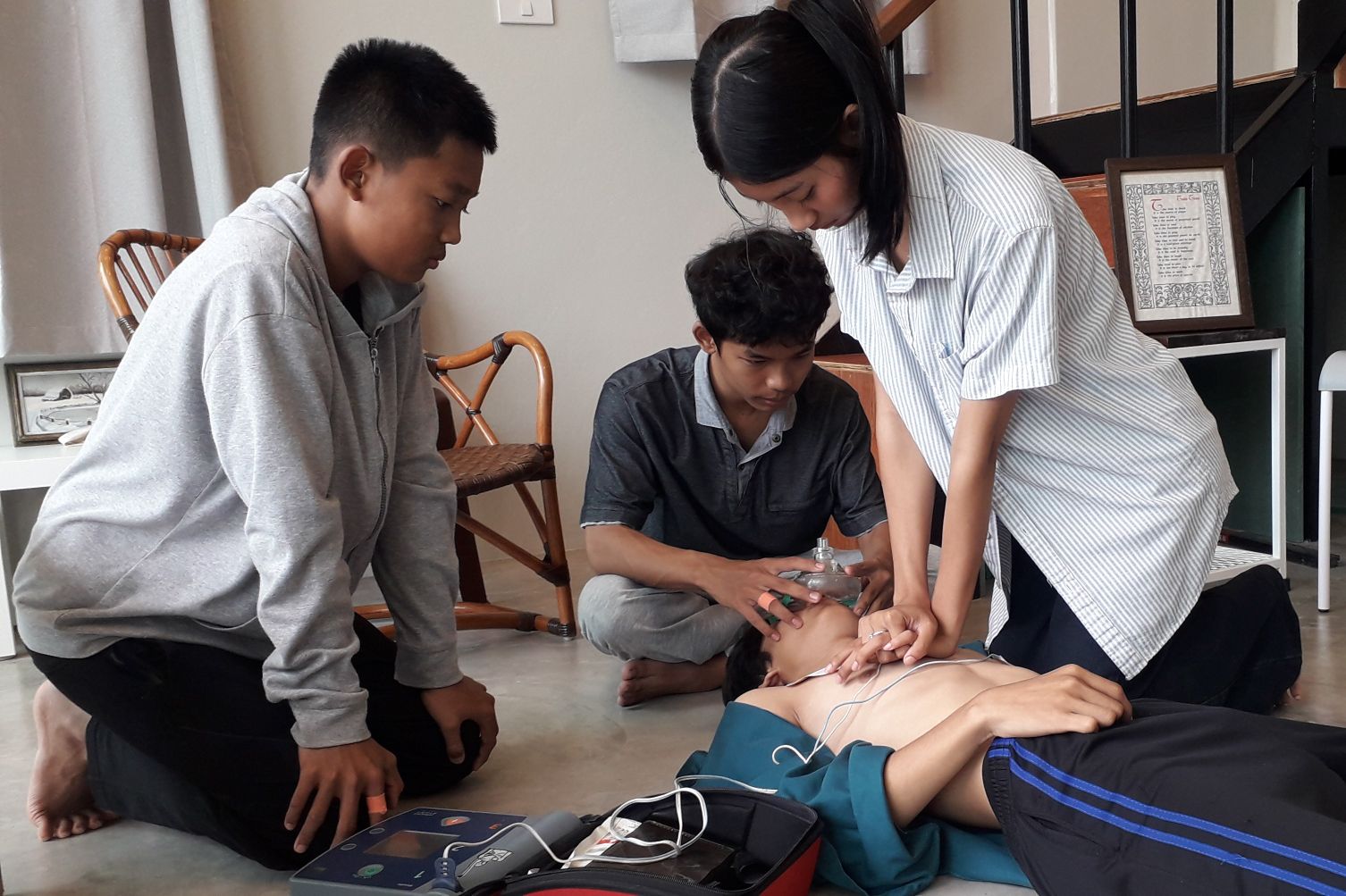
After about 5 cycles (30 compressions and 2 breaths per cycle) or 2 minutes of CPR, check for the return of a pulse. If the pulse returns keep the patient laying down, and transport to a medical facility.
If the pulse does not return continue CPR until;
- For locations with medical services (local clinics and ambulances), continue until medical personnel take over doing CPR from you.
- For remote locations without medical services:
- Victims of drowning or electrical shock, stop CPR after 30 minutes without a pulse.
- Pediatric or infant patients, stop CPR after 30 minutes without a pulse.
- Cardiac Arrest patients, stop CPR after 11 minutes without a pulse.
Consider switching people compressing the heart every 2 minutes. Effective teamwork greatly increases the chance of successfully saving the patient.
Thank you to Hazel and her brothers for helping with the photos, along with the Pitakkarn Foundation. Thanks to Dr. K and Dr. Honey for help with the Burmese translation.
References
American Heart Association BLS Project Team. (2016). Basic Life Support Provider Manual. Dallas, Texas: American Heart Association.
Boy Scouts of America. (2017). Wilderness First Aid Cirriculum and Doctrine Guidelines. Irving, Texas: Boy Scouts of America.
Disque, Karl. (2025). ACLS – Advanced Cardiac Life Support Provider Handbook. Las Vegas, NV: Satori Continuum Publishing.
National Park Service. (2018). Emergency Medical Services Protocols and Procedures. Washington, D.C.: U.S. Department of the Interior.